Explore comprehensive regional statistics and travel insights for the Philippines, covering NCR, Luzon Regions I–IV‑A, IV‑B & XIV, Visayas Regions VI–VIII, and Mindanao Regions IX–XV. Includes population data, geography, economy, culture, and related regional travel guides.
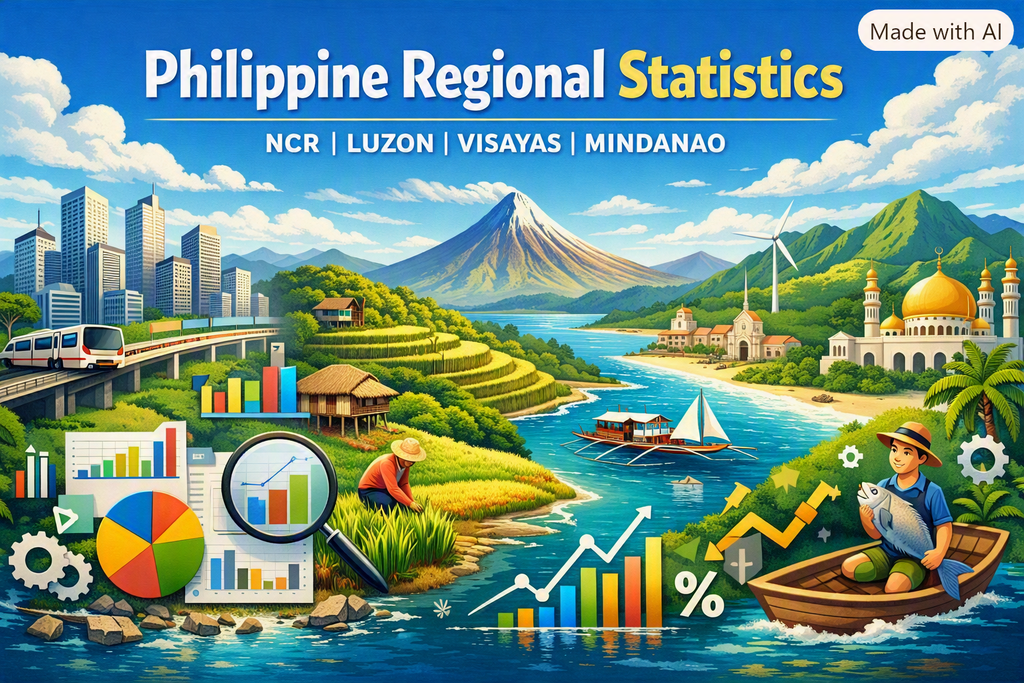
Part of Philippines by the Numbers
This guide is part of Philippines by the Numbers, Turista Sa Pilipinas’ reference collection covering Philippine regions, provinces, cities, municipalities, barangays, population statistics, geographic information, rankings, and administrative data.
Continue Exploring → Philippines by the Numbers
Philippine Regional Statistics & Travel Overview
The Philippines is divided into four major island groups—NCR, Luzon, Visayas, and Mindanao—each with distinct cultural identities, economic strengths, and geographic characteristics. This landing page provides a statistical, geographic, and tourism‑focused overview of all major regions requested, serving as a central hub for deeper regional guides.

NCR – National Capital Region
Overview
The National Capital Region (NCR) is the political, economic, and cultural center of the Philippines. Composed of 16 cities and 1 municipality, NCR is the most densely populated region in the country.
Key Statistics
- Population: ~13.1 million
- Land Area: 619 km²
- Economic Role: Financial capital; home to major banks, BPO hubs, and corporate headquarters
- Urban Density: Highest in the Philippines
Travel Highlights
- Historic sites in Manila
- Shopping & entertainment in Makati, BGC, Pasay
- Cultural districts like Intramuros and Binondo
Related Guide:
- National Capital Region Statistics Landing Page
- Manila: District I Statistics Page
- Eastern Manila: District II Statistics Page
- Northern Manila: District III Statistics Page
- Southern Manila District IV Statistics Page
- Quezon City Statistics Page
Luzon Island Group
Luzon is the largest island group, containing the country’s capital and several of its most economically significant regions.
Region I – Ilocos Region
Overview
Known for heritage towns, coastal landscapes, and strong agricultural output.
Key Statistics
- Population: ~5 million
- Economy: Agriculture (tobacco, garlic, corn), tourism
- Major Cities: Laoag, Vigan
Related Guide:
Region II – Cagayan Valley
Overview
A vast agricultural basin with mountain ranges and river systems.
Key Statistics
- Population: ~3.8 million
- Economy: Rice, corn, fisheries
- Geography: Sierra Madre & Cordillera ranges
Related Guide:
Region III – Central Luzon
Overview
A major agricultural and industrial hub north of NCR.
Key Statistics
- Population: ~12 million
- Economy: Rice bowl of the Philippines; manufacturing; logistics
- Key Cities: Angeles, San Fernando
Related Guide:
Region IV‑A – CALABARZON
Overview
The most industrialized region outside NCR.
Key Statistics
- Population: ~17 million
- Economy: Manufacturing, IT parks, tourism
- Key Areas: Tagaytay, Batangas beaches
Related Guide:
Region IV‑B – MIMAROPA
Overview
A mix of island provinces including Palawan, one of the world’s top tourism destinations.
Key Statistics
- Population: ~3.2 million
- Economy: Tourism, agriculture, fisheries
- Key Destinations: Coron, El Nido, Puerto Princesa
Related Guide:
Region V – Bicol
Overview
Known for its perfect-cone Mayon Volcano, pristine islands like Calaguas and Caramoan, and unique spicy coconut‑based cuisine.
Key Statistics
- Population: ~6 million
- Economy: Agriculture, forestry, & fishing
- Key Destinations: Mayon Volcano, Caramoan, Calaguas islands
Related Guide:
Region XIV – Cordillera Administrative Region (CAR)
Overview
A highland region known for indigenous culture and cool climate.
Key Statistics
- Population: ~1.8 million
- Economy: Agriculture, crafts, tourism
- Key Destinations: Baguio, Sagada, Banaue Rice Terraces
Related Guide:
Visayas Island Group
The Visayas is the central island cluster of the Philippines, known for beaches, festivals, and strong regional identities.
Region VI – Western Visayas
Overview
Home to Boracay, Iloilo, and Negros Occidental.
Key Statistics
- Population: ~7.9 million
- Economy: Tourism, sugar industry, fisheries
- Key Cities: Iloilo City, Bacolod City
Related Guide:
Region VII – Central Visayas
Overview
A major tourism and economic center anchored by Cebu.
Key Statistics
- Population: ~8 million
- Economy: BPO, tourism, manufacturing
- Key Destinations: Cebu, Bohol, Dumaguete
Related Guide:
Region VIII – Eastern Visayas
Overview
A region rich in history, natural wonders, and cultural heritage.
Key Statistics
- Population: ~4.5 million
- Economy: Agriculture, fisheries, emerging tourism
- Key Cities: Tacloban, Ormoc
Related Guide:
Mindanao Island Group
Mindanao is the second-largest island group, known for diverse cultures, fertile lands, and rapidly growing urban centers.
Region IX – Zamboanga Peninsula
Overview
A culturally diverse region with Spanish-influenced heritage.
Key Statistics
- Population: ~3.8 million
- Economy: Agriculture, fisheries, trade
- Key Cities: Zamboanga City, Dipolog
Related Guide:
Region X – Northern Mindanao
Overview
A balanced region with agriculture, industry, and tourism.
Key Statistics
- Population: ~5 million
- Economy: Pineapple industry, manufacturing, eco‑tourism
- Key Cities: Cagayan de Oro, Iligan
Related Guide:
Region XI – Davao Region
Overview
One of the fastest-growing regions in the Philippines.
Key Statistics
- Population: ~5.4 million
- Economy: Agriculture (durian, banana), tourism, trade
- Key Cities: Davao City
Related Guide:
Region XII – SOCCSKSARGEN
Overview
A major agricultural and fishing powerhouse.
Key Statistics
- Population: ~4.9 million
- Economy: Tuna industry, agriculture
- Key Cities: General Santos City
Related Guide:
Region XIII – Caraga Admin. Region
Overview
A region known for forests, rivers, and eco‑tourism.
Key Statistics
- Population: ~2.8 million
- Economy: Mining, forestry, eco‑tourism
- Key Destinations: Siargao, Butuan
Related Guide:
- Caraga Admin. Region Statistics Page
Region XV – BARMM (Bangsamoro Autonomous Region)
Overview
A culturally rich autonomous region with growing tourism potential.
Key Statistics
- Population: ~4.9 million
- Economy: Agriculture, fisheries, crafts
- Key Areas: Tawi‑Tawi, Basilan, Marawi
Related Guide:
Conclusion: A Unified Statistical Information System
This landing page serves as a central gateway to the Philippines’ major regions—NCR, Luzon, Visayas, and Mindanao—providing statistical insights. Each region offers unique cultural identities, economic strengths, and tourism opportunities, making the Philippines one of the most diverse destinations in Southeast Asia.