Explore Cebu Island, the heart of the Central Visayas. Discover beaches, cities, diving, waterfalls, islands, transportation, history, top attractions, and travel planning tips for 2026.
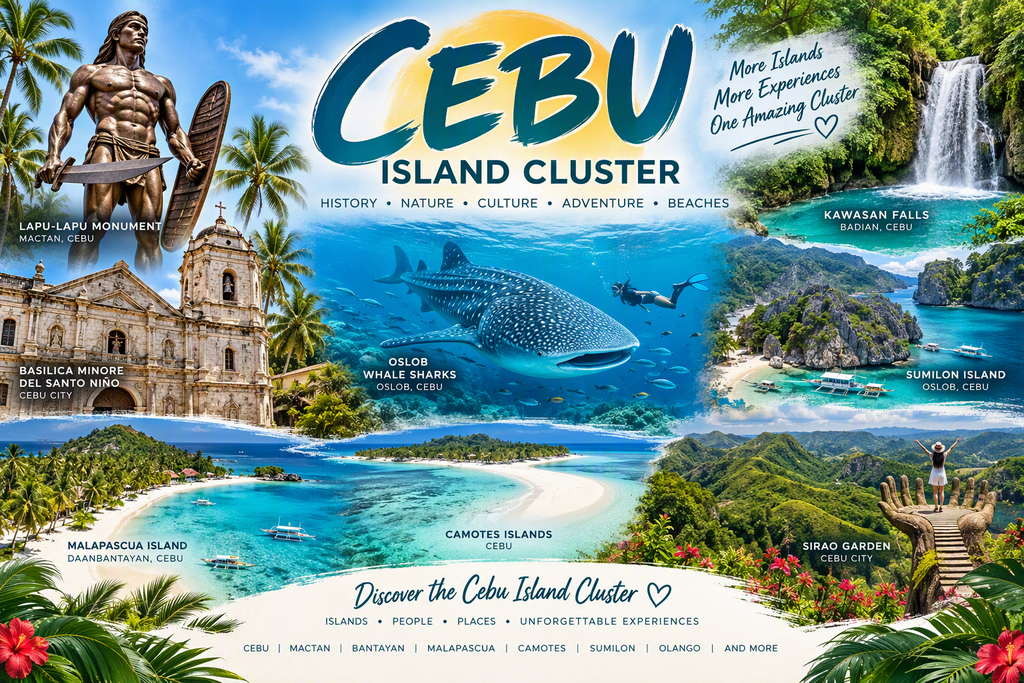
Cebu Island is one of the Philippines’ most influential and diverse destinations, serving as the geographic, economic, cultural, and transportation heart of the Central Visayas. Stretching through the center of the Philippine archipelago, the island combines historic cities, mountain landscapes, white-sand beaches, world-class diving, island destinations, and important cultural heritage sites within a single province.
Cebu Island Travel Guide 2026: Exploring the Heart of the Central Visayas
Known as the birthplace of Christianity in the Philippines, Cebu has played a central role in the nation’s history for centuries. Today, the island remains one of the country’s busiest tourism gateways, welcoming travelers seeking everything from historical landmarks and urban experiences to waterfalls, marine adventures, and tropical island escapes.
Whether you’re exploring the cultural attractions of Cebu City, diving in Moalboal, relaxing on Bantayan Island, or swimming alongside whale sharks in Oslob, Cebu offers one of the most complete travel experiences in the Philippines.
Why Visit Cebu Island?
Cebu Island offers one of the most complete travel experiences in the Philippines, combining history, culture, beaches, islands, diving, waterfalls, mountain adventures, and modern urban conveniences within a single destination. Located at the heart of the Central Visayas, Cebu serves as both a major transportation gateway and one of the country’s most important tourism hubs, making it an ideal starting point for exploring the broader Philippine archipelago.
What sets Cebu apart is its remarkable diversity. Visitors can explore centuries-old landmarks in Cebu City, relax at luxury resorts on Mactan Island, swim alongside whale sharks in Oslob, snorkel through the famous Sardine Run in Moalboal, chase waterfalls hidden in the island’s mountains, or escape to the white-sand beaches of Bantayan and Malapascua. Few destinations in the Philippines offer such a wide range of experiences within a single province.
Cebu is also one of the most historically significant islands in the country. As the site of Ferdinand Magellan’s arrival in 1521 and the birthplace of Christianity in the Philippines, the island is home to iconic landmarks such as Magellan’s Cross, Fort San Pedro, and the Basilica Minore del Santo Niño. These historical attractions blend seamlessly with modern shopping districts, business centers, and tourism developments that make Cebu one of the Philippines’ most dynamic regions.
For outdoor enthusiasts, Cebu provides endless opportunities for adventure. Divers can explore coral reefs and encounter thresher sharks in Malapascua, hikers can trek to viewpoints such as Osmeña Peak, and nature lovers can discover waterfalls, coastal cliffs, marine sanctuaries, and island-hopping routes throughout the province. The island’s extensive road network also makes it one of the best self-drive destinations in the Philippines.
Whether you’re seeking cultural heritage, family-friendly vacations, beach escapes, marine adventures, road trips, or island-hopping experiences, Cebu Island delivers a unique combination of accessibility, diversity, and world-class attractions that continue to make it one of the Philippines’ most rewarding destinations.
Featured Destination Islands Around Cebu
While Cebu Island offers countless attractions on its own, several of the Visayas’ most popular island destinations are located just offshore. These islands are among the highlights of many Cebu itineraries and provide additional opportunities for beaches, diving, island hopping, and relaxed tropical escapes.
Featured Island Travel Guides
- Bantayan Island Travel Guide — White-sand beaches, island hopping, sunsets, and relaxed island life.
- Malapascua Island Travel Guide — Thresher sharks, world-class diving, coral reefs, and quiet beaches.
- Camotes Island Travel Guide — Lakes, caves, beaches, cliff viewpoints, and family-friendly island adventures.
These destinations complement a Cebu vacation and are easily combined with North Cebu road trips and island-hopping itineraries.
Quick Facts About Cebu
| Feature | Information |
|---|---|
| Region | Central Visayas |
| Province | Cebu |
| Capital City | Cebu City |
| Largest Island | Cebu Island |
| Primary Airport | Mactan-Cebu International Airport |
| Known For | History, Beaches, Diving, Islands, Waterfalls |
| Major Language | Cebuano |
| Surrounding Waters | Camotes Sea, Bohol Strait, Cebu Strait, Tañon Strait |
Understanding Cebu Island
Geographic Overview
Cebu Island occupies a strategic position in the center of the Philippine archipelago. The island stretches more than 190 kilometers from north to south and is characterized by a mountainous spine running through its interior.
The island is surrounded by:
- Negros Island to the west
- Bohol Island to the southeast
- Leyte Island to the northeast
- Camotes Islands to the east
- Numerous smaller islands and marine ecosystems
Its central location has made Cebu one of the Philippines’ most important transportation and trade hubs throughout history.
Why Cebu Matters
Few islands have shaped Philippine history as significantly as Cebu.
The island was already a thriving trading center long before European arrival. In 1521, Ferdinand Magellan reached Cebu, marking the beginning of one of the most transformative periods in Philippine history. Cebu later became the first major Spanish settlement in the country and remains home to some of the Philippines’ most important historical and religious landmarks.
Today, Cebu serves as:
- A transportation gateway to the Visayas and Mindanao
- A major business and economic center
- A leading tourism destination
- A center of Cebuano culture
- One of the country’s most important aviation hubs
Cebu’s Role in the Central Visayas
Cebu Island serves as the transportation, economic, and tourism center of the Central Visayas Region. Through Mactan-Cebu International Airport, extensive ferry routes, and major seaports, Cebu connects travelers to destinations across the Visayas and Mindanao, including Bohol, Negros, Siquijor, Leyte, and Camiguin. This strategic position has made Cebu one of the Philippines’ most important commercial gateways and one of its busiest tourism hubs.
This strengthens the authority side of the page considerably.
Exploring Cebu by Region
North Cebu
North Cebu is known for island destinations, marine tourism, diving opportunities, and some of the province’s most beautiful beaches.
The region serves as the gateway to several of Cebu’s most famous islands while maintaining a more relaxed and less urban atmosphere than the central portion of the province.
Key Destinations
- Bantayan Island
- Malapascua Island
- Medellin
- Daanbantayan
- Bogo
Best For
- Beach vacations
- Diving
- Island hopping
- Relaxation
- Photography
Highlights
- White-sand beaches
- Thresher shark diving
- Resort destinations
- Coastal landscapes
- Ferry connections to offshore islands
Related Guides
- North Cebu Travel Guide
- Bantayan Island Guide
- Malapascua Island Guide
Central Cebu
Central Cebu serves as the cultural, historical, transportation, and economic core of the province.
Home to Cebu City, Mandaue, and Lapu-Lapu City, the region combines modern urban amenities with some of the country’s most important historical landmarks.
Key Destinations
- Cebu City
- Mandaue City
- Lapu-Lapu City
- Mactan Island
- Talisay
Best For
- Culture
- History
- Food tourism
- Shopping
- Urban exploration
Highlights
- Magellan’s Cross
- Basilica Minore del Santo Niño
- Fort San Pedro
- Heritage districts
- Major transportation hubs
Related Guides
- Central Cebu Travel Guide
- Cebu City Guide
- Mactan Island Guide
South Cebu
South Cebu is one of the province’s most popular tourism regions and contains many of its best-known natural attractions.
Travelers visiting South Cebu can explore waterfalls, coastal communities, mountain viewpoints, marine sanctuaries, and some of the country’s most famous wildlife encounters.
South Cebu is home to two of the province’s most popular destinations, Moalboal and Oslob, which can be explored together through a multi-day self-drive itinerary.
Key Destinations
- Oslob
- Moalboal
- Badian
- Alegria
- Samboan
- Dalaguete
Best For
- Adventure travel
- Diving
- Snorkeling
- Waterfalls
- Wildlife encounters
- Road trips
Highlights
- Whale shark encounters
- Kawasan Falls
- Sardine Run
- Pescador Island
- Osmeña Peak
Related Guides
- South Cebu Travel Guide
- Oslob Travel Guide
- Moalboal Travel Guide
- Cebu City to Moalboal (Best Stops, Beaches & Travel Tips)
- Cebu Road Trip: Moalboal to Oslob Travel Guide | Stops, Attractions & Tips
Offshore Islands of Cebu
Beyond mainland Cebu, several offshore islands contribute significantly to the province’s tourism appeal. These islands offer some of the Philippines’ best beaches, diving sites, marine sanctuaries, and island-hopping opportunities.
Mactan Island
Connected to mainland Cebu by multiple bridges, Mactan Island is home to Mactan-Cebu International Airport and numerous luxury resorts. The island is one of the country’s leading beach and resort destinations.
Best For
- Resort vacations
- Families
- Water activities
- Luxury accommodations
Bantayan Island
Bantayan Island is one of Cebu’s most famous beach destinations, known for clear waters, white-sand beaches, cycling routes, and a laid-back atmosphere.
Best For
- Beach holidays
- Relaxation
- Couples
- Island escapes
Malapascua Island
Malapascua has gained international recognition as one of the world’s best locations to dive with thresher sharks.
Best For
- Scuba diving
- Marine tourism
- Adventure travel
- Underwater photography
Camotes Islands
The Camotes Islands offer a quieter alternative to many of Cebu’s more developed destinations and are known for beaches, caves, lakes, and scenic coastal landscapes.
Best For
- Nature tourism
- Family travel
- Relaxed vacations
- Local culture
Top Destinations in Cebu
Cebu City
Historic landmarks, museums, culture, shopping, and food experiences.
Oslob
Whale sharks, waterfalls, and coastal scenery.
Moalboal
Sardine Run, sea turtles, diving, and marine sanctuaries.
Bantayan Island
White-sand beaches and resort escapes.
Malapascua Island
World-famous thresher shark diving.
Mactan Island
Luxury resorts and island-hopping excursions.
Natural Attractions
Best Waterfalls
- Kawasan Falls
- Tumalog Falls
- Dao Falls
- Inambakan Falls
Best Mountains and Viewpoints
- Osmeña Peak
- Casino Peak
- Sirao Highlands
Best Marine Attractions
- Sardine Run
- Pescador Island
- Malapascua Dive Sites
- Oslob Marine Areas
History and Culture
Cebu occupies a unique place in Philippine history and remains one of the nation’s most culturally significant islands.
Important landmarks include:
- Magellan’s Cross
- Basilica Minore del Santo Niño
- Fort San Pedro
- Lapu-Lapu Shrine
The island is also home to the Sinulog Festival, one of the largest and most celebrated cultural events in the Philippines.
Ecology and Conservation
Cebu’s marine and terrestrial ecosystems support tourism, fisheries, biodiversity, and local communities throughout the province.
Important ecosystems include:
- Coral reefs
- Mangrove forests
- Seagrass beds
- Marine protected areas
- Mountain watersheds
Conservation initiatives continue to focus on sustainable tourism, marine protection, and watershed management.
Tourism and Travel Planning
Best Time to Visit
| Season | Months | Best For |
|---|---|---|
| Dry Season | December-May | Beaches, diving, sightseeing |
| Peak Season | December-April | Best overall weather |
| Shoulder Season | May-June, October-November | Fewer crowds |
| Rainy Season | June-October | Budget travel and greener landscapes |
Suggested Itineraries
3-Day Highlights
Day 1
- Cebu City
- Magellan’s Cross
- Fort San Pedro
Day 2
- Oslob
- Tumalog Falls
Day 3
- Moalboal
- Sardine Run
- Pescador Island
5-Day Cebu Explorer
Days 1-2
- Cebu City and Mactan
Day 3
- Oslob and South Cebu
Day 4
- Moalboal and Kawasan Falls
Day 5
- Bantayan Island or Malapascua Island
Cebu Road Trips
Cebu is one of the best self-drive destinations in the Philippines. Major highways connect northern beaches, urban centers, southern adventure destinations, and ferry gateways throughout the province.
Popular routes include:
- Cebu City to Moalboal
- Moalboal to Oslob Travel Guide
- Cebu City to Bantayan Island Gateway
- South Cebu Waterfalls Route
- Northern Cebu Coastal Route
Related Guide:
How to Get Around Cebu
Air Travel
- Mactan-Cebu International Airport
Ferry Connections
- Bohol
- Negros
- Leyte
- Siquijor
- Camiguin
Local Transportation
- Jeepneys
- Buses
- Vans
- Taxis
- Ride-hailing services
- Motorbike rentals
Related Guides
Cebu Destinations
- Cebu City Guide
- North Cebu Travel Guide
- Central Cebu Travel Guide
- South Cebu Travel Guide
- Top Vacation Locations in Cebu Province
- Oslob Travel Guide
- Moalboal Travel Guide
- Bantayan Island Guide
- Malapascua Island Guide
- Camotes Islands Travel Guide
- Cebu Road Trips Guide
- Cebu City to Moalboal
- Moalboal to Oslob Travel Guide
Nearby Island Guides
Regional Guides
- Central Visayas Island Clusters Guide
- Visayas Island Group Clusters Guide
- Best Islands in the Philippines
- Philippine Waterfalls Guide
- Top 10 Easy Access Waterfalls in the Philippines
Frequently Asked Questions About Cebu Island
What is Cebu Island known for?
Cebu is known for its historical landmarks, whale shark encounters, diving destinations, waterfalls, island resorts, and role as the birthplace of Christianity in the Philippines.
What is the best time to visit Cebu?
The dry season from December to May generally offers the best conditions for beaches, island hopping, diving, and outdoor activities.
How many days should I spend in Cebu?
Most travelers spend between four and seven days exploring Cebu City, South Cebu, and at least one offshore island such as Bantayan or Malapascua.
Is Cebu good for first-time visitors to the Philippines?
Yes. Cebu combines major transportation infrastructure, diverse attractions, modern accommodations, and easy access to neighboring islands, making it one of the best introductions to the Philippines.
Conclusion: Why Cebu Remains One of the Philippines’ Best Destinations
Cebu Island continues to stand among the Philippines’ most rewarding travel destinations because it combines history, culture, adventure, island life, and modern convenience in a way few places can match. From the historic landmarks of Cebu City and the resort beaches of Mactan to the diving sites of Moalboal, the whale shark encounters of Oslob, and the island escapes of Bantayan and Malapascua, Cebu offers an extraordinary variety of experiences within a single province.
As the heart of the Central Visayas, Cebu serves as both a destination and a gateway, connecting travelers to some of the most beautiful islands and attractions in the Philippine archipelago. Its well-developed transportation network, international airport, diverse accommodations, and year-round tourism opportunities make it one of the easiest and most accessible places to explore in the country.
Whether you’re planning your first trip to the Philippines, embarking on a multi-day road trip, searching for world-class diving, exploring centuries of history, or simply looking for the perfect tropical getaway, Cebu delivers unforgettable experiences for every type of traveler.
Ready to discover Cebu? Start planning your adventure today by comparing hotels, booking tours, arranging transportation, and exploring our destination guides for Cebu City, Moalboal, Oslob, Bantayan Island, Malapascua Island, and the many incredible destinations that make Cebu one of the Philippines’ premier island provinces.
Plan Your Cebu Adventure
- Find the best hotels and resorts across Cebu Island
- Compare flights to Mactan-Cebu International Airport
- Book island-hopping tours and diving excursions
- Explore Cebu Road Trip itineraries
- Secure travel insurance before departure
- Stay connected with a Philippines eSIM
Your Cebu journey starts here. Explore, experience, and discover why millions of travelers continue to choose Cebu as their gateway to the best of the Philippines.