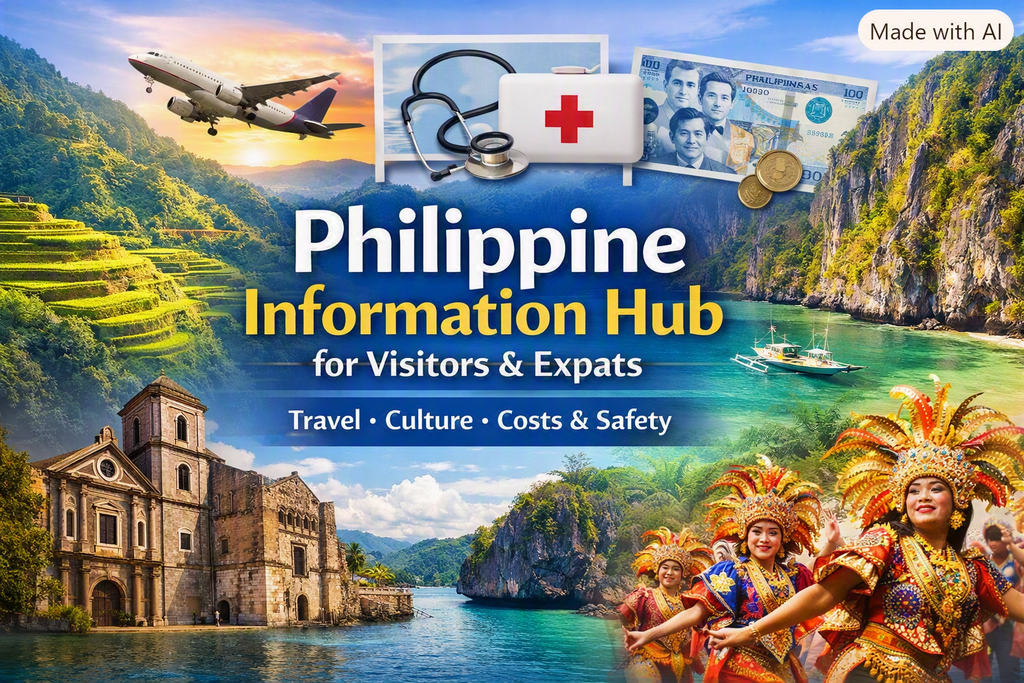
The Visitor & Expat Information Hub – Philippines is your central resource for everything you need to know before traveling to or living in the Philippines. This pillar page organizes all essential guides into a clear, interconnected structure covering expat essentials, travel logistics, cultural orientation, regional differences, weather, cost of living, and quick-reference information.
This page serves as the parent pillar for all related subpages, strengthening topical authority and improving navigation across your entire information ecosystem.
Core Expat & Visitor Essentials
These guides provide the foundational knowledge every visitor or expat needs. They cover legal requirements, daily living, safety, healthcare, transportation, and financial basics.
- Expat Essentials — Key requirements, lifestyle basics, and first steps for new expats.
- Travel Essentials — Entry requirements, packing lists, connectivity, and travel preparation.
- Visa & Immigration Guide — Visa types, extensions, immigration rules, and entry procedures.
- Healthcare & Hospitals Guide — Hospital systems, clinics, insurance, and emergency care.
- Safety & Security Guide — Crime realities, safe areas, scams, and emergency protocols.
- Transportation & Getting Around — Jeepneys, buses, ferries, airports, and provincial travel.
- Money, Banking & ATMs — Currency, ATMs, banking options, remittances, and digital payments.
- Housing & Rentals Guide — Rental markets, lease types, utilities, and neighborhood selection.
Regional Guides & Weather
These guides help visitors and expats understand climate patterns, regional differences, and seasonal realities across Luzon, Visayas, and Mindanao.
- Philippine Weather & Climate Guide — Seasons, rainfall, typhoons, heat index, and regional climate zones.
- Regional Weather Comparison Guide — Side-by-side comparisons of weather patterns across major regions.
Culture & Social Norms
Understanding Filipino culture is essential for respectful travel and successful long-term living. These guides cover etiquette, traditions, festivals, and language basics.
- Regional Cultural Differences — Cultural variations across Luzon, Visayas, and Mindanao.
- Traditional Clothing & Arts — Indigenous textiles, crafts, and regional art forms.
- Cultural Etiquette & Social Norms — Manners, greetings, social expectations, and Filipino values.
- Public Holidays & Festivals — National holidays, regional fiestas, and cultural celebrations.
- Language Basics & Useful Phrases — Essential Filipino and regional phrases for daily use.
Quick Reference & Practical Information
These guides provide fast-access information for planning, budgeting, emergencies, and understanding regional realities.
- Quick Reference Guides — Fast facts, cheat sheets, and essential summaries.
- Emergency Numbers — National and regional emergency contacts.
- Regional Summaries Guide — Overview of each region’s culture, economy, and travel highlights.
- Cost Snapshot Guide — Quick cost comparisons for food, transport, housing, and daily expenses.
- Travel Time Realities — Realistic travel times, traffic patterns, and inter-island movement.
- Cost of Living Breakdown — Detailed cost categories for expats and long-term visitors.
How to Use This Hub
This pillar page is designed to function as the central gateway to all visitor and expat information on TuristasAPilipinas.com. Each section links to deeper subpages, allowing users to explore topics in detail while maintaining a clear, organized structure.
Use this Hub to:
- Prepare for travel or relocation
- Understand cultural and regional differences
- Navigate daily life in the Philippines
- Access quick-reference information
- Compare costs and plan budgets
- Learn about weather, safety, and transportation
Recommended Related Guides
These additional guides complement the main Hub and enhance user navigation.
- SIM Registration Guide
- Airport Usage Guide
- Provincial Transport Guide
- Barangay & LGU Basics