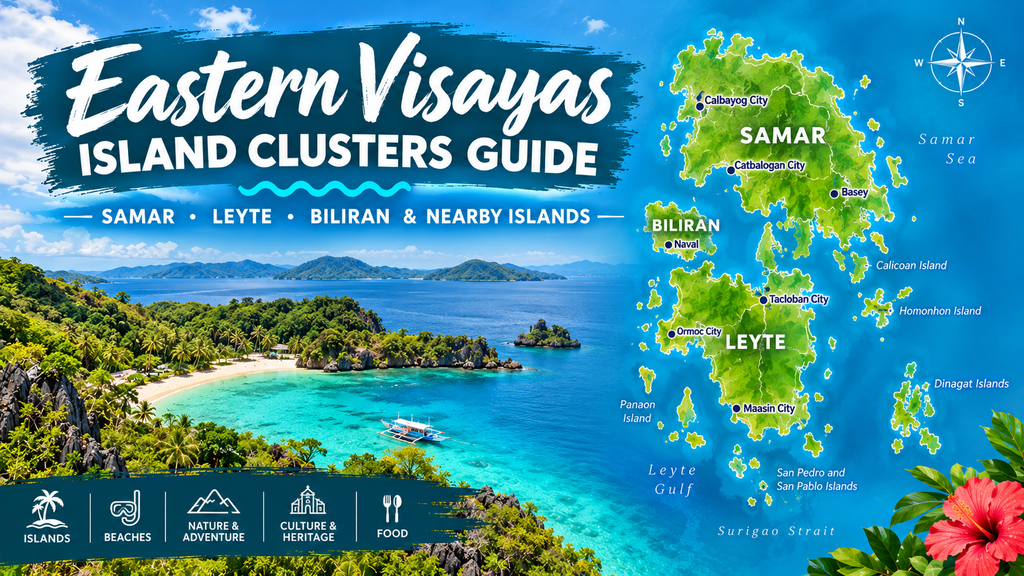
Introduction to the Eastern Visayas Island Clusters
Eastern Visayas occupies the eastern portion of the Visayas Island Group and serves as the Philippine gateway to the Pacific Ocean. The region is composed of several major islands centered around the Leyte and Samar island groups, offering a combination of historic sites, surfing destinations, remote beaches, protected natural landscapes, waterfalls, caves, and marine ecosystems.
Eastern Visayas plays an important role in Philippine history, transportation, agriculture, and regional development. The region includes the provinces of Biliran, Eastern Samar, Leyte, Northern Samar, Samar, and Southern Leyte.
Visitors exploring Eastern Visayas can experience World War II landmarks, island-hopping adventures, whale shark encounters, surf breaks, mountain landscapes, cave systems, and some of the country’s most authentic and less-crowded destinations.
Quick Facts About Eastern Visayas
| Feature | Information |
|---|---|
| Island Group | Visayas |
| Administrative Region | Eastern Visayas (Region VIII) |
| Major Islands | Leyte, Samar, Biliran |
| Largest City | Tacloban City |
| Most Famous Destination | Kalanggaman Island |
| Primary Airports | Tacloban, Catarman, Calbayog |
| Known For | History, Surfing, Caves, Waterfalls, Eco-Tourism |
Eastern Visayas Island Clusters
Eastern Visayas can be explored through two primary island clusters that serve as the region’s geographic, cultural, and travel hubs.
Leyte Island Cluster
The Leyte Island Cluster includes Leyte, Southern Leyte, and Biliran. This island group combines significant historical landmarks, beautiful coastlines, marine biodiversity, island escapes, waterfalls, and outdoor adventures. The cluster is also home to some of the Philippines’ most important World War II sites and growing eco-tourism destinations.
Highlights of Leyte Island
- Kalanggaman Island
- MacArthur Landing Memorial National Park
- Sogod Bay
- Limasawa Island
- Biliran Waterfalls
- Ormoc City
Explore
- Leyte Island Cluster Guide →
Samar Island Cluster
The Samar Island Cluster includes Samar, Northern Samar, and Eastern Samar. Known for its rugged landscapes, extensive cave systems, surfing beaches, waterfalls, and protected forests, Samar offers some of the Philippines’ most impressive natural attractions. Its relatively undeveloped tourism sector provides visitors with a more adventurous and off-the-beaten-path travel experience.
Highlights of Samar Island
- Sohoton Cave and Natural Bridge Park
- Langun-Gobingob Cave System
- Biri Rock Formations
- Calicoan Island
- Guiuan
- Northern Samar Beaches
Explore
- Samar Island Cluster Guide →
Geography of Eastern Visayas
Eastern Visayas occupies the eastern edge of the Visayas and faces the Pacific Ocean. Its islands are separated by straits, bays, and seas that support transportation, fishing, tourism, and trade throughout the region.
Surrounding Waters
- Philippine Sea
- Samar Sea
- Leyte Gulf
- San Juanico Strait
- Camotes Sea
These waterways have historically connected Eastern Visayas to neighboring regions while supporting the livelihoods of coastal communities across the islands.
Provinces of Eastern Visayas
The region consists of six provinces:
Biliran
Known for waterfalls, hot springs, mountains, and island-hopping opportunities.
Eastern Samar
Home to surfing destinations, dramatic coastlines, and Pacific-facing beaches.
Leyte
The region’s economic and transportation center, famous for its historical significance and urban hubs.
Northern Samar
Known for scenic coastlines, rock formations, caves, and emerging eco-tourism attractions.
Samar
The largest province in the region, featuring forests, waterfalls, cave systems, and adventure tourism.
Southern Leyte
Recognized for diving, marine sanctuaries, whale shark encounters, and coastal landscapes.
Culture and Heritage
Eastern Visayas possesses a rich cultural heritage shaped by indigenous traditions, Spanish colonial influence, maritime trade, and historical events.
The region played a pivotal role in Philippine and world history, particularly during World War II, when General Douglas MacArthur returned to the Philippines through Leyte.
The region hosts numerous festivals and cultural celebrations throughout the year, including:
- Pintados-Kasadyaan Festival
- Sangyaw Festival
- Buyogan Festival
- Manaragat Festival
Historic churches, cultural landmarks, traditional communities, and heritage sites can be found across the islands.
Transportation Across Eastern Visayas
Travelers can reach Eastern Visayas through several transportation gateways connecting the region with Luzon, the central Visayas, and Mindanao.
Major Airports
- Daniel Z. Romualdez Airport (Tacloban)
- Calbayog Airport
- Catarman Airport
- Borongan Airport
Ferry Connections
Eastern Visayas is connected by ferry routes linking:
- Luzon
- Central Visayas
- Mindanao
Roll-on/Roll-off (RORO) routes make inter-island travel relatively straightforward throughout the region.
Why Visit Eastern Visayas?
Eastern Visayas appeals to travelers seeking authentic experiences, outdoor adventures, and lesser-known destinations.
The region offers:
- Historic landmarks
- Surfing destinations
- Cave systems
- Waterfalls
- Island-hopping adventures
- Marine biodiversity
- Eco-tourism opportunities
Visitors can explore renowned attractions such as Kalanggaman Island and Sohoton Cave while discovering remote coastal communities and natural landscapes that remain largely untouched by mass tourism.
Where to Stay in Eastern Visayas
Accommodation options range from beachfront resorts and dive lodges to city hotels, guesthouses, and budget accommodations.
Popular accommodation areas include:
- Tacloban City
- Ormoc City
- Southern Leyte
- Biliran Island
- Guiuan
Tours and Activities
Popular experiences include:
- Kalanggaman Island tours
- Sohoton Cave excursions
- Whale shark encounters
- Surfing in Eastern Samar
- Island hopping adventures
- Diving and snorkeling
- Nature and eco-tourism excursions
Getting to Eastern Visayas
Travelers can reach the region through domestic flight connections from Manila, Cebu, Clark, and other major Philippine cities.
Major gateways include:
- Daniel Z. Romualdez Airport (Tacloban)
- Calbayog Airport
- Catarman Airport
Ferry services also connect Eastern Visayas with neighboring islands and regions throughout the Philippines.
Related Guides
Island Cluster Guides
- Visayas Island Clusters Guide
- Leyte Island Cluster Guide
- Samar Island Cluster Guide
- Western Visayas Island Clusters Guide
- Central Visayas Island Clusters Guide
Destination Guides
- Tacloban Travel Guide
- Biliran Travel Guide
- Southern Leyte Travel Guide
- Samar Travel Guide
- Eastern Samar Travel Guide
Planning Resources
- Top Destinations in the Visayas
- Best Beaches in the Philippines
- Philippine Ferry Guide
- Philippine Weather Guide
Eastern Visayas at a Glance
Eastern Visayas combines historic landmarks, untouched natural attractions, island adventures, surfing destinations, marine biodiversity, and cultural heritage into one of the Philippines’ most rewarding yet underexplored travel regions. Whether you are visiting the historic sites of Leyte, relaxing on Kalanggaman Island, exploring the cave systems of Samar, or discovering the coastal landscapes of Biliran and Southern Leyte, Eastern Visayas offers a unique perspective on the Visayas beyond the country’s most heavily visited destinations.
Explore the Leyte Island Cluster →
Explore the Samar Island Cluster →
Return to the Visayas Island Clusters Guide →