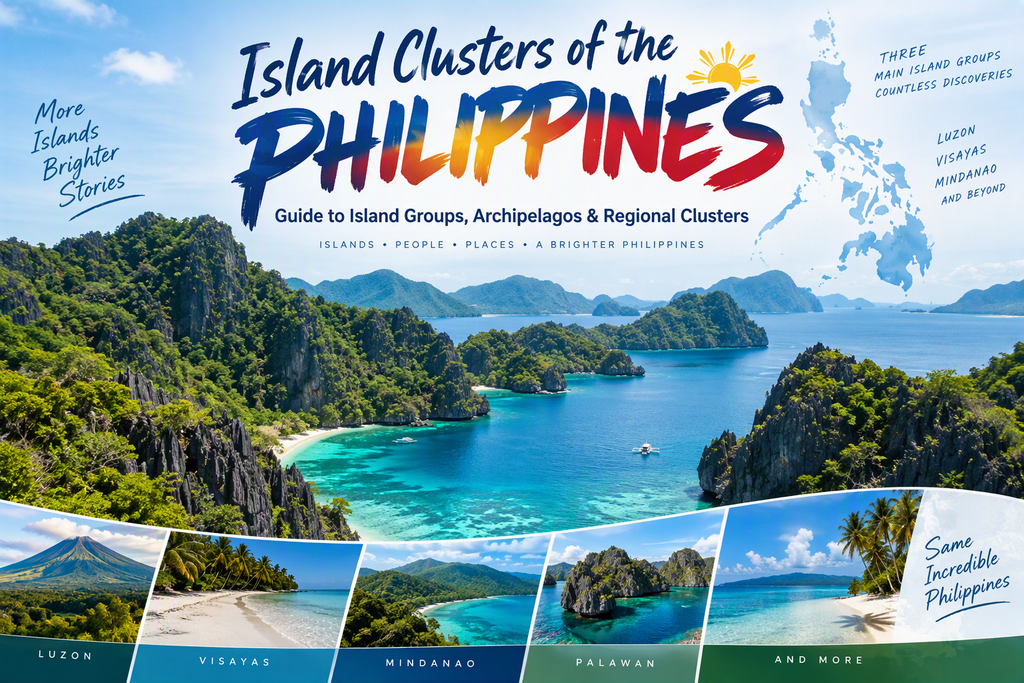
The Philippines is one of the world’s largest archipelagic nations, consisting of more than 7,600 islands spread across the western Pacific Ocean. While the country is traditionally divided into the three major island groups of Luzon, Visayas, and Mindanao, a cluster-based approach provides a more detailed way to understand how the Philippine islands are organized geographically.
Island clusters bring together neighboring islands, archipelagos, and coastal island groups that share geographic proximity, transportation connections, cultural relationships, and similar environmental characteristics. This approach offers a clearer picture of the Philippine archipelago while helping travelers, researchers, and geography enthusiasts better understand its immense diversity.
Whether you are exploring the volcanic islands of Northern Luzon, the heritage-rich islands of the Visayas, or the remote archipelagos of southern Mindanao, this guide serves as an introduction to the major island clusters of the Philippines.
What Is an Island Cluster?
An island cluster is a grouping of islands that share geographic, environmental, historical, or transportation connections. Unlike administrative regions, which are created for governance, island clusters focus on the physical geography of the archipelago.
A cluster may consist of:
- A single large island and its surrounding smaller islands
- Multiple neighboring islands connected by ferry routes
- Archipelagos with shared cultural or historical identities
- Coastal islands associated with a nearby mainland region
Using island clusters helps explain how the Philippine archipelago is organized beyond political boundaries and highlights the relationships between thousands of islands spread across the country.
Quick Facts About Philippine Island Clusters
| Category | Information |
|---|---|
| Major Island Groups Covered | Luzon, Visayas, Mindanao |
| Primary Purpose | Geographic Organization |
| Largest Cluster | Palawan Island Cluster |
| Northernmost Cluster | Northern Luzon Island Cluster |
| Southernmost Cluster | Tawi-Tawi Islands |
| Major Cluster Types | Island, Archipelago, Coastal, Maritime |
| Used For | Geography, Tourism, Transportation, Regional Planning |
| Related Classifications | Island Groups, Archipelagos, Island Provinces, Administrative Regions |
Island Clusters of the Philippines at a Glance
| Island Cluster | Island Group | Key Islands |
|---|---|---|
| Northern Luzon Island Cluster | Luzon | Batanes, Babuyan Islands |
| Eastern Luzon Island Cluster | Luzon | Catanduanes, Polillo Islands |
| Southeastern Luzon Island Cluster | Luzon | Masbate, Ticao, Burias |
| Mindoro Island Cluster | Luzon | Mindoro and nearby islands |
| Palawan Island Cluster | Luzon | Palawan, Coron, El Nido, Balabac |
| Cebu Island Cluster | Visayas | Cebu and surrounding islands |
| Bohol Island Cluster | Visayas | Bohol, Panglao |
| Panay Island Cluster | Visayas | Panay, Guimaras |
| Negros Island Cluster | Visayas | Negros and nearby islands |
| Samar Island Cluster | Visayas | Samar |
| Northern Mindanao Island Cluster | Mindanao | Camiguin and nearby islands |
| Davao Gulf Island Cluster | Mindanao | Samal and nearby islands |
| Sulu Archipelago | Mindanao | Jolo and surrounding islands |
| Tawi-Tawi Islands | Mindanao | Tawi-Tawi archipelago |
Major Island Clusters of the Philippines at a Glance
The Philippines contains dozens of significant island groups, each with distinct landscapes, cultures, ecosystems, and levels of development. The following comparison provides an overview of the country’s major island clusters.
| Island Cluster | Region | Major Islands & Archipelagos | Geographic Highlights | Best Known For |
|---|---|---|---|---|
| Northern Luzon Island Cluster | Luzon | Batanes, Babuyan Islands | Northernmost Philippine islands | Ivatan culture, dramatic coastlines |
| Eastern Luzon Island Cluster | Luzon | Catanduanes, Polillo Islands, Jomalig, Patnanungan | Pacific-facing islands | Surfing, secluded beaches |
| Southeastern Luzon Island Cluster | Luzon | Masbate, Ticao, Burias | Transition between Luzon and Visayas | Marine biodiversity |
| Bicol Peninsula Cluster | Luzon | Mainland Bicol and nearby islands | Volcanic landscapes | Mayon Volcano, whale sharks |
| CALABARZON Coastal Cluster | Luzon | Marinduque, Romblon, coastal islands | Islands near Metro Manila | Heritage towns, diving |
| Mindoro Island Cluster | Luzon | Mindoro and surrounding islands | Diverse ecosystems | Apo Reef, indigenous cultures |
| Palawan Island Cluster | Luzon | Palawan, Coron, El Nido, Balabac | Western Philippine island chain | Lagoons and island-hopping |
| Cebu Island Cluster | Visayas | Cebu and surrounding islands | Central Visayan location | Accessibility and tourism |
| Bohol Island Cluster | Visayas | Bohol, Panglao | Limestone landscapes | Chocolate Hills |
| Panay Island Cluster | Visayas | Panay, Guimaras | Cultural and economic center | Boracay and heritage sites |
| Negros Island Cluster | Visayas | Negros and nearby islands | Mountain ranges and coastlines | Diving and ecotourism |
| Leyte Island Cluster | Visayas | Leyte and surrounding islands | Historical significance | Waterfalls and wartime history |
| Samar Island Cluster | Visayas | Samar | Extensive cave and river systems | Ecotourism and surfing |
| Biliran Island | Visayas | Biliran | Volcanic island province | Waterfalls and scenery |
| Siquijor Island | Visayas | Siquijor | Compact island destination | Island culture and nature |
| Northern Mindanao Island Cluster | Mindanao | Camiguin and nearby islands | Volcanic island landscapes | Hot springs and marine sanctuaries |
| Dinagat Islands | Mindanao | Dinagat archipelago | Limestone islands and coastal habitats | Scenic island landscapes |
| Davao Gulf Island Cluster | Mindanao | Samal and nearby islands | Protected gulf environment | Resorts and beaches |
| SOCCSKSARGEN Island Cluster | Mindanao | Sarangani and nearby islands | Southern maritime region | Marine biodiversity |
| Zamboanga Peninsula Island Cluster | Mindanao | Offshore islands of western Mindanao | Historic sea routes | Cultural diversity |
| Basilan Island | Mindanao | Basilan | Gateway to the Sulu Archipelago | Yakan heritage |
| Sulu Archipelago | Mindanao | Jolo and surrounding islands | Island chain reaching toward Borneo | Maritime history |
| Tawi-Tawi Islands | Mindanao | Tawi-Tawi archipelago | Southernmost Philippine islands | Maritime culture |
Island Cluster Categories
The Philippines’ island clusters can be grouped into several broad categories based on geography and characteristics.
| Cluster Category | Examples | Key Characteristics |
|---|---|---|
| Remote Archipelago Clusters | Northern Luzon, Dinagat, Tawi-Tawi | Isolated islands, unique local cultures, low population density |
| Island-Hopping Clusters | Palawan, Eastern Luzon, SOCCSKSARGEN | Numerous neighboring islands connected by sea routes |
| Nature & Wildlife Clusters | Samar, Mindoro, Southeastern Luzon | Rich biodiversity, forests, marine ecosystems |
| Cultural & Heritage Clusters | Panay, Bicol Peninsula, Basilan | Strong historical and cultural identity |
| Resort & Tourism Clusters | Cebu, Bohol, Davao Gulf, Palawan | Well-developed tourism infrastructure |
The Three Traditional Island Groups
Luzon
Luzon is the largest and most populous island group in the Philippines. It contains the country’s capital region, major transportation hubs, mountain ranges, volcanic landscapes, and numerous offshore islands. Beyond the main island of Luzon, the region includes several distinct island clusters extending into the Philippine Sea, Sibuyan Sea, and West Philippine Sea.
Visayas
Located in the center of the Philippine archipelago, the Visayas serves as a bridge between Luzon and Mindanao. The region is composed of several major islands and surrounding island groups known for cultural heritage, marine biodiversity, beaches, and historic settlements.
Mindanao
Mindanao forms the southern portion of the Philippine archipelago. In addition to the mainland, the region includes numerous offshore islands, archipelagos, and maritime communities stretching toward Indonesia and Malaysia. These islands contribute significantly to the country’s cultural and environmental diversity.
Major Island Clusters of Luzon
Luzon’s island clusters extend far beyond the main island itself. They range from the windswept islands of the far north to the world-famous destinations of Palawan.
Northern Luzon Island Cluster
The Northern Luzon Island Cluster consists of the Batanes and Babuyan Islands. Located at the northern edge of the Philippines, these islands are characterized by rugged coastlines, rolling hills, strong maritime traditions, and strategic positions between Luzon and Taiwan.
Includes:
- Batanes
- Babuyan Islands
Eastern Luzon Island Cluster
The Eastern Luzon Island Cluster occupies the Pacific-facing side of the country. These islands experience direct exposure to the Philippine Sea and are known for their coastal landscapes, surfing destinations, and relatively quiet tourism development.
Includes:
- Catanduanes
- Polillo Island Group
- Jomalig Island
- Patnanungan Island
Southeastern Luzon Island Cluster
Located between Luzon and the Visayas, this cluster acts as a geographic transition zone connecting two major regions of the Philippines. The islands support agriculture, fishing communities, and emerging marine tourism activities.
Includes:
- Masbate
- Ticao Island
- Burias Island
Bicol Peninsula Cluster
The Bicol Peninsula Cluster combines mainland Bicol with its nearby coastal islands. The region is dominated by volcanic landscapes and extensive coastlines that connect to several offshore island destinations.
Includes:
- Albay
- Camarines Norte
- Camarines Sur
- Sorsogon
CALABARZON Coastal Cluster
The CALABARZON Coastal Cluster encompasses the islands and coastal areas surrounding the CALABARZON region. Its proximity to Metro Manila makes it one of the most accessible island regions in the country.
Includes:
- Marinduque
- Romblon
- Verde Island Passage islands
- Coastal islands of Batangas, Quezon, Cavite, and Laguna
Mindoro Island Cluster
The Mindoro Island Cluster centers on Mindoro and surrounding islands. The region contains mountain ranges, protected marine areas, indigenous cultural communities, and some of the country’s most important coral reef systems.
Palawan Island Cluster
The Palawan Island Cluster extends from northern Palawan to the southern reaches of Balabac. This long chain of islands is internationally recognized for its exceptional natural beauty, limestone karst formations, and marine biodiversity.
Central Luzon Islands
The Central Luzon Islands consist of smaller islands associated with the provinces along Luzon’s western and eastern coasts. These islands contribute to the region’s fisheries, transportation networks, and coastal ecosystems.
Major Island Clusters of the Visayas
The Visayas contains some of the most culturally significant and economically important islands in the Philippines. Its central location has historically made it a crossroads for trade, migration, and cultural exchange.
Cebu Island Cluster
The Cebu Island Cluster serves as one of the principal transportation and economic centers of the central Philippines. The cluster includes Cebu and its surrounding islands and is known for its strong regional influence and extensive connectivity.
Bohol Island Cluster
The Bohol Island Cluster combines unique geological formations, coastal landscapes, and marine environments. Bohol and Panglao serve as the cluster’s primary population and tourism centers.
Panay Island Cluster
The Panay Island Cluster is one of the Visayas’ most culturally significant regions. It includes major urban centers, heritage districts, agricultural areas, and some of the country’s most recognized tourism destinations.
Negros Island Cluster
The Negros Island Cluster is known for its mountainous terrain, agricultural production, and extensive coastal environments. Several offshore islands contribute further diversity to the region.
Leyte Island Cluster
The Leyte Island Cluster occupies a strategic position between the Visayas and Mindanao. Its islands feature important historical sites, mountain landscapes, and coastal communities.
Samar Island Cluster
The Samar Island Cluster contains some of the Philippines’ largest remaining forest ecosystems, extensive cave networks, and significant river systems, making it one of the country’s most important ecological regions.
Guimaras Island
Situated between Panay and Negros, Guimaras is an island province known for agriculture, coastal resources, and its strategic location within the Visayas.
Biliran Island
Biliran is a compact island province known for volcanic landscapes, waterfalls, and strong connections to neighboring Leyte.
Siquijor Island
Siquijor remains one of the most distinctive islands in the Visayas, combining natural attractions with a unique cultural identity and long-standing local traditions.
Major Island Clusters of Mindanao
Mindanao is surrounded by numerous island groups, archipelagos, and offshore destinations that collectively form one of the most diverse maritime regions in the Philippines. These islands are characterized by rich marine ecosystems, strong cultural identities, volcanic landscapes, and centuries of seafaring history.
Northern Mindanao Island Cluster
The Northern Mindanao Island Cluster serves as an important gateway between the Visayas and Mindanao. Centered around Camiguin and nearby offshore islands, the cluster is known for volcanic landscapes, waterfalls, hot springs, and protected marine areas.
Dinagat Islands
Located off the northeastern coast of Mindanao, the Dinagat Islands are characterized by limestone formations, coastal forests, scenic coves, and relatively undeveloped landscapes.
Davao Gulf Island Cluster
The Davao Gulf Island Cluster includes Samal Island and neighboring islands situated within one of the country’s most important coastal waterways. The cluster supports tourism, transportation, and marine ecosystems.
SOCCSKSARGEN Island Cluster
The SOCCSKSARGEN Island Cluster includes Sarangani and numerous smaller islands scattered along Mindanao’s southern waters. The cluster is known for fishing communities, coastal landscapes, and diverse marine environments.
Zamboanga Peninsula Island Cluster
The Zamboanga Peninsula Island Cluster includes islands located off western Mindanao. Historically linked to maritime trade routes, the region reflects centuries of cultural exchange and seafaring activity.
Basilan Island
Basilan serves as an important geographic and cultural link between mainland Mindanao and the Sulu Archipelago. The island is home to diverse communities and significant forest and coastal environments.
Sulu Archipelago
Extending toward Borneo, the Sulu Archipelago forms one of the Philippines’ most historically significant maritime regions. The archipelago has long played an important role in trade, navigation, and cultural exchange throughout Southeast Asia.
Tawi-Tawi Islands
The Tawi-Tawi Islands form the southernmost island cluster of the Philippines. Surrounded by rich marine ecosystems, the archipelago is known for maritime traditions, coastal communities, and strategic geographic importance.
Planning Your Island-Hopping Adventure
Exploring multiple island clusters requires understanding the challenges and opportunities presented by an archipelagic nation.
Before visiting several island groups, travelers should consider:
- Domestic flight availability
- Inter-island ferry routes
- Seasonal weather conditions
- Accommodation availability
- Protected marine areas
- Local transportation options
- Regional accessibility
Many island clusters are easily reached from major cities, while others require multiple transportation connections and additional travel planning.
Explore More Philippine Travel Guides
Continue exploring the Philippine archipelago through these related resources:
- Luzon Travel Guide
- Visayas Travel Guide
- Mindanao Travel Guide
- Island Travel Guides
- Luzon Island Group Budget Travel Guide
- Beaches of the Philippines
- National Parks of the Philippines
- Marine Protected Areas of the Philippines
- UNESCO World Heritage Sites in the Philippines
Conclusion
The Philippines’ thousands of islands create one of the world’s most complex and fascinating archipelagos. While the traditional divisions of Luzon, Visayas, and Mindanao remain useful, viewing the country through island clusters provides a deeper understanding of its geography, cultures, transportation networks, and natural environments.
From the windswept islands of Batanes to the remote island chains of Tawi-Tawi, each cluster contributes a unique chapter to the story of the Philippine archipelago. Understanding these connections offers a clearer picture of how the islands fit together and provides the perfect starting point for exploring the diverse island groups that make up the Philippines