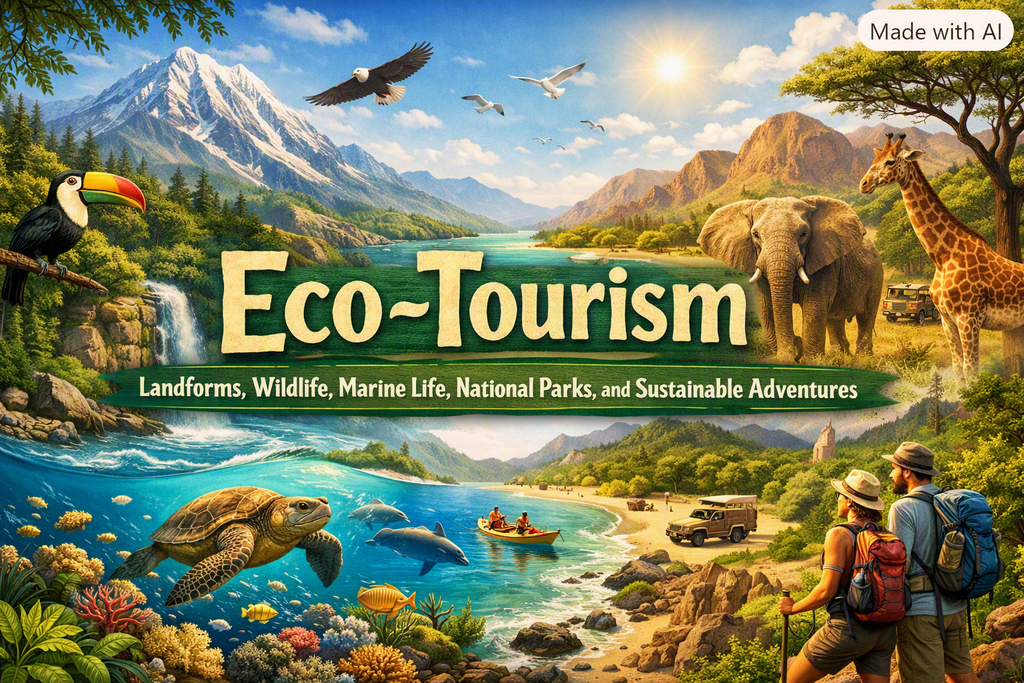
Explore the Philippines’ eco‑tourism destinations—from waterfalls, caves, beaches, and mountain ranges to wildlife sanctuaries, marine biodiversity hotspots, national parks, hiking trails, caving sites, and eco‑friendly diving adventures.
Eco‑tourism in the Philippines is more than sightseeing. It is a commitment to conservation, community empowerment, and low‑impact travel across one of the world’s most biodiverse archipelagos. This landing page unifies your major eco‑tourism categories—Landforms, Wildlife, Marine Life, National Parks, Biodiversity, and Eco‑Friendly Activities
Eco‑Tourism in the Philippines
Eco‑tourism in the Philippines blends natural beauty with responsible travel. With over 7,641 islands, the country offers unmatched diversity—from towering mountain ranges and volcanic landscapes to coral reefs, mangrove forests, and endemic wildlife found nowhere else on Earth.
This guide covers:
- Landforms: waterfalls, caves, beaches, lakes, mountain ranges, rivers, sandbars, volcanoes, wetlands
- Wildlife Destinations: sanctuaries, conservation areas, endemic species habitats
- Marine Life Destinations: coral reefs, MPAs, diving sites
- National Parks: protected areas across Luzon, Visayas, and Mindanao
- Biodiversity: wildlife, marine ecosystems, forest and wetland ecology
- Eco‑Tourism Activities: hiking, eco‑friendly diving, caving, birdwatching, river tours
Philippine Landforms for Eco‑Tourism
The Philippines’ landforms are the backbone of its eco‑tourism identity. Each formation supports unique ecosystems and community‑based tourism programs.


by storage.googleeapis.com by fity.club
Waterfalls
Waterfalls are among the most visited eco‑tourism sites due to their accessibility and natural beauty. Many are community‑managed, ensuring sustainable visitor flow.
- Waterfalls Guide
- Watershed‑protected falls
- Multi‑tiered waterfalls
- Forest‑surrounded cascades
Caves
Caving is a specialized eco‑tourism activity requiring trained guides and strict conservation rules.
- Caves Guide
Highlight cave types:
- Limestone caves
- Underground rivers
- Bat sanctuaries
- Archaeological caves
Beaches and Sandbars
The Philippines’ beaches and sandbars are ecological treasures shaped by tides, coral systems, and coastal vegetation.
- Luzon Beaches Guide
- Visayas Beaches Guide
- Mindanao Beaches Guide
- Sandbars Guide
Lakes & Rivers
Freshwater ecosystems offer boating, rafting, fishing, and nature exploration.
- Lakes Guide
- Rivers Guide
Mountain Ranges
Mountain ranges offer trekking, birdwatching, and cultural immersion with indigenous communities.
- Mountain Ranges Guide
Volcanoes
Volcanoes shape the Philippines’ geology and support geothermal ecosystems.
- Volcanoes Guide
Wetlands
Wetlands are crucial for migratory birds and freshwater biodiversity.
- Wetlands Guide
Wildlife Destinations and Biodiversity
Related Guides
- Philippine Wildlife & Biodiversity Guide -– Endemic Species, Protected Areas & Ethical Tourism
The Philippines is a biodiversity hotspot with thousands of endemic species. Eco‑tourism plays a vital role in protecting wildlife through education and community‑based conservation.


by neprimateconservancy.org by rappler.com by wallpaperaccess.com
Endemic Wildlife
Key species include:
- Philippine Eagle
- Tamaraw
- Philippine Tarsier
- Visayan Warty Pig
- Palawan Bearcat
Related Guides
- Wildlife Guide
Wildlife Sanctuaries
Sanctuaries protect endangered species and offer controlled eco‑tourism experiences.
Examples:
- Eagle Centers
- Tamaraw Conservation Areas
- Tarsier Sanctuaries
- Wetland bird sanctuaries
Biodiversity Corridors
These areas connect forests, mountains, and wetlands to support wildlife movement.
- Biodiversity Guide
Marine Life Destinations and Ocean Biodiversity
The Philippines sits at the center of the Coral Triangle, home to 76 percent of the world’s coral species. Marine eco‑tourism must be practiced responsibly to protect fragile ecosystems.


by flickrriver.com by ar.inspiredpencil.com by nationalgeographic.com
Coral Reefs
Top coral reef destinations include:
- Apo Reef
- Tubbataha Reefs Natural Park
- Balicasag Island
- Moalboal Sardine Run
Relatable Guides
Marine Protected Areas (MPAs)
MPAs regulate fishing, diving, and tourism to preserve marine biodiversity.
Mangrove Forests
Mangroves serve as nurseries for fish and protect coastlines from erosion.
Seagrass Meadows
Vital feeding grounds for sea turtles and dugongs.
National Parks and Protected Areas
National parks are the heart of Philippine eco‑tourism. They safeguard ecosystems while offering regulated tourism activities.


by thelavalygeologists.blogspot.com by traveloka.com
Top National Parks
- National Parks Guide
Examples:
- Mount Apo Natural Park
- Bataan Natural Park
- Mts. Iglit‑Baco National Park
- Tubbataha Reefs Natural Park
- Northern Sierra Madre Natural Park
Forest Reserves
These areas protect dipterocarp forests, wildlife corridors, and watershed systems.
Ramsar Wetlands
Internationally recognized wetlands for birdwatching and conservation.
Eco‑Tourism Activities in the Philippines
Eco‑tourism is not just about destinations—it is about responsible activities that minimize environmental impact and support local communities.


by storage.googleapis.com by traveloka.com
Hiking and Trekking
Hiking is one of the most popular eco‑tourism activities.
Key features:
- Community‑guided treks
- Indigenous cultural immersion
- Forest and mountain biodiversity
- Watershed protection zones
- Eco‑Hiking Guide
Eco‑Friendly Diving
Eco‑friendly diving promotes reef‑safe practices:
- No touching corals
- No feeding fish
- Reef‑safe sunscreen
- Buoyancy control training
- Eco‑Friendly Diving Guide
Caving and Spelunking
Caving requires specialized training and strict conservation rules.
Key principles:
- No artifact removal
- No disturbing bat colonies
- Controlled visitor numbers
- Certified local guides
- Eco‑Caving Guide
Birdwatching
Wetlands, forests, and mountains offer prime birdwatching opportunities.
River and Mangrove Tours
Low‑impact river cruises and mangrove kayaking support conservation and local livelihoods.
Why Eco‑Tourism Matters
Eco‑tourism protects natural resources while empowering communities. It ensures:
- Conservation of endangered species
- Sustainable livelihoods for locals
- Preservation of cultural heritage
- Protection of fragile ecosystems
- Responsible visitor behavior
Related Guides
- Landforms
- Waterfalls
- Caves
- Beaches
- Mountain Ranges
- Sandbars
- Volcanoes
- Wetlands
- Wildlife
- Philippine Marine Life Guide
- National Parks
- Biodiversity
- Eco‑Friendly Diving
- Eco‑Hiking
- Eco‑Caving
- 15 Best Sustainable Destinations
Conclusion
Eco‑tourism in the Philippines is a powerful tool for conservation, cultural preservation, and sustainable development. By exploring landforms, wildlife habitats, marine ecosystems, and national parks responsibly, travelers help protect the country’s natural heritage for future generations.
This landing page serves as your master hub—ready to link out to your detailed guides and strengthen your SEO architecture across TuristasAPilipinas.com.