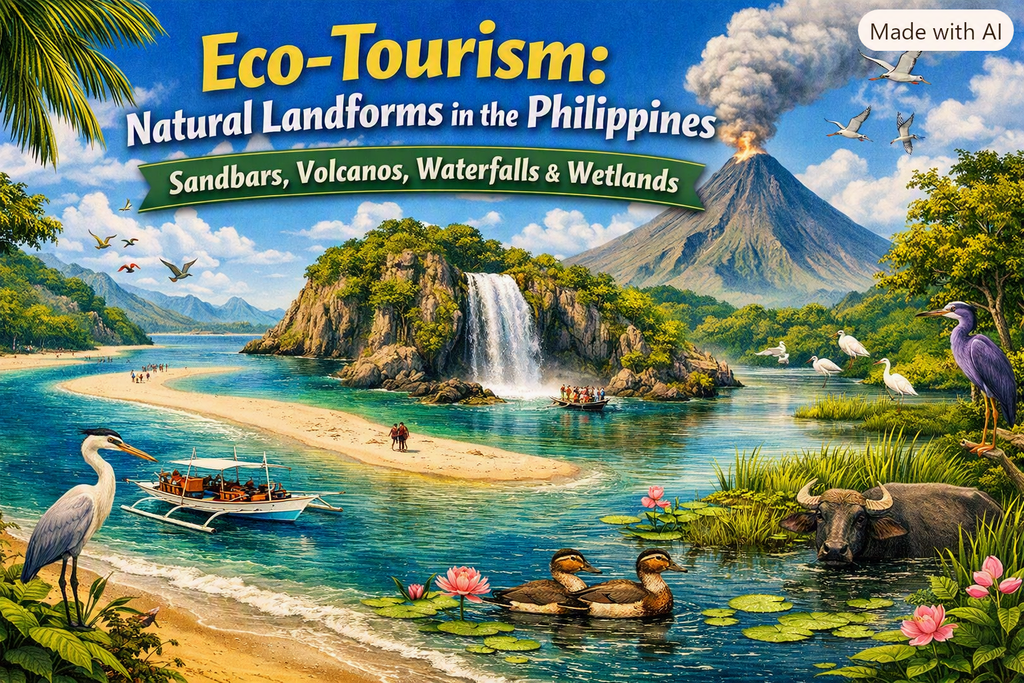
Natural Landforms in the Philippines Part 1 – Complete Travel Guide
Natural Landforms in the Philippines Part 2 – Complete Travel Guide
The Philippines is one of the world’s most geographically diverse nations, shaped by tectonic activity, tropical climate, and centuries of natural evolution. This guide covers every major landform category, with detailed insights and top destinations.
- Note: Due to the size of this Topic, it had to be broken into to two (2) Landing pages.
Overview of Philippine Natural Landforms
- Over 7,641 islands
- Part of the Pacific Ring of Fire
- Home to UNESCO natural wonders
- Rich biodiversity across marine, freshwater, and forest ecosystems
Landform Categories
- Sandbars & Sandbar Islands
- Volcanoes
- Waterfalls
- Wetlands
Other Landforms Categories: See Natural Landforms in the Philippines Part 1
- Beaches
- Caves
- Lakes & Rivers
- Mountain Ranges
Stay Updated
We regularly add new informational posts to help travelers discover more of the Philippines. Check back often for fresh guides, tips, and insights.
Sandbars & Sandbar Islands in the Philippines
Sandbars are naturally formed stretches of white sand created by tidal currents and shifting sediments. Many appear only during low tide, creating temporary islands surrounded by shallow turquoise waters. They are among the most photographed natural landforms in the Philippines and are essential highlights in island‑hopping itineraries.
Top Sandbars & Sandbar Islands
- Kalanggaman Sandbar (Leyte)
A long, symmetrical sandbar famous for its crystal‑clear waters and postcard‑perfect scenery.
2. Manjuyod Sandbar (Negros Oriental)
Known as the “Maldives of the Philippines”, featuring stilt cottages and dolphin‑watching tours.
3. White Island (Camiguin)
A C‑shaped sandbar with panoramic views of Mt. Hibok‑Hibok.
4. Sumilon Sandbar (Cebu)
A shifting sandbar whose shape changes with the tides.
5. Mansalangan Sandbar (Balabac, Palawan)
A remote, pristine sandbar ideal for off‑grid travel and drone photography.
6. Vanishing Island (Samal, Davao Region)
A seasonal sandbar that disappears during high tide.
7. Sacol Island (Antique, Western Visayas Region)
A sandbar island off the coast of Tibiao, great for extreme kiteboarding and windsurfing.
8. Balabac Island Group (Palawan, MIMAROPA Region)
Lots of sandbars on this island group
Best Time to Visit Sandbars in the Philippines
Dry Season (December–May) — Ideal
- Clear skies and calm seas
- Sandbars fully visible during low tide
- Best for drone shots, swimming, and island hopping
- Peak months: February–April
Shoulder Months (June & November) — Good but Variable
- Some rain but still manageable
- Sandbars may shrink or disappear during high tide
- Fewer tourists
Rainy/Typhoon Season (July–October) — Least Ideal
- Rough seas and unpredictable weather
- Ferry cancellations possible
- Sandbars may not appear at all during high tide
Travel Tips for Visiting Sandbars
- Check tide schedules Sandbars are best during low tide. High tide can completely submerge them.
- Start early Morning visits offer calmer seas, fewer crowds, and better lighting for photography.
- Bring reef‑safe sunscreen Sandbars have no shade; UV exposure is high.
- Wear aqua shoes Protect your feet from sharp shells, corals, or sea urchins.
- Secure permits or book official tours Some sandbars (Kalanggaman, Sumilon) require entrance fees or regulated access.
- Bring cash Remote sandbars often have no digital payment options.
- Respect marine life Avoid stepping on corals or disturbing wildlife in shallow waters.
- Stay hydrated Sandbars can get extremely hot due to lack of vegetation.
Volcanoes in the Philippines | Active & Dormant Volcano Travel Guide
Explore the Philippines’ iconic volcanoes including Mayon, Taal, Kanlaon, and Apo. Includes trekking routes, safety tips, and geological insights.
Volcanoes in the Philippines – Full Guide
The Philippines’ volcanic landscape is shaped by the Pacific Ring of Fire, creating dramatic peaks and fertile lands.
Top Volcanoes
- Mayon Volcano (Albay)
- Taal Volcano (Batangas)
- Mount Apo (Davao)
- Kanlaon Volcano (Negros)
Best Time to Visit
Year-round, depending on PHIVOLCS advisories.
Travel Tips
- Check volcanic activity alerts
- Hire certified guides
- Bring proper trekking gear
Best Waterfalls in the Philippines | Complete Travel & Adventure Guide
Discover the Philippines’ most stunning waterfalls including Tinuy-an, Kawasan, Aliwagwag, Limunsudan, and Asik-Asik. Includes travel tips, best seasons, and top destinations.
Waterfalls in the Philippines – Full Guide
Waterfalls are among the Philippines’ most dramatic natural features, ranging from towering multi-tier cascades to hidden jungle falls.
Top Waterfalls
- Tinuy-an Falls (Surigao del Sur)
- Kawasan Falls (Cebu)
- Aliwagwag Falls (Davao Oriental)
- Limunsudan Falls (Lanao del Norte)
- Asik-Asik Falls (Cotabato)
Best Time to Visit
Dry season (Nov–May) offers clearer waters and safer trails.
Travel Tips
- Wear water shoes
- Hire local guides
- Bring waterproof bags
- Respect protected areas
Philippine Wetlands | Mangroves, Marshes & Bird Sanctuaries
Learn about the Philippines’ wetlands including Agusan Marsh, Candaba Wetlands, and Olango Island Wildlife Sanctuary. Includes eco-tourism tips and conservation insights.
Wetlands in the Philippines – Full Guide
Wetlands are essential ecosystems supporting migratory birds, mangroves, and rare wildlife.
Top Wetlands
- Agusan Marsh (Mindanao)
- Rice Terraces in the Philippines
- Banaue Rice Terraces
- Candaba Wetlands (Pampanga)
- Olango Island Wildlife Sanctuary (Cebu)
Best Time to Visit
Bird migration peaks from November to February.
Travel Tips
- Bring binoculars
- Follow conservation rules
- Avoid disturbing wildlife
Final Thoughts
The Philippines is one of the most geographically diverse countries on Earth, and this Complete Guide to Natural Landforms brings together every major attraction—beaches, caves, lakes, mountain ranges, rivers, sandbars, volcanoes, waterfalls, and wetlands—into one unified resource. With over 7,641 islands, the country’s landscapes are shaped by tectonic forces, tropical climate, and centuries of natural evolution, resulting in destinations that are both visually stunning and culturally meaningful.
For travelers, researchers, and tourism planners, understanding these landforms isn’t just about sightseeing. It’s about appreciating how each feature supports biodiversity, local livelihoods, and sustainable tourism. Whether you’re exploring sandbars like Kalanggaman, trekking mountain ranges like the Cordilleras, diving into caves in Palawan, or marveling at volcanoes like Mayon, the Philippines offers endless opportunities for discovery.