Learn about Philippine currency, Philippine Peso banknotes and coins, exchange rates, ATMs, credit cards, tipping, and money-saving tips for travelers visiting the Philippines.
Currency of the Philippines: Understanding the Philippine Peso (PHP)
Understanding Philippine currency is one of the most important parts of planning a trip to the Philippines. Whether you are visiting for a short vacation, a long-term stay, retirement, or business, knowing how Philippine money works will help you budget properly and avoid surprises when you arrive.
The official currency of the Philippines is the Philippine Peso, commonly called the Piso by locals. The currency is represented by the symbol ₱ and the currency code PHP. Philippine currency is issued and regulated by the Bangko Sentral ng Pilipinas (BSP), the country’s central bank.
From paying for jeepney rides and street food to booking hotels and domestic flights, the Philippine Peso is used for virtually all transactions throughout the country. While credit cards and digital payments are becoming more common, cash remains important, especially in smaller towns, islands, and rural destinations.
Quick Facts About Philippine Currency
| Item | Details |
|---|---|
| Official Currency | Philippine Peso |
| Currency Code | PHP |
| Currency Symbol | ₱ |
| Local Name | Piso |
| Subdivision | 100 Centavos |
| Central Bank | Bangko Sentral ng Pilipinas |
| Common Payment Methods | Cash, Credit Cards, Digital Wallets |
| Popular Mobile Wallets | GCash, Maya |
| Major Cards Accepted | Visa, Mastercard |
What Is the Philippine Peso?
The Philippine Peso is the national currency of the Republic of the Philippines. The word “peso” originated during Spanish colonial rule and remains the official English-language name of the currency. Filipinos commonly refer to it as the “piso.”
One Philippine Peso is divided into 100 centavos. Although centavo coins remain legal tender, most everyday transactions are conducted using peso denominations.
Today, the Philippine economy uses a modern currency system that includes both traditional paper banknotes and newer polymer notes designed to improve durability and security.
Philippine Peso Banknotes
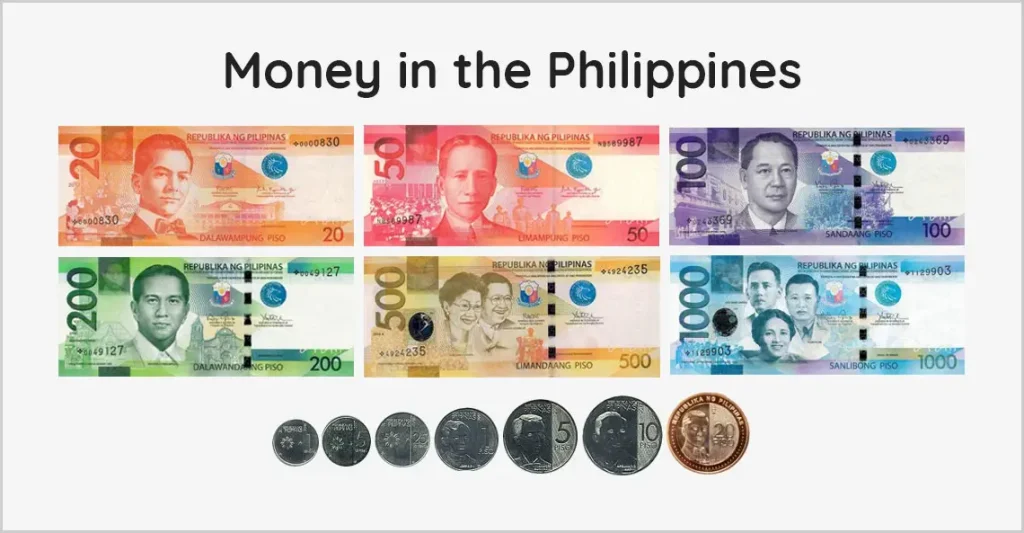
Modern Philippine banknotes currently in circulation.
The Philippine Peso is available in several banknote denominations. Each features important historical figures, national symbols, and cultural themes.
₱20 Note
The ₱20 denomination is often used for:
- Jeepney and tricycle fares
- Street food purchases
- Convenience store purchases
- Small daily expenses
The BSP has introduced a polymer version of the ₱20 note designed to last longer than traditional paper money.
₱50 Note
The ₱50 bill is common for everyday spending and small purchases.
Typical uses include:
- Snacks and drinks
- Fast-food meals
- Transportation costs
- Convenience store shopping
₱100 Note
One of the most frequently used banknotes in the Philippines.
Typical uses include:
- Restaurant meals
- Taxi fares
- Grocery purchases
- Attraction admission fees
₱200 Note
Although less common than other denominations, the ₱200 note remains in circulation and is accepted nationwide.
₱500 Note
The ₱500 bill is commonly used for:
- Hotel payments
- Tours and activities
- Restaurant bills
- Shopping purchases
₱1,000 Note
The ₱1,000 bill is the highest standard denomination currently in circulation.
It is commonly obtained through ATM withdrawals and used for:
- Hotel stays
- Resort payments
- Large purchases
- Tour packages
Travel Tip: Small businesses, market vendors, and transportation operators may have difficulty making change for ₱1,000 bills. Carrying smaller denominations can make daily transactions easier.
Philippine Coins
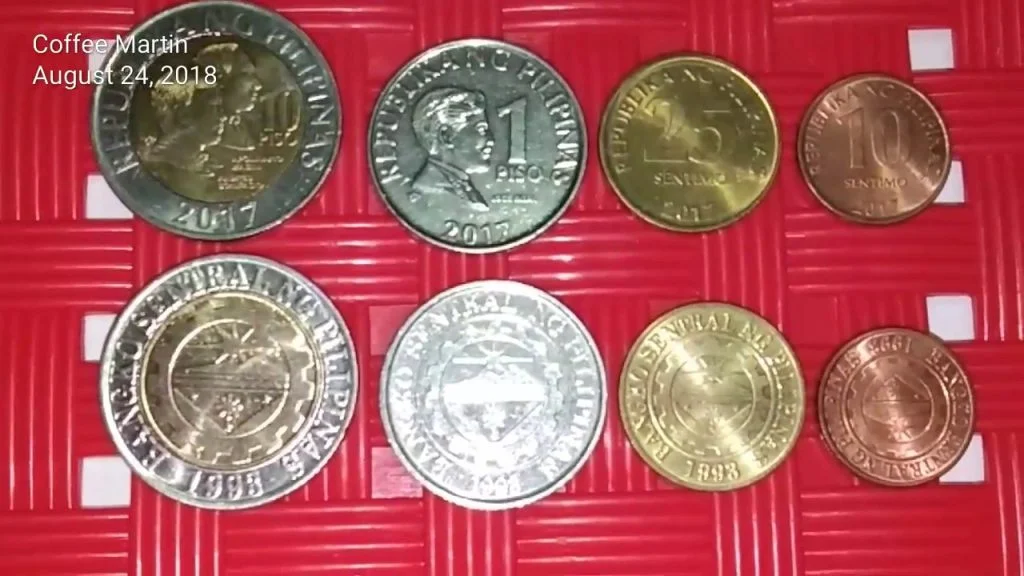
Philippine peso and centavo coins commonly found in circulation.
Coins remain an important part of daily life in the Philippines and are frequently used for transportation fares and exact-change purchases.
Current Coin Denominations
| Coin | Common Usage |
|---|---|
| 1 Centavo | Rarely used |
| 5 Centavos | Limited circulation |
| 25 Centavos | Occasional use |
| ₱1 | Everyday purchases |
| ₱5 | Transportation and retail purchases |
| ₱10 | Common change denomination |
| ₱20 | Increasingly common denomination |
The ₱20 coin has become increasingly popular and has gradually replaced many older ₱20 paper notes in circulation.
Understanding Philippine Exchange Rates
The value of the Philippine Peso changes daily against international currencies. Exchange rates are influenced by global financial markets, economic conditions, and currency demand.
Travelers should always check current exchange rates before a trip. However, understanding approximate values can help with budgeting and estimating travel costs while in the Philippines.
Quick Peso Conversion Guide
Using a sample exchange rate of ₱57 = US$1. Actual rates fluctuate daily.
| Philippine Peso | Approximate USD Value |
|---|---|
| ₱20 | $0.35 |
| ₱50 | $0.88 |
| ₱100 | $1.75 |
| ₱200 | $3.51 |
| ₱500 | $8.77 |
| ₱1,000 | $17.54 |
| ₱5,000 | $87.72 |
| ₱10,000 | $175.44 |
Use these figures only as rough estimates. Currency exchange rates change regularly and may vary depending on your bank or exchange provider.
How Much Does Money Go in the Philippines?
Many visitors are surprised by how affordable the Philippines can be compared to North America, Europe, Australia, and other developed destinations.
Examples of common travel expenses:
| Item | Typical Cost |
|---|---|
| Bottled Water | ₱20–₱50 |
| Fast Food Meal | ₱150–₱300 |
| Restaurant Meal | ₱250–₱800 |
| Hotel Room | ₱1,500–₱6,000+ |
| Tricycle Ride | ₱20–₱150 |
| Taxi Ride | ₱150–₱500 |
| Domestic Flight | ₱1,500–₱8,000+ |
Prices vary considerably depending on location, season, and travel style.
Where to Exchange Money
Before You Travel
Many visitors exchange a small amount of money before arriving in the Philippines for immediate transportation or airport expenses.
Advantages:
- Immediate access to local currency
- Useful upon arrival
Disadvantages:
- Often less favorable exchange rates
Airport Currency Exchange
Major international airports offer currency exchange services, including:
- Ninoy Aquino International Airport (NAIA)
- Mactan-Cebu International Airport
- Clark International Airport
These facilities are convenient but may not always offer the best exchange rates.
Banks
Many banks provide safe and reliable exchange services.
Examples include:
- BDO
- BPI
- Metrobank
- RCBC
- LandBank
Bring valid identification when exchanging currency.
Licensed Money Changers
Licensed money changers in major cities often provide competitive exchange rates.
Popular exchange locations include:
- Manila
- Makati
- Cebu City
- Davao City
- Major shopping malls
Always compare rates before exchanging larger amounts.
Using ATMs in the Philippines
ATMs are widely available in:
- Cities
- Tourism destinations
- Airports
- Shopping malls
- Commercial districts
Major ATM networks include:
- BDO
- BPI
- Metrobank
- RCBC
- LandBank
Benefits include:
- Convenient access to cash
- Competitive exchange rates
- Broad availability
Potential drawbacks:
- Foreign ATM fees
- Withdrawal limits
- International banking fees
Many travelers find ATM withdrawals to be the easiest way to access Philippine Pesos.
Credit Cards in the Philippines
Credit cards are commonly accepted in larger:
- Hotels
- Resorts
- Shopping malls
- Restaurants
- Supermarkets
- Tourist attractions
The most widely accepted cards include:
- Visa
- Mastercard
American Express and Discover may be accepted at some establishments but are generally less common.
Always carry some cash, especially when visiting smaller communities or islands.
Mobile Payments and Digital Wallets
The Philippines has seen significant growth in digital payments.
Two of the most popular platforms are:
GCash
GCash is the country’s largest mobile wallet and is used by millions of Filipinos for:
- Shopping
- Restaurant payments
- Utility bills
- Fund transfers
Maya
Maya is another popular payment platform that supports:
- Digital payments
- Money transfers
- Online shopping
Visitors may encounter QR code payment systems at restaurants, stores, and tourist businesses.
Cash vs. Card: Which Is Better?
The best approach is usually to carry both.
Cash Is Essential For
- Public markets
- Small stores
- Rural destinations
- Island communities
- Local transportation
Cards Work Best For
- Hotels
- Resorts
- Restaurants
- Shopping malls
- Large tour operators
A combination of cash and cards provides the greatest flexibility while traveling in the Philippines.
Tipping in the Philippines
Tipping is appreciated but generally not mandatory.
Typical Tipping Guidelines
| Service | Suggested Tip |
|---|---|
| Restaurant | 5%–10% |
| Bellhop | ₱20–₱50 |
| Hotel Housekeeping | ₱50–₱100 |
| Tour Guide | ₱100–₱500 |
| Drivers | Small tip or fare rounding |
Always check whether a service charge has already been included in your bill.
Common Money Scams and Mistakes
Most visitors experience no problems, but it is wise to remain cautious.
Count Your Change
Verify change before leaving a counter or store.
Use Licensed Exchange Providers
Avoid unofficial currency exchanges.
Use Secure ATMs
Prefer ATMs located inside:
- Banks
- Airports
- Shopping malls
Carry Small Bills
Having smaller denominations makes transactions easier and reduces confusion when receiving change.
Sample Daily Travel Budgets
Budget Traveler
₱1,500–₱3,000 per day
Includes:
- Budget hotels
- Public transportation
- Local restaurants
Mid-Range Traveler
₱3,000–₱7,000 per day
Includes:
- Comfortable hotels
- Mixed transportation
- Restaurant dining
Comfort Traveler
₱7,000–₱15,000+ per day
Includes:
- Higher-end hotels
- Private transportation
- Guided tours
- Premium dining
Frequently Asked Questions
Is It Peso or Piso?
Both terms are correct. “Peso” is the English name, while “Piso” is commonly used in Filipino.
Can I Use U.S. Dollars in the Philippines?
Some hotels and tourist businesses may accept U.S. dollars, but most transactions require Philippine Pesos.
Should I Bring Cash or Use ATMs?
Most travelers find ATMs to be the most convenient way to access local currency.
Are Credit Cards Widely Accepted?
Credit cards are common in cities and tourism centers but less common in rural destinations.
Is the Philippines an Affordable Destination?
For many international visitors, the Philippines is considered a relatively affordable destination compared to many Western countries.
Related Guides
- Money & Budgeting in the Philippines
- Cost of Living in the Philippines for Travelers
- Cost of Living in the Philippines: Long-Term
- Trip Planning & Budgeting in the Philippines
- Visa & Entry Requirements for the Philippines
- Best Time to Visit the Philippines
- Mobile Data, SIM Cards & eSIMs in the Philippines
- Packing for the Philippines
- Transportation Guide for the Philippines
- Money, Banking & ATMs in the Philippines
- Retirement in the Philippines
Final Thoughts
Whether you are planning a two-week vacation, a months-long backpacking trip, or a permanent move to the Philippines, understanding the Philippine Peso is an important part of preparing for your journey. Learning how banknotes, coins, exchange rates, ATMs, and digital payments work will help you travel more confidently and manage your budget more effectively.
For most visitors, a mix of cash, credit cards, and ATM access provides the simplest and most convenient way to manage money while exploring the Philippines.