Discover quiet beaches, mountain communities, river resorts, countryside road trips, and destinations where scenery, space, and local culture matter more than crowds and commercial tourism.
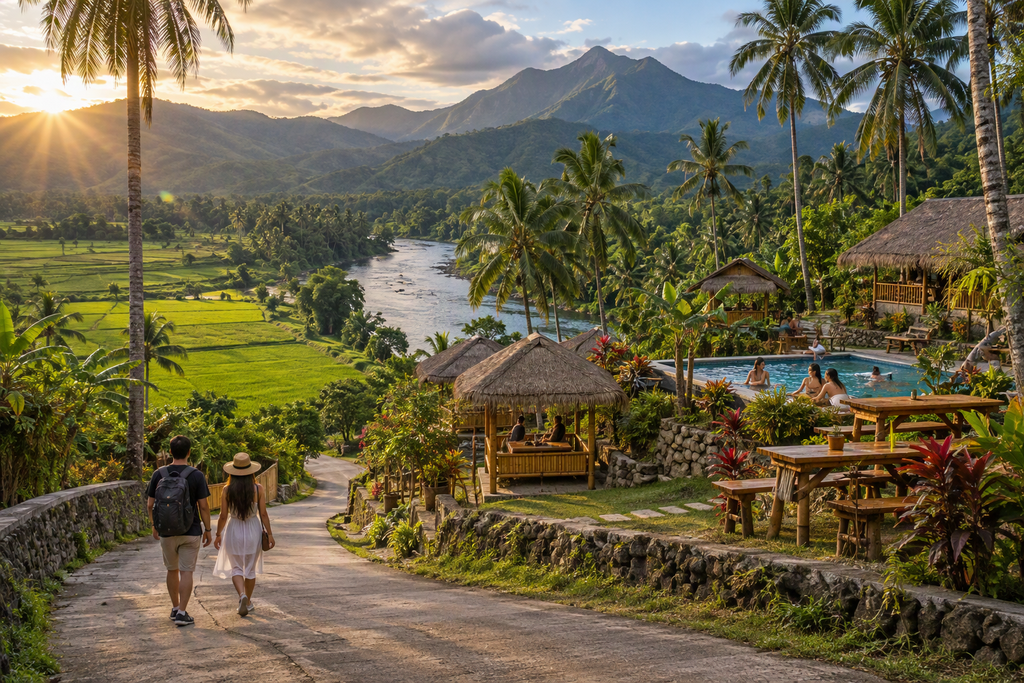
Rural & Off-the-Beaten-Path Travel in the Philippines focuses on destinations where scenery, space, and local experiences matter more than crowds, high-rise resorts, or commercial tourism districts.
Escape the cities and experience the Provincial Philippines through quiet beaches, mountain communities, river resorts, countryside road trips, and destinations where scenery, space, and local culture matter more than crowds and commercial tourism.
“In the Provincial Philippines, people often travel for the place first and the amenities second.”
What Is Rural Travel?
Rural travel focuses on experiencing the Philippines outside major cities, heavily developed tourism districts, and densely populated commercial areas.
This does not necessarily mean remote.
In many parts of the Philippines, particularly in regions such as Central Luzon, you can leave a city center, tourism district, or major highway and find yourself surrounded by farmland, rivers, coastlines, mountain views, and small communities within minutes.
A rural destination may be:
- On the north or south edge of a small town
- Between neighboring communities
- Along a coastal road
- Beside a river
- Near a waterfall
- In an agricultural area
- In a mountain community
- Just a few miles outside a tourism center
The attraction is often the setting rather than the development.
Why Travelers Choose Rural Destinations
People choose rural destinations for many reasons:
- Less crowded beaches
- Scenic drives
- Nature and wildlife
- River swimming
- Mountain views
- Photography opportunities
- Local culture
- Small-town hospitality
- Slower travel
- Peace and quiet
Many travelers simply want their own space.
A quiet beach, a riverside cottage, a mountain lodge, or a small resort between towns can provide a completely different experience than staying in a busy tourism district.
Popular Rural Travel Experiences
Coastal Destinations
Examples include:
- Aurora
- Quezon Coastal Communities
- La Union
- Sipalay
- Anda
- Camiguin
- Siquijor
- Romblon
- Dinagat Islands
- Coastal Mindanao communities
Mountain & Highland Destinations
Examples include:
- Cordillera Region
- Sagada
- Banaue
- Buscalan
- Bontoc
- Bukidnon
- Lake Sebu
River & Countryside Destinations
Examples include:
- Loboc
- Lake Sebu
- Valencia
- Agricultural regions throughout Luzon, Visayas, and Mindanao
Provincial Road Trips
Examples include:
- Ilocos Region
- Cagayan Valley
- Aurora
- South Cebu
- Bukidnon
- Camiguin
The destinations themselves are important, but the experience is usually what travelers remember most.
The Provincial Philippines Travel Mindset
In the Provincial Philippines, people often travel for the place first and the amenities second.
Unlike urban travel where the hotel may be the centerpiece of the trip, provincial travel often starts with the destination.
Travelers choose:
- A beach
- A river
- A waterfall
- A mountain viewpoint
- A lake
- A scenic road
- A quiet countryside setting
Then they find accommodations that allow them to enjoy it.
A simple cottage beside a beautiful river may create better memories than a luxury room in a crowded destination.
What Rural Accommodations Are Like
Rural accommodations vary tremendously.
You might find:
- Beach resorts
- River resorts
- Farm resorts
- Mountain lodges
- Beach cottages
- Bungalows
- Nipa huts
- Vacation houses
- Camping areas
- Glamping sites
- Boutique resorts
The farther you travel from major tourism centers, the more varied accommodations become.
Rural Accommodations Are Available at Every Comfort Level
Budget-Conscious
Often includes:
- Fan rooms
- Nipa huts
- Camping
- Shared CRs
- Shared cooking facilities
- Beach cottages
Comfortable
Often includes:
- Air-conditioned rooms
- Private CRs
- Resort restaurants
- Family rooms
- Beachfront cottages
- Reliable electricity and Wi‑Fi
Premium
Available in some destinations but not all.
May include:
- Villas
- Boutique resorts
- Guest-only facilities
- Private pools
- Premium dining
- Enhanced privacy
Not every rural destination offers premium accommodations. In many provincial areas, even the best properties remain relatively simple compared with major resort destinations.
Understanding Rural Comfort
Many first-time visitors assume that “basic” means uncomfortable.
In much of the Philippines outside higher mountain regions, temperatures commonly range between the mid-70s°F and mid-90s°F (mid-20s°C to mid-30s°C).
As a result:
- Fan rooms are very common
- Open-air cottages can be comfortable
- Cold-water showers often feel refreshing
- Water is frequently cool or lukewarm rather than truly cold
Many travelers discover they need fewer amenities than they originally expected.
Rural Resort Culture
Many rural resorts operate differently from urban hotels.
Common features include:
- Outdoor kitchens
- BBQ grills
- Covered pavilions
- Picnic tables
- Shared dining spaces
- Swimming areas
- Open-air gathering places
Families and groups often stop at:
- Public markets
- Grocery stores
- Roadside vendors
before arriving.
Typical purchases include:
- Bottled drinking water
- Ice
- Seafood
- Meat
- Vegetables
- Rice
- Drinks
- Snacks
Many travelers rely on bottled or purified water for drinking.
Cooking and sharing meals is often an important part of the vacation experience.
Day-Use Resort Culture
One thing that surprises many visitors is how common day-use resorts are throughout the Philippines.
A rural resort may serve:
- Overnight guests
- Day visitors
- Family gatherings
- Church groups
- Company outings
- Weekend reunions
Visitors may pay a day-use fee to enjoy:
- Swimming pools
- Beach access
- River access
- Picnic cottages
- Pavilions
- BBQ facilities
Some resorts maintain separate facilities for overnight guests, while others share facilities between everyone on the property.
Kubos, Cottages & Simple Accommodations
Many attractions offer facilities that are far simpler than a traditional hotel.
You may encounter:
- Kubos
- Nipa huts
- Picnic cottages
- Glamping tents
- Tent campsites
A kubo is often a bamboo shelter with a roof, table, and seating area.
Some overnight cottages may include:
- A thin mattress
- A sleeping platform
- Curtains for privacy
Many do not include:
- Air conditioning
- Private CRs
- Private showers
Guests commonly use shared facilities throughout the property.
For many Filipino families, this is completely normal because the attraction is the destination itself, not the room.
Weekdays vs Weekends
If you’re looking for peace and quiet, weekdays are often the best time to visit.
Weekdays usually mean:
- More room availability
- Empty cottages
- Less crowded pools
- Quieter beaches
- Fewer day visitors
Weekends can be completely different.
It is common to find:
- Every table occupied
- Every kubo rented
- BBQ grills in constant use
- Large family gatherings
- Church groups
- Birthday celebrations
This is not overcrowding by local standards. It is how many Filipino families enjoy their weekends.
Local Weekend Culture
Many rural resorts become community gathering places during weekends and holidays.
The atmosphere may include:
- Families cooking together
- Relatives celebrating birthdays
- Friends enjoying outings
- Children swimming all day
- Multi-generational gatherings
If you want to experience local resort culture, visit on a weekend.
If you want quiet surroundings, choose weekdays whenever possible.
Don’t Be Afraid to Ask Locals
One of the easiest ways to discover rural destinations is simply by asking.
Imagine you’re staying in Cebu City and mention:
“I’m looking for a quiet beach resort for a couple of days. Do you know any places like that?”
The hotel employee may immediately know several.
Many rural properties operate primarily through:
- Word of mouth
- Repeat visitors
- Community referrals
- Local recommendations
Some may have:
- No booking website
- Limited online reviews
- Minimal online advertising
Yet they remain popular because locals already know about them.
Word of Mouth Is the Rule of Thumb
In much of the Philippines, reputation still matters.
A recommendation from:
- A hotel employee
- A tricycle driver
- A resort owner
- A local resident
often carries real weight.
People generally recommend places they know and trust.
If visitors have a good experience:
- Positive recommendations continue
- More guests arrive
- Reputation grows
If visitors have a bad experience:
- Negative word spreads
- Trust declines
- Reputation suffers
That community accountability is one reason many locally recommended businesses work hard to treat visitors well.
Research Before You Travel
Before booking any rural accommodation, confirm:
- Aircon or fan room
- Private or shared CR
- Hot water availability
- Wi‑Fi availability
- Mobile signal strength
- Restaurant availability
- Cooking facilities
- Drinking water availability
- Pool access
- Day-use visitors allowed
- Transportation options
Two accommodations that look similar in photos can offer very different experiences.
The best rural travelers understand what they are booking before they arrive.
Who Should Consider Rural Travel?
Rural travel is especially appealing to:
- Nature lovers
- Road-trip travelers
- Couples seeking quiet destinations
- Families
- Photographers
- Long-stay visitors
- Repeat visitors to the Philippines
- Travelers interested in local culture
Related Guides
Travel Styles
- Travel Styles in the Philippines
- Solo Travel in the Philippines
- Couples & Honeymoon Travel in the Philippines
- Family Travel in the Philippines
- Senior Travel in the Philippines
- Group Travel in the Philippines
- Budget-Conscious Travel in the Philippines
- Comfort Travel in the Philippines
- Luxury Travel in the Philippines
Trip Planning
- Transportation & Getting Around the Philippines
- Traveling by Tricycle, Jeepney, Scooter & Local Transportation
- Travel Costs in the Philippines
- Budget Travel in the Philippines
- How to Plan a Philippine Trip
- Accommodation Guide to the Philippines
Rural & Off-the-Beaten-Path Travel in the Philippines at a Glance
The Provincial Philippines offers a side of the country that many visitors never experience. Here, the destination often matters more than the room, the scenery matters more than the shopping, and the experience matters more than the amenities. Whether it’s a beach between towns, a river resort outside a barangay, a mountain lodge in the Cordillera, or a small family-run property down a provincial road, the reward is often the same: space, nature, and a slower pace of life.
People often travel for the place first and the amenities second.