How Philippine Tourism Infrastructure Connects the Archipelago
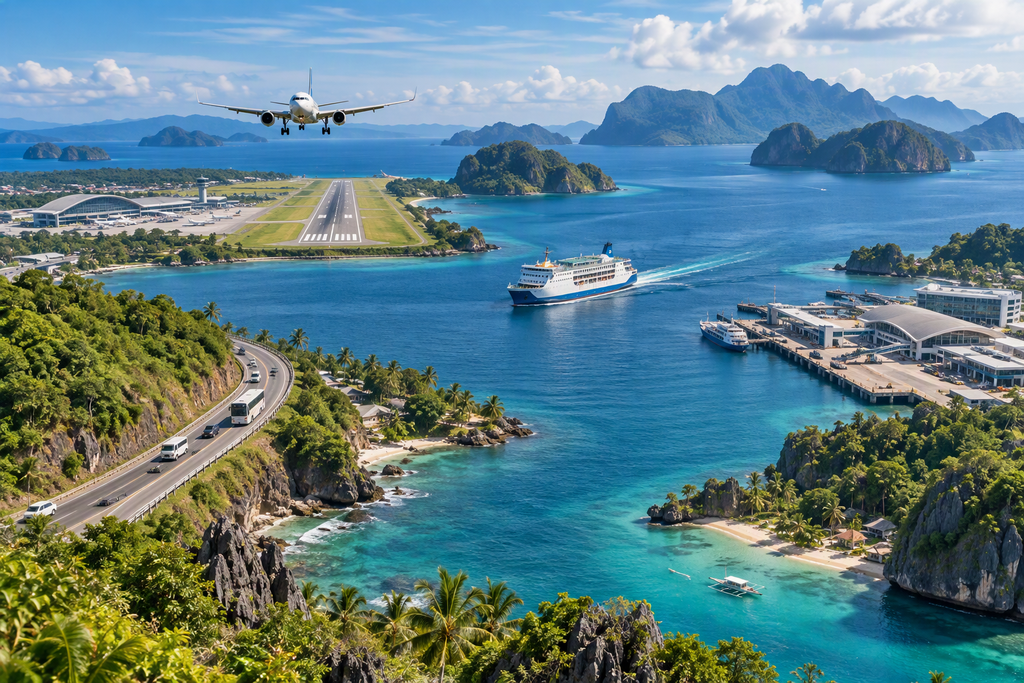
Airports, ferry networks, ports, and highways help connect the Philippine archipelago, making travel between islands and destination areas more accessible for visitors.
Discover how airports, ferries, highways, ports, and transportation networks connect the Philippine archipelago and make travel between destinations easier than ever.
How Philippine Tourism Infrastructure Connects the Archipelago
The Philippines is one of the world’s largest archipelagic nations, with more than 7,000 islands spread across a vast area of Southeast Asia. While this geography creates remarkable opportunities for travelers, it also presents unique transportation challenges. Beaches, mountains, heritage cities, diving destinations, and island communities are often separated by seas, straits, and rugged terrain.
Tourism infrastructure is what makes travel across the Philippines possible. Airports, ferry networks, highways, bridges, ports, and public transportation systems work together to connect destinations throughout Luzon, Visayas, and Mindanao. These transportation links allow visitors to travel from major international gateways to remote islands, mountain provinces, cultural destinations, and emerging tourism areas.
Today, travelers can explore far more of the archipelago than ever before, thanks to decades of investment in transportation infrastructure and growing connectivity between destinations.
The Challenge of Connecting an Archipelago
Unlike countries connected primarily by roads or railways, the Philippines relies on a combination of air, sea, and land transportation.
A single vacation may involve:
- An international flight
- A domestic flight
- A ferry crossing
- A highway journey
- Local transportation within a destination
This interconnected system allows visitors to experience multiple islands and destinations within one trip.
Tourism infrastructure serves several important functions:
- Connecting international gateways to regional destinations
- Supporting inter-island travel
- Reducing travel times
- Improving access to remote attractions
- Strengthening local economies
- Encouraging visitors to explore beyond major tourism hubs
Without these networks, many of the country’s most famous destinations would remain difficult to reach.
Airports: The Primary Tourism Gateways
Air travel remains the fastest way to connect the Philippine archipelago.
Major international gateways provide access to the country, while domestic airports connect visitors to destinations throughout Luzon, Visayas, and Mindanao.
Some of the country’s most important tourism gateways include:
- Ninoy Aquino International Airport (NAIA)
- Clark International Airport
- Mactan-Cebu International Airport
- Davao International Airport
- Bohol-Panglao International Airport
- Puerto Princesa International Airport
- Siargao Airport
- Caticlan Airport
The growth of regional airports has allowed travelers to bypass Manila and access destinations directly, helping tourism spread across the country.
For many visitors, a domestic flight is the first step in reaching island destinations, mountain regions, and coastal attractions.
Related Guides:
Ferry Networks: Linking the Islands
While aviation connects the archipelago quickly, ferries provide the transportation backbone between neighboring islands.
Many of the Philippines’ most popular destinations depend on regular ferry services.
Important tourism ferry routes connect:
- Cebu and Bohol
- Dumaguete and Siquijor
- Iloilo and Guimaras
- Surigao and Siargao
- Batangas and Puerto Galera
- Palawan destinations through inter-island ferry services
For island-hopping travelers, ferries provide affordable and flexible transportation options while creating opportunities to explore multiple destinations during a single trip.
Modern passenger terminals and expanded ferry schedules have significantly improved connectivity in many parts of the country.
Related Guides:
- Inter-Island Travel in the Philippines
- Luzon Mainland Ferry Routes Guide
- Luzon Islands Ferry Guide
- Visayas Ferry Guide
- Mindanao Mainland Ferry Routes Guide
- Mindanao Islands Ferry Guide
Roads, Highways, and Tourism Corridors
Within larger islands, road infrastructure is equally important.
Road networks connect:
- Airports to tourism areas
- Cities to provincial destinations
- Coastal attractions to inland destinations
- Multiple attractions within a single destination area
Improved highways have transformed travel throughout the country, reducing journey times and making self-drive road trips increasingly popular.
Many travelers now explore destinations through regional tourism corridors that link multiple attractions together.
Related Guides:
- Land Transportation of the Philippines Guide
- Luzon Road Trips Guide
- Visayas Road Trip Guide
- Mindanao Road Trips Guide
RORO Routes and Multi-Island Travel
One of the most important developments in Philippine transportation has been the expansion of the Roll-On/Roll-Off (RORO) network.
RORO vessels allow vehicles to drive directly onto ferries, creating seamless travel between islands.
This system supports:
- Road trip tourism
- Motorcycle travel
- Private vehicle exploration
- Commercial transportation
- Regional tourism development
For travelers interested in exploring beyond major tourism destinations, RORO routes help connect islands into larger tourism circuits.
Related Guides:
Public Transportation and Local Mobility
Even the best airports and highways would have limited value without transportation within destinations.
Visitors commonly use:
- Buses
- Vans
- Jeepneys
- Tricycles
- Taxis
- Ride-hailing services
- Tourist shuttle services
These transportation systems connect travelers from airports and ports to hotels, resorts, attractions, beaches, and town centers.
Related Guides:
Tourism Connectivity Across Philippine Destination Areas
Different destination areas offer different levels of transportation connectivity depending on geography, infrastructure, and tourism development.
Tourism Connectivity Comparison
| Destination Area | Air Access | Ferry Access | Road Connectivity | Overall Accessibility |
|---|---|---|---|---|
| Northern Luzon Destinations | Good | Limited | Excellent | High |
| Central Luzon Destinations | Excellent | Limited | Excellent | Very High |
| Southern Luzon Destinations | Good | Excellent | Good | High |
| Western Visayas Destinations | Excellent | Excellent | Good | Very High |
| Central Visayas Destinations | Excellent | Excellent | Excellent | Very High |
| Eastern Visayas Destinations | Moderate | Excellent | Moderate | Moderate-High |
| Northern Mindanao Destinations | Good | Good | Good | High |
| Central Mindanao Destinations | Good | Moderate | Good | Moderate-High |
| Southeastern Mindanao Destinations | Excellent | Moderate | Good | High |
| Southwestern Mindanao Mainland Destinations | Developing | Moderate | Moderate | Developing |
| Mindanao Islands Destinations | Moderate | Excellent | Limited | Moderate |
The Philippines’ Most Connected Tourism Areas
Some destination areas benefit from particularly strong transportation networks.
Central Visayas Destinations
Central Visayas is one of the most connected tourism areas in the country.
Advantages include:
- Major international airport access
- Frequent ferry services
- Established tourism infrastructure
- Strong connections between destinations
Travelers can easily move between destinations such as Cebu, Bohol, Siquijor, and Negros through a combination of air and sea transportation.
Related Guides:
Western Visayas Destinations
Western Visayas benefits from extensive inter-island transportation links.
Visitors can combine:
- Beach destinations
- Heritage cities
- Island attractions
- Nature experiences
through a well-developed network of airports, ports, ferries, and highways.
Related Guides:
- Western Visayas Travel Guide
- Panay Island Travel Guide
- Guimaras Island Travel Guide
- Negros Island Travel Guide
Southern Luzon Destinations
Southern Luzon serves as an important transportation hub between mainland Luzon and nearby island destinations.
Its strengths include:
- Highway access from Metro Manila
- Major ferry terminals
- Coastal transportation networks
- Gateway access to surrounding island destinations
Related Guides:
- Luzon’s Mainland Destinations
- Southern Luzon Travel Guides
- Lucena City Guide
- Bicol Travel Guide
- Legazpi City Guide
Southeastern Mindanao Destinations
Southeastern Mindanao serves as one of the major transportation gateways of southern Philippines.
Regional connectivity is supported by:
- International and domestic aviation links
- Expanding highway networks
- Urban transportation infrastructure
- Access to nearby coastal and island destinations
Related Guides:
Cultural Connectivity in Southwestern Mindanao Mainland Destinations
Southwestern Mindanao Mainland Destinations differ from many other destination areas because their importance is often defined as much by culture and history as by tourism infrastructure.
Historically, the area has developed through maritime trade routes, cultural exchanges, and community connections across the southern Philippines.
Visitors interested in:
- Cultural heritage
- Indigenous traditions
- Moro history
- Maritime history
- Traditional communities
will find a destination area that offers unique cultural experiences and perspectives within the broader story of the Philippine archipelago.
Transportation infrastructure continues to improve, but the area’s greatest significance lies in its cultural identity and historical importance rather than mainstream tourism development.
Related Guides:
- Southwestern Mindanao Mainland Guide
- Basilan Island Travel Guide
- Sulu Islands Travel Guide
- Tawi-Tawi Islands Travel Guide
How Travelers Move Around the Philippines
Different forms of transportation support different types of travel experiences.
| Travel Type | Typical Transportation |
|---|---|
| International Arrivals | International Flights |
| Between Major Islands | Domestic Flights |
| Between Neighboring Islands | Ferries and Fast Craft |
| Multi-Island Road Trips | RORO Ferries |
| Long Mainland Journeys | Buses and Highways |
| Local Exploration | Vans, Jeepneys, Tricycles, Taxis |
| Island Hopping | Ferries and Tour Boats |
Infrastructure and Tourism Growth
Improved connectivity has helped tourism expand beyond traditional destinations.
Benefits include:
- Easier access to emerging destinations
- Greater visitor dispersal
- New opportunities for local businesses
- Increased domestic tourism
- Stronger regional economies
As transportation links improve, more destinations become accessible to both domestic and international visitors.
The Future of Tourism Connectivity
Future infrastructure development is expected to focus on:
- Airport modernization
- Improved regional aviation
- Ferry terminal upgrades
- Expanded highway networks
- Climate-resilient infrastructure
- Digital transportation services
- Enhanced inter-island connectivity
These improvements will continue to strengthen connections across the archipelago and support tourism growth throughout the country.
Conclusion
Tourism infrastructure is what allows the Philippine archipelago to function as a connected travel destination. Airports, ferries, highways, ports, bridges, and public transportation systems work together to link thousands of islands across Luzon, Visayas, and Mindanao. Whether travelers are flying to a major gateway, taking a ferry between islands, exploring a mountain road trip, or visiting cultural destinations in the south, these transportation networks make discovery possible. As connectivity continues to improve, visitors gain access to an even wider range of destinations, experiences, and communities throughout the Philippines.