National Parks vs Protected Landscapes in the Philippines: What’s the Difference?
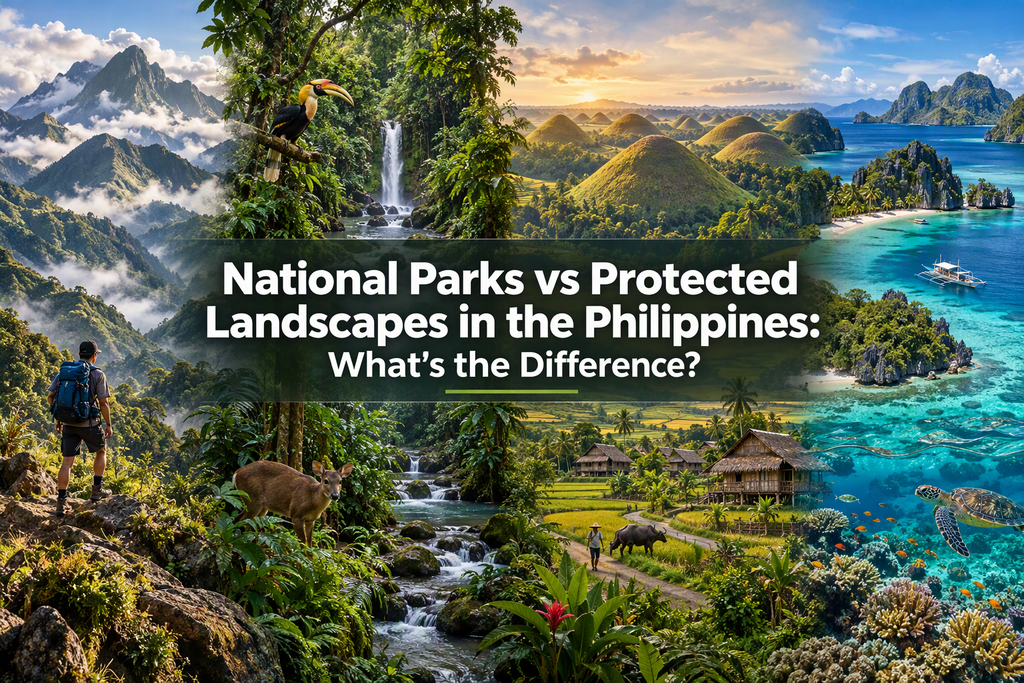
Many travelers assume that all protected natural areas in the Philippines are national parks. In reality, the country protects important landscapes, wildlife habitats, mountains, forests, coastlines, marine ecosystems, and cultural environments under several different classifications. Understanding the difference between national parks, protected landscapes, protected seascapes, wildlife sanctuaries, and natural parks can help travelers better appreciate the country’s conservation efforts and choose destinations that match their interests.
Whether you’re hiking Mount Pulag, exploring the Puerto Princesa Underground River, diving at Apo Reef, or discovering the forests of the Sierra Madre, you’re helping support some of the Philippines’ most important, protected areas.
Quick Answer: National Parks vs Protected Landscapes
| Feature | National Park | Protected Landscape |
|---|---|---|
| Primary Purpose | Protect ecosystems and biodiversity | Protect both natural and cultural landscapes |
| Human Communities | Often limited | Often present and integrated |
| Tourism Access | Usually managed and regulated | Often more accessible |
| Main Attractions | Forests, mountains, wildlife, caves | Mountains, forests, villages, farms, heritage sites |
| Examples | Mount Pulag, Hundred Islands, Puerto Princesa Underground River | Mount Banahaw-San Cristobal, Peñablanca |
What Is a National Park?
A national park is a protected area established to conserve important ecosystems, wildlife habitats, geological features, forests, caves, rivers, mountains, or marine environments.
National parks often contain some of the country’s most significant natural resources and are managed to balance conservation, research, recreation, and tourism.
Famous National Parks in the Philippines
- Puerto Princesa Subterranean River National Park
- Mount Pulag National Park
- Hundred Islands National Park
- Mount Apo Natural Park
- Apo Reef Natural Park
- Northern Sierra Madre Natural Park
- Mounts Iglit-Baco National Park
Best For
- Hiking
- Wildlife viewing
- Nature photography
- Ecotourism
- Diving
- Birdwatching
What Is a Protected Landscape?
A Protected Landscape is an area where the interaction between people and nature has created a distinctive environment with important ecological, scenic, historical, and cultural value.
Unlike many national parks, protected landscapes often include communities, farms, agricultural areas, heritage sites, and traditional land-use practices.
Examples of Protected Landscapes
- Mount Banahaw-San Cristobal Protected Landscape
- Peñablanca Protected Landscape and Seascape
- Batanes Protected Landscapes and Seascapes
- Rajah Sikatuna Protected Landscape
Best For
- Cultural tourism
- Scenic drives
- Heritage exploration
- Hiking
- Photography
- Community-based tourism
What Is a Protected Seascape?
Protected seascapes focus primarily on coastal and marine ecosystems while often including nearby islands, fishing communities, and traditional maritime environments.
These areas protect coral reefs, mangrove forests, seagrass habitats, marine wildlife, and important fisheries.
Examples
- Tañon Strait Protected Seascape
- Peñablanca Protected Landscape and Seascape
- Batanes Protected Landscapes and Seascapes
Best For
- Snorkeling
- Diving
- Island hopping
- Marine wildlife viewing
- Photography
What Is a Wildlife Sanctuary?
Wildlife sanctuaries are established primarily to protect specific species and their habitats. Conservation often takes priority over tourism.
These areas may protect nesting sites, migration corridors, breeding grounds, wetlands, forests, or habitats of endangered species.
Examples
- Mount Hamiguitan Range Wildlife Sanctuary
- Agusan Marsh Wildlife Sanctuary
- Olango Island Wildlife Sanctuary
Best For
- Birdwatching
- Wildlife observation
- Conservation tourism
- Nature photography
Why Aren’t All Protected Areas National Parks?
Many protected areas contain important ecosystems but do not meet the goals or management requirements of a national park.
Some areas are protected because of:
- Cultural significance
- Traditional communities
- Marine ecosystems
- Bird habitats
- Wetlands
- Heritage landscapes
- Conservation priorities
As a result, national parks represent only one category within the Philippines’ broader protected area system.
Which Protected Area Type Is Most Common in the Philippines?
National parks often receive the most attention from travelers because many of the country’s best-known nature destinations carry the national park designation. However, national parks are only one part of the Philippines’ broader protected area network.
The country also protects important landscapes, coastlines, marine ecosystems, forests, wetlands, and wildlife habitats through classifications such as protected landscapes, protected seascapes, wildlife sanctuaries, natural parks, and marine reserves. Together, these conservation areas safeguard a much wider range of natural and cultural resources than national parks alone.
Many popular destinations are not technically national parks but remain among the Philippines’ most significant protected areas. Examples include the Batanes Protected Landscapes and Seascapes, Mount Banahaw-San Cristobal Protected Landscape, Peñablanca Protected Landscape and Seascape, and Mount Hamiguitan Range Wildlife Sanctuary.
For travelers, the classification is often less important than the experience itself. Whether visiting a national park, protected landscape, protected seascape, or wildlife sanctuary, each destination plays a vital role in conserving the Philippines’ biodiversity, natural beauty, and cultural heritage while providing unique opportunities for nature-based tourism and ecotourism.
Comparison of Protected Area Types
| Type | Main Purpose | Tourism Focus | Example |
|---|---|---|---|
| National Park | Biodiversity and ecosystem protection | High | Mount Pulag National Park |
| Protected Landscape | Natural and cultural landscape conservation | High | Mount Banahaw-San Cristobal |
| Protected Seascape | Marine and coastal conservation | High | Tañon Strait Protected Seascape |
| Wildlife Sanctuary | Species protection | Moderate | Mount Hamiguitan Wildlife Sanctuary |
| Natural Park | Broad ecosystem conservation | Moderate to High | Northern Sierra Madre Natural Park |
Protected Area Classification at a Glance
| Classification | Main Focus | Example Destination | Best For |
|---|---|---|---|
| National Park | Biodiversity & ecosystems | Mount Pulag National Park | Hiking & nature travel |
| Natural Park | Large-scale ecosystem protection | Northern Sierra Madre Natural Park | Wildlife & ecotourism |
| Protected Landscape | Nature and cultural heritage | Mount Banahaw-San Cristobal | Scenic travel & cultural tourism |
| Protected Seascape | Coastal and marine environments | Tañon Strait Protected Seascape | Diving & marine travel |
| Wildlife Sanctuary | Species conservation | Mount Hamiguitan Range Wildlife Sanctuary | Wildlife viewing |
Which Type Is Best for Travelers?
Best for Hiking
- Mount Pulag National Park
- Mount Apo Natural Park
- Mount Kitanglad Range Natural Park
Best for Wildlife Viewing
- Northern Sierra Madre Natural Park
- Mounts Iglit-Baco National Park
- Mount Hamiguitan Range Wildlife Sanctuary
Best for Diving
- Apo Reef Natural Park
- Tubbataha Reefs Natural Park
Best for Cultural Landscapes
- Batanes Protected Landscapes and Seascapes
- Mount Banahaw-San Cristobal Protected Landscape
Best for Families
- Hundred Islands National Park
- Puerto Princesa Subterranean River National Park
Protected Areas Every Traveler Should Know
| Destination | Classification |
|---|---|
| Puerto Princesa Underground River | National Park |
| Mount Pulag | National Park |
| Hundred Islands | National Park |
| Apo Reef | Natural Park |
| Northern Sierra Madre | Natural Park |
| Mount Banahaw-San Cristobal | Protected Landscape |
| Peñablanca | Protected Landscape and Seascape |
| Batanes Protected Landscapes and Seascapes | Protected Landscape and Seascape |
| Mount Hamiguitan | Wildlife Sanctuary |
Why Protected Areas Matter
Protected areas preserve many of the Philippines’ most valuable natural treasures, including:
- Philippine Eagle habitat
- Tamaraw habitat
- Coral reef ecosystems
- Watersheds and rivers
- Old-growth forests
- Endemic wildlife
- Important bird areas
- Mountain ecosystems
They also support local communities through ecotourism, sustainable livelihoods, conservation projects, and environmental education.
Responsible Travel in Protected Areas
When visiting national parks, protected landscapes, and conservation areas:
- Stay on designated trails.
- Respect wildlife and habitats.
- Follow local regulations.
- Practice Leave No Trace principles.
- Support local guides and communities.
- Avoid collecting plants, animals, or natural materials.
- Carry out all trash.
Responsible tourism helps ensure these landscapes remain protected for future generations.
Related Guides
- National Parks of the Philippines
- National Parks of Luzon
- Protected Areas of the Philippines
- Wildlife of the Philippines
- Endangered Species of the Philippines
- Biodiversity Hotspots of the Philippines
- Nature Destinations of the Philippines
- Marine Life of the Philippines
Conclusion
National parks and protected landscapes both play vital roles in protecting the Philippines’ natural heritage, but they serve different purposes. National parks primarily focus on conserving ecosystems and biodiversity, while protected landscapes recognize the long relationship between people and nature. Together with wildlife sanctuaries, protected seascapes, and other conservation areas, they form a nationwide network that safeguards the country’s forests, mountains, rivers, coastlines, coral reefs, and iconic wildlife.
For travelers, understanding these classifications offers a deeper appreciation of destinations such as Mount Pulag, the Puerto Princesa Underground River, Northern Sierra Madre, Mount Banahaw, and Batanes. Regardless of the label, each protected area provides an opportunity to experience some of the most remarkable natural environments in the Philippines.