Chicken Adobo: The Philippines’ Most Famous National Dish
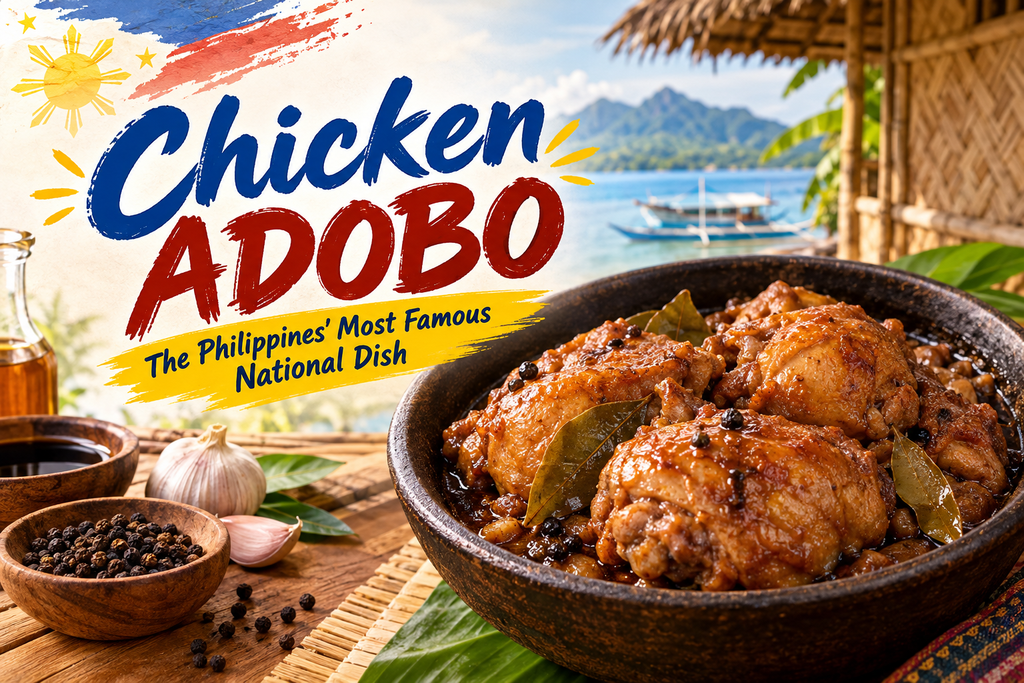
Discover the history, preparation, cultural importance, and regional variations of Chicken Adobo, one of the most iconic dishes in Filipino cuisine. Loved throughout the Philippines and recognized internationally, Chicken Adobo represents centuries of culinary tradition, cultural adaptation, and comforting home cooking.
What Is Chicken Adobo?
Chicken Adobo is a traditional Filipino dish made by simmering chicken in a mixture of vinegar, soy sauce, garlic, peppercorns, and bay leaves. The name “adobo” originates from the Spanish word adobar, meaning “to marinate,” although the Filipino version developed independently from indigenous cooking methods that existed before Spanish colonization.
Today, Chicken Adobo is often considered the unofficial national dish of the Philippines due to its popularity across all regions, social classes, and generations.
From family dinners and celebrations to school lunches and restaurant menus, adobo remains a staple of Filipino cuisine both within the Philippines and in Filipino communities around the world.
Quick Facts About Chicken Adobo
| Feature | Information |
|---|---|
| Type | Main Dish |
| Cuisine | Filipino |
| Main Protein | Chicken |
| Cooking Method | Braising / Simmering |
| Known For | Savory, Tangy Flavor |
| Common Ingredients | Chicken, Vinegar, Soy Sauce, Garlic |
| Served With | Steamed Rice |
| Popularity | Nationwide |
The History of Adobo in the Philippines
by freepik.com
Long before European colonization, indigenous Filipinos already practiced food preservation techniques using vinegar and salt. The tropical climate of the Philippine archipelago made preservation important, and vinegar naturally helped prevent spoilage.
When Spanish explorers arrived in the 16th century, they observed these cooking methods and referred to them as adobo because they resembled marinated dishes found in Spain. Over time, the name remained, even though Filipino adobo differs significantly from Spanish adobo recipes.
The addition of soy sauce came later through Chinese trade influences, creating the flavor profile that many people associate with modern Chicken Adobo today.
As generations passed, every family developed its own variation, resulting in the wide range of adobo styles enjoyed throughout the country.
Why Chicken Adobo Is So Popular
Chicken Adobo has remained popular for centuries because it combines several qualities that appeal to Filipino households.
Affordable Ingredients
Adobo can be made using simple and widely available ingredients.
Long Shelf Life
The vinegar-based sauce naturally helps preserve the dish, making it practical in tropical environments.
Easy Preparation
The recipe requires relatively little preparation compared to many other traditional dishes.
Rich Flavor
The balance of salty, savory, tangy, and slightly sweet flavors appeals to many different tastes.
Versatility
Families can adjust ingredients and techniques according to regional traditions and personal preferences.
Traditional Chicken Adobo Ingredients
by foxyfolksy.com
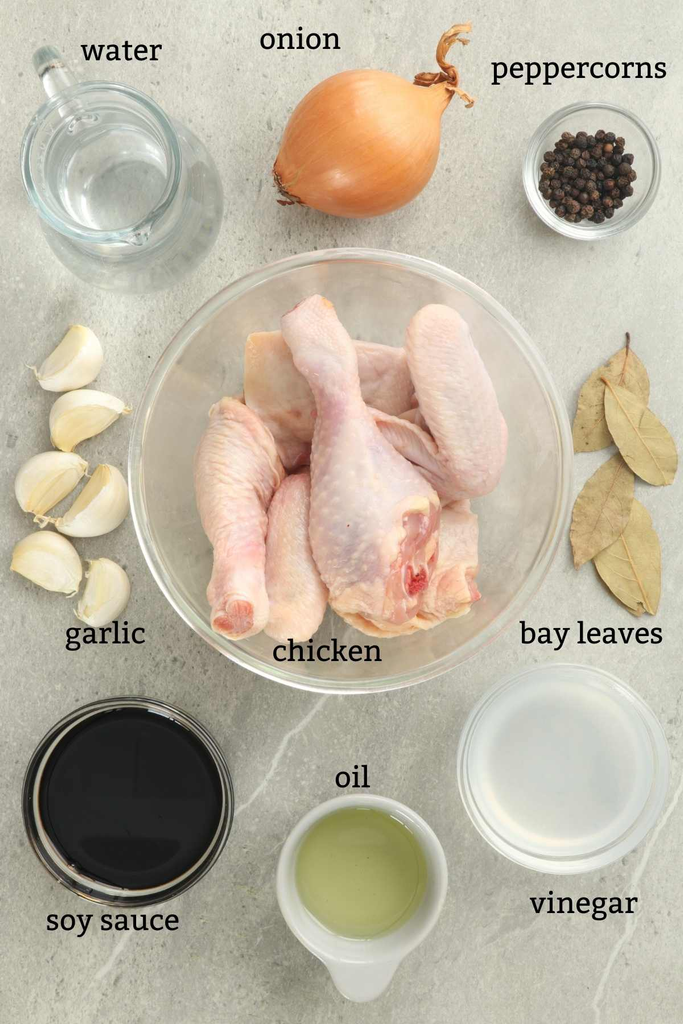
Although countless variations exist, traditional Chicken Adobo typically includes:
- Chicken
- Vinegar
- Soy Sauce
- Garlic
- Whole Peppercorns
- Bay Leaves
- Water
Optional ingredients may include:
- Onion
- Brown Sugar
- Potatoes
- Coconut Milk
- Chili Peppers
The simplicity of these ingredients helps explain the dish’s enduring popularity.
How Chicken Adobo Is Prepared
by dreamtime.com
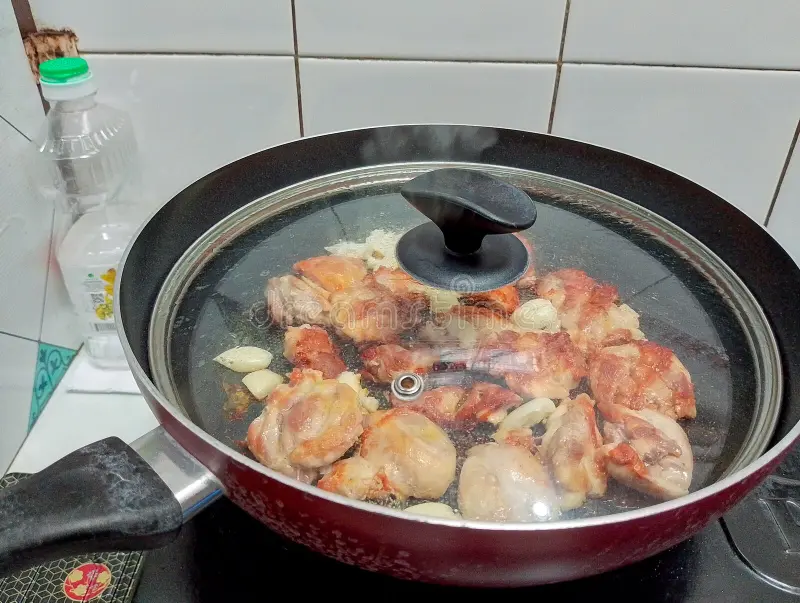
The cooking process generally follows several key steps.
Step 1: Marinating
Many cooks marinate the chicken in soy sauce and garlic before cooking.
Step 2: Browning
The chicken is often lightly browned to develop flavor.
Step 3: Simmering
Vinegar, seasonings, and liquids are added before the mixture is slowly simmered.
Step 4: Sauce Reduction
The liquid is reduced until a rich, flavorful sauce develops.
Step 5: Serving
The finished dish is typically served over steamed white rice.
Many Filipinos believe adobo tastes even better the next day as the flavors continue to develop.
Regional Variations of Adobo
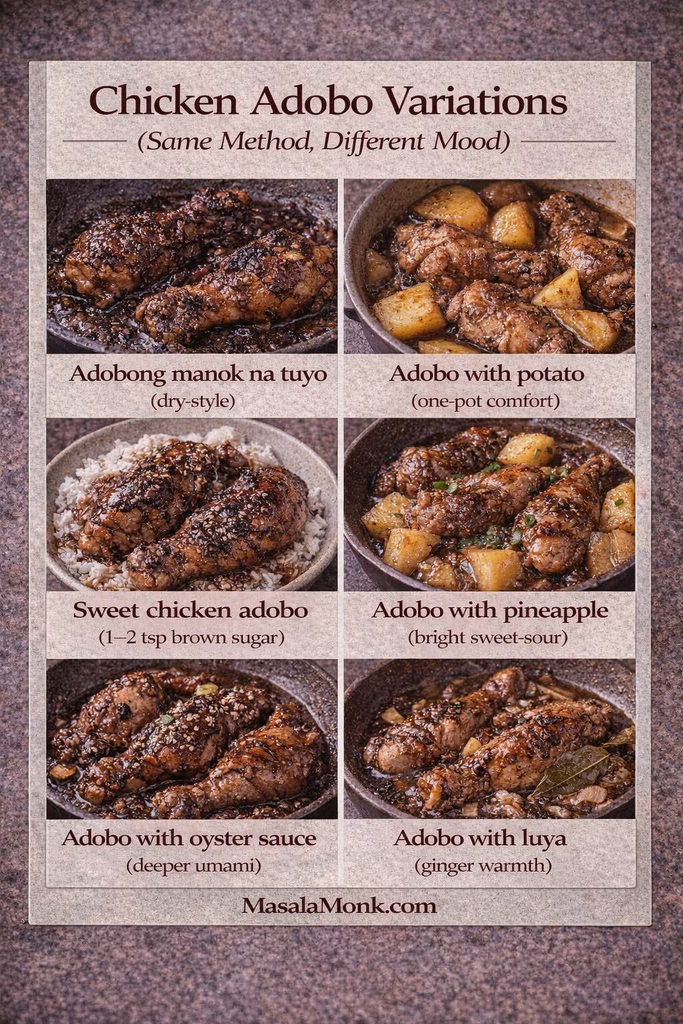
by masalamonk.com
One of the remarkable aspects of Filipino cuisine is how a single dish can vary from region to region.
Luzon Adobo
Many Luzon recipes use soy sauce alongside vinegar and garlic.
The resulting dish often has a rich brown sauce and a bold savory flavor.
Visayan Adobo
Some Visayan variations rely less on soy sauce and place greater emphasis on vinegar.
This creates a brighter and tangier flavor profile.
Mindanao Adobo
Mindanao’s adobo styles may incorporate local ingredients and distinct seasoning preferences influenced by the region’s diverse cultural heritage.
White Adobo
A traditional version found in some areas uses vinegar and garlic without soy sauce.
Food historians often view this as one of the closest versions to the original pre-colonial preparation.
Chicken Adobo vs. Pork Adobo
Although Chicken Adobo is widely popular, pork is equally common in many Filipino households.
Chicken Adobo
- Lighter texture
- Faster cooking time
- Absorbs marinades well
- Popular for everyday meals
Pork Adobo
- Richer flavor
- Higher fat content
- Tender texture after slow cooking
- Common during celebrations
Many families combine both chicken and pork in a single dish for added flavor and variety.
Cultural Importance of Adobo
Chicken Adobo is more than a meal. It serves as a symbol of Filipino identity and culinary heritage.
The dish appears at:
- Family gatherings
- Birthday celebrations
- Holiday meals
- School events
- Community festivals
For many Filipinos living abroad, adobo provides a comforting connection to home and family traditions.
Because recipes are often passed down through generations, preparing adobo can also become a way of preserving family history.
Chicken Adobo Around the World
As Filipino communities expanded internationally, Chicken Adobo gained recognition across North America, Europe, the Middle East, and Asia.
Today, many international restaurants feature adobo on their menus, introducing Filipino cuisine to new audiences.
The dish is frequently highlighted in culinary publications and travel features exploring global comfort foods.
Its combination of simple ingredients and bold flavors makes it appealing to a wide range of cultures.
What to Serve With Chicken Adobo
Chicken Adobo is traditionally served with steamed rice, but many side dishes complement its rich flavor.
Popular accompaniments include:
- Garlic Rice
- Pickled Papaya (Atchara)
- Fresh Tomatoes
- Cucumbers
- Stir-Fried Vegetables
- Green Mango Salad
Rice remains essential because it balances the strong flavors of the adobo sauce.
Where to Try Chicken Adobo in the Philippines
Visitors can find Chicken Adobo throughout the country.
Excellent examples are commonly served in:
- Traditional Filipino restaurants
- Local carinderias
- Regional eateries
- Family-owned establishments
- Home-based food businesses
Because every family often has its own recipe, some of the most memorable adobo experiences occur in local communities rather than tourist-oriented restaurants.
Frequently Asked Questions
Is Chicken Adobo the national dish of the Philippines?
Many Filipinos consider adobo the unofficial national dish because of its popularity and cultural significance.
Why is vinegar important in adobo?
Vinegar provides the dish’s signature flavor while also acting as a natural preservative.
Can adobo be made without soy sauce?
Yes. Several traditional variations use vinegar, garlic, and spices without soy sauce.
Why does adobo taste better the next day?
The ingredients continue absorbing the sauce over time, resulting in deeper and more balanced flavors.
Can adobo be spicy?
Yes. Some regional and family recipes include chili peppers for additional heat.
Why Chicken Adobo Remains the Heart of Filipino Cuisine
Few dishes represent the Philippines as completely as Chicken Adobo. Combining indigenous cooking traditions, centuries of culinary evolution, simple ingredients, and remarkable versatility, adobo has become a defining symbol of Filipino food culture. Whether enjoyed in a rural household, a major city restaurant, or a Filipino home halfway around the world, Chicken Adobo continues to connect people through a shared appreciation of comfort, tradition, and flavor.
Related Guides
- Filipino Food Guide
- Cooked Foods in the Philippines
- Chicken Dishes in the Philippines
- Pork Adobo Guide
- Sinigang Guide
- Kare-Kare Guide
- Lechon Guide
- Pancit Guide
- Halo-Halo Guide
- Philippine Culinary Traditions
- Regional Foods of Luzon
- Regional Foods of the Visayas
- Regional Foods of Mindanao