Compare Philippine mobile networks, eSIM options, tourist SIM cards, coverage maps, airport purchases, data plans, and connectivity tips for travelers, digital nomads, expats, and long-term visitors.
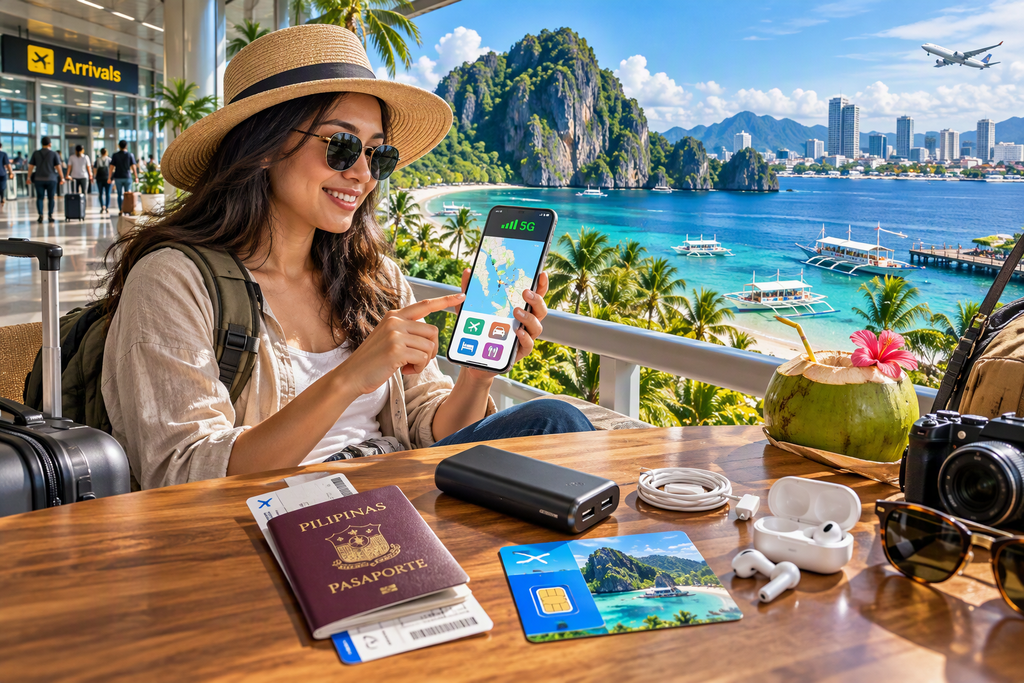
Mobile Data, SIM Cards & eSIMs in the Philippines: Compare Globe, Smart, and DITO coverage, data plans, SIM card options, and eSIM services before arriving in the Philippines.
Staying connected in the Philippines is easier than ever, but choosing the right mobile provider before your trip can save you time, money, and frustration. Whether you’re island hopping through Palawan, surfing in Siargao, exploring Cebu, working remotely in Manila, or planning a long-term stay, reliable mobile data is essential for navigation, transportation, accommodations, banking, and communication.
This guide explains Philippine SIM cards, eSIM options, mobile networks, coverage differences, costs, and connectivity tips for travelers, digital nomads, expats, and long-term visitors.
Quick Connectivity Checklist
Before arriving in the Philippines:
✅ Check whether your phone is unlocked
✅ Confirm eSIM compatibility
✅ Download offline maps
✅ Save accommodation details offline
✅ Install transportation apps
✅ Prepare backup connectivity options
✅ Research coverage for your destinations
Why Mobile Data Matters in the Philippines
Many travelers underestimate how important mobile internet becomes during a Philippine trip.
Reliable mobile data helps you:
- Navigate unfamiliar destinations
- Book transportation
- Confirm ferry schedules
- Access airline updates
- Use digital payment services
- Stay in contact with accommodations
- Find emergency information
- Work remotely
Because the Philippines is an archipelago, internet and mobile coverage can vary significantly between destinations.
Major Mobile Networks in the Philippines
Three primary networks serve most of the country.
Globe Telecom

by logos-world.net
One of the country’s largest mobile providers.
Best for:
- Major cities
- Tourist destinations
- Airport SIM purchases
- Extensive retail support
Popular destinations with generally strong Globe coverage include:
- Manila
- Cebu
- Boracay
- Bohol
- Palawan
- Siargao
Smart Communications
by gigago.com
Smart operates one of the largest nationwide mobile networks.
Best for:
- Broad provincial coverage
- Rural travel
- Inter-island travel
- Road trips
Many travelers consider Smart a strong option when visiting multiple regions.
DITO Telecommunity
by bobreyes.com
DITO is the newest major national provider.
Benefits include:
- Competitive pricing
- Modern network infrastructure
- Growing coverage footprint
Coverage continues expanding, although availability may vary by region.
SIM Card vs eSIM
Travelers generally have two options.
Physical SIM Cards
Traditional SIM cards remain widely available.
Advantages:
- Easy to purchase
- Wide compatibility
- Available at airports
- Available at malls and convenience stores
Best for:
- Most short-term visitors
- Budget travelers
- Older devices
eSIMs
eSIM technology allows activation without inserting a physical card.
Advantages:
- Instant activation
- No SIM swapping
- Convenient setup
- Useful for dual-SIM phones
Best for:
- Short trips
- Digital nomads
- Frequent international travelers
Before traveling, verify that your phone supports eSIM functionality.
Mobile Network Comparison
| Feature | Globe Telecom | Smart Communications | DITO Telecommunity |
|---|---|---|---|
| Best For | Visitors, major cities, tourist destinations | Nationwide travel, provincial areas, road trips | Budget-conscious users, growing modern network |
| Coverage | Strong in cities and most popular destinations | Broad national coverage, including many provincial areas | Growing coverage in urban and selected regional areas |
| Airport Availability | Widely available | Widely available | Available in selected locations |
| Tourist-Friendly | Excellent | Excellent | Good |
| Physical SIMs | Yes | Yes | Yes |
| eSIM Availability | Available on supported devices and plans | Available on supported devices and plans | Availability varies |
| Best For Island Hopping | Good | Very Good | Varies by destination |
| Best For Road Trips | Good | Excellent | Varies by region |
| Best For Digital Nomads | Very Good | Very Good | Good |
| Backup Recommendation | Strong primary option | Strong primary option | Consider as secondary option in remote destinations |
Quick Recommendations
| Traveler Type | Recommended Option |
|---|---|
| First-Time Visitors | Globe or Smart |
| Island-Hopping Travelers | Smart |
| Road Trippers | Smart |
| Beach Vacation Travelers | Globe or Smart |
| Digital Nomads | Globe + Smart backup if critical work depends on connectivity |
| Budget Travelers | Compare Globe, Smart, and DITO offers available at arrival |
| Long-Term Visitors | Choose the provider with the strongest local coverage in your intended destination |
Coverage Reality
No single network performs best everywhere in the Philippines. Coverage can vary significantly between islands, mountain regions, remote beaches, ferry routes, and provincial municipalities. Travelers visiting multiple destinations should research local coverage before arrival and consider keeping offline maps and essential travel information available when exploring remote areas.
Where to Buy a SIM Card
Most visitors purchase SIM cards upon arrival.
Airport Counters
Available at:
- Manila Airport (NAIA)
- Mactan-Cebu International Airport
- Clark International Airport
- Davao International Airport
Advantages:
- Immediate connectivity
- Convenient setup assistance
Shopping Malls
Major providers maintain stores in:
- SM Malls
- Ayala Malls
- Robinsons Malls
Advantages:
- Staff support
- Troubleshooting assistance
- Package comparisons
Convenience Stores
Many prepaid products are also available through:
- 7-Eleven
- Convenience stores
- Authorized retailers
Coverage by Travel Destination
Coverage quality depends heavily on location.
Strong Coverage Areas
Typically include:
- Manila
- Cebu City
- Davao City
- Clark
- Boracay
- Bohol
Variable Coverage Areas
Coverage may vary in:
- Remote islands
- Mountain regions
- National parks
- Rural municipalities
Always research coverage before visiting remote destinations.
Island-Hopping Reality
Mobile service may fluctuate during:
- Ferry crossings
- Island-hopping tours
- Remote beach visits
- Marine protected areas
Offline maps and downloaded travel information remain useful backups.
Mobile Data for Digital Nomads
Remote workers often require more than basic connectivity.
Important considerations include:
- Network redundancy
- Data allowances
- Accommodation internet quality
- Coworking space availability
Popular digital nomad destinations include:
- Siargao
- Cebu City
- Dumaguete
- Baguio
- Manila
Many long-term visitors maintain both a primary and backup data connection.
Data Usage Planning
Typical travelers use mobile data for:
- Navigation
- Social media
- Messaging
- Photography uploads
- Booking services
Heavy users may include:
- Digital nomads
- Content creators
- Remote workers
- Long-term visitors
Video calls, cloud backups, and streaming services consume significantly more data.
Connectivity Tips for Travelers
Download Offline Maps
Particularly useful for:
- Island destinations
- Road trips
- Hiking routes
Save Important Documents Offline
Store copies of:
- Passport
- Boarding passes
- Hotel confirmations
- Travel insurance
Carry a Power Bank
Long travel days often involve:
- Flights
- Ferries
- Bus rides
- Van transfers
Reliable charging options are not always available.
Have a Backup Plan
Many travelers use:
- Primary SIM
- Secondary SIM
- eSIM backup
This can help minimize connectivity disruptions.
Common Connectivity Mistakes
Avoid:
- Traveling with a locked phone
- Relying entirely on hotel Wi-Fi
- Assuming all islands have strong coverage
- Running out of prepaid data
- Skipping offline maps
- Waiting until reaching a remote destination to purchase a SIM
Which Option Is Best?
Short-Term Travelers
Best option:
- Airport SIM card
- Tourist prepaid package
- eSIM if supported
Island-Hopping Travelers
Best option:
- Provider with strong regional coverage
- Offline backup maps
Digital Nomads
Best option:
- Primary mobile network
- Backup data option
- Reliable accommodation internet
Long-Term Visitors & Expats
Best option:
- Compare long-term prepaid and postpaid plans
- Consider network reliability in your chosen area
Related Guides
Before You Visit the Philippines
- What You Need to Know Before Visiting the Philippines
- Best Time to Visit the Philippines
- Travel Safety in the Philippines
- Packing for the Philippines
- Money & Budgeting in the Philippines
- Visa & Entry Requirements for the Philippines
Travel Preparation
- Travel Insurance for the Philippines
- Travel Essentials Philippines
- Visitor & Expat Quick Reference Hub
Transportation
- How to Fly to the Philippines
- Philippine Airports Guide
- Domestic Flights in the Philippiness
- Transportation & Getting Around the Philippines
Long-Term Living & Retirement
- ong-Term Stay Guide for Foreigners
- Retirement Guide for the Philippines
- Housing & Rentals Guide
- Healthcare & Hospitals Guide
Stay Connected Throughout Your Philippine Journey
Whether you’re spending a week on the beaches of Boracay, working remotely from Cebu, exploring Palawan’s islands, or planning a long-term stay in the Philippines, reliable mobile connectivity will make your trip smoother, safer, and more convenient. Choosing the right SIM card, eSIM, or mobile provider before arrival helps ensure you’re connected from the moment you land.