Finding Housing in the Philippines: Apartments, Condos & Long-Term Rentals
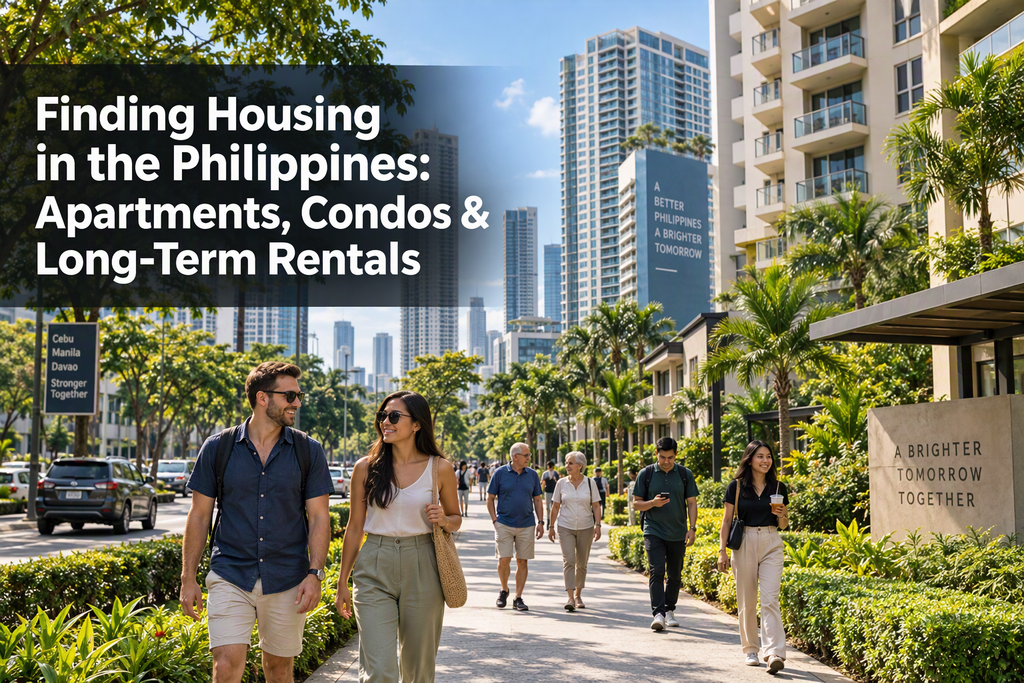
Learn how to find apartments, condos, houses, and long-term rentals in the Philippines. Compare costs, lease terms, locations, and housing options for travelers, retirees, expats, and digital nomads.
Finding Housing in the Philippines: Apartments, Condos, Houses & Long-Term Rentals
Whether you’re planning a long vacation, retiring, working remotely, or relocating to the Philippines, finding suitable housing is one of the most important decisions you’ll make. Fortunately, the country offers a wide range of options, from affordable provincial apartments to modern city condominiums and beachfront homes.
Rental prices vary significantly depending on location, property type, amenities, and proximity to tourist areas. Major cities such as Manila, Cebu, and Davao generally command higher rents, while smaller cities and provincial towns offer considerably more affordable options.
This guide explains the major housing options available in the Philippines and what prospective renters should know before signing a lease.
Quick Housing Overview
| Housing Type | Best For | Typical Monthly Cost |
|---|---|---|
| Studio Apartment | Solo renters | ₱8,000-₱25,000 |
| Condominium Unit | Professionals, retirees, digital nomads | ₱15,000-₱60,000+ |
| House Rental | Families, long-term residents | ₱15,000-₱150,000+ |
| Provincial Home | Budget-conscious renters | ₱5,000-₱20,000 |
| Beach Property | Lifestyle retirees and remote workers | ₱20,000-₱100,000+ |
Actual prices depend heavily on the destination and quality of the property.
Urban vs Rural Living in the Philippines
| Factor | Urban Areas (Manila, Cebu, Davao, Iloilo, Clark) | Rural Areas & Small Towns |
|---|---|---|
| Monthly Rent | Higher | Lower |
| Housing Options | More condos and apartments | More houses and lots |
| Internet Reliability | Usually excellent | Varies by location |
| Healthcare Access | Hospitals and specialists nearby | Basic facilities common |
| Shopping & Services | Extensive choices | Limited but sufficient |
| Public Transportation | Widely available | More limited |
| Traffic | Often heavy | Generally lighter |
| Cost of Living | Higher | Lower |
| Nightlife & Entertainment | Extensive | Limited |
| Expat Communities | Larger | Smaller |
| Noise Levels | Higher | Lower |
| Access to Airports | Usually easy | Often requires longer travel |
| Outdoor Space | Limited | More land and larger properties |
| Pace of Life | Fast-paced | Relaxed |
| Power Reliability | Generally better | Can vary significantly |
Typical Housing Costs: Urban vs Rural
| Housing Type | Urban Areas | Rural Areas |
|---|---|---|
| Studio Apartment | ₱15,000-₱40,000+ | ₱5,000-₱12,000 |
| One-Bedroom Apartment | ₱18,000-₱50,000+ | ₱7,000-₱15,000 |
| Condominium | ₱15,000-₱60,000+ | Rare outside major cities |
| Family House | ₱25,000-₱150,000+ | ₱10,000-₱35,000 |
| Large Property with Yard | Often very expensive | Frequently affordable |
Which Is Best for You?
Urban Living May Be Better If You:
- Need reliable high-speed internet
- Work remotely full-time
- Want modern conveniences
- Prefer restaurants, malls, and nightlife
- Need regular healthcare access
- Plan to live car-free
Rural Living May Be Better If You:
- Prioritize affordability
- Want more space and privacy
- Enjoy a slower pace of life
- Plan to retire in the Philippines
- Prefer nature and outdoor activities
- Don’t mind driving or occasional longer trips for services
Reality Check
Many long-term visitors discover that the best balance is often found in secondary cities such as Dumaguete, Iloilo, Bacolod, Cagayan de Oro, General Santos, and Puerto Princesa. These destinations typically offer lower housing costs than Metro Manila while still providing many of the conveniences that expats, retirees, and digital nomads expect.Understanding Philippine Housing Options
Apartments
Apartments are among the most affordable rental choices.
Typical features include:
- One to three bedrooms
- Basic furnishings or unfurnished units
- Shared parking
- Local neighborhoods
- Utility costs billed separately
Best for:
- Long-term travelers
- Budget retirees
- Local workers
- Students
Apartments are commonly found throughout cities, municipalities, and provincial areas.
Condominiums
Condominiums have become increasingly popular in major urban centers.
Typical amenities include:
- Security personnel
- Reception desks
- Swimming pools
- Fitness centers
- Backup power
- Elevators
Popular condominium markets include:
- Metro Manila
- Cebu City
- Mandaue City
- Davao City
- Iloilo City
- Clark
- Baguio
Best for:
- Digital nomads
- Expats
- Business travelers
- Retirees seeking convenience
House Rentals
Houses provide more space and privacy than apartments or condos.
Options range from:
- Modest provincial homes
- Townhouses
- Gated subdivision properties
- Beach houses
- Luxury villas
Many houses include:
- Parking areas
- Gardens
- Multiple bedrooms
- Pet-friendly spaces
Families often prefer house rentals over condominiums for long-term stays.
Housing Costs by Region
Metro Manila
The country’s largest housing market.
Typical rentals:
| Property Type | Monthly Cost |
|---|---|
| Studio Condo | ₱18,000-₱40,000 |
| One Bedroom Condo | ₱25,000-₱60,000 |
| Family House | ₱35,000-₱150,000+ |
Premium districts include:
- Makati
- Bonifacio Global City (BGC)
- Ortigas
- Alabang
Cebu
A favorite among retirees and digital nomads.
Typical rentals:
| Property Type | Monthly Cost |
|---|---|
| Studio Condo | ₱15,000-₱30,000 |
| One Bedroom Condo | ₱20,000-₱45,000 |
| House Rental | ₱20,000-₱80,000+ |
Popular areas include:
- Cebu City
- Mandaue
- Lapu-Lapu City
- Talisay
Davao
One of the more affordable major cities.
Typical rentals:
| Property Type | Monthly Cost |
|---|---|
| Apartment | ₱8,000-₱20,000 |
| Condo | ₱15,000-₱35,000 |
| House | ₱15,000-₱50,000+ |
Many retirees appreciate Davao’s lower costs and relatively relaxed pace.
Provincial Cities
Examples include:
- Dumaguete
- Bacolod
- Iloilo
- Cagayan de Oro
- General Santos
Typical rentals:
| Property Type | Monthly Cost |
|---|---|
| Apartment | ₱5,000-₱15,000 |
| House | ₱10,000-₱35,000 |
| Condo | ₱12,000-₱30,000 |
These cities often provide excellent value compared to Manila.
Furnished vs Unfurnished Rentals
Furnished Properties
Often include:
- Beds
- Refrigerator
- Air conditioning
- Dining table
- Cookware
- Internet equipment
Best for:
- Travelers
- Expats
- Digital nomads
Higher monthly costs but lower move-in expenses.
Unfurnished Properties
May only include:
- Lighting fixtures
- Basic kitchen cabinets
- Bathroom fixtures
Best for:
- Long-term residents
- Families
- Retirees planning permanent stays
Lower monthly rent but greater setup costs.
Lease Terms and Rental Practices
Most long-term rentals require:
- One month advance rent
- One to two months security deposit
A common arrangement is:
1 Month Advance + 2 Months Deposit
Lease lengths typically range from:
- Six months
- One year
- Multiple years
Shorter leases are often available in tourist destinations but usually come at higher monthly rates.
Utilities and Additional Costs
Many newcomers focus only on rent and overlook ongoing expenses.
Common monthly costs include:
| Expense | Typical Monthly Range |
|---|---|
| Electricity | ₱2,000-₱10,000+ |
| Water | ₱200-₱1,000 |
| Internet | ₱1,200-₱3,000 |
| Condo Fees | Sometimes included |
| Parking | ₱500-₱5,000 |
Air conditioning use often becomes the biggest utility expense.
Popular Destinations for Long-Term Renters
Cebu
Ideal for:
- Digital nomads
- Retirees
- Frequent travelers
Strong airport connectivity and modern infrastructure.
Dumaguete
Popular among retirees.
Advantages include:
- Lower living costs
- University town atmosphere
- Access to diving and beaches
Davao
Known for:
- Affordability
- Modern amenities
- Large city services
- Access to nature
Iloilo
Growing rapidly while maintaining relatively affordable housing costs.
Popular with:
- Retirees
- Families
- Remote workers
Clark & Angeles
Increasingly attractive due to:
- International airport access
- Modern developments
- Business growth
Common Rental Mistakes to Avoid
Renting Sight Unseen
Photos may not accurately represent a property’s condition.
Whenever possible:
- Request video tours
- Visit in person
- Verify utilities and internet service
Ignoring Commute Times
Traffic in major cities can significantly affect quality of life.
Always consider:
- Work location
- Shopping access
- Medical facilities
- Public transportation
Not Clarifying Utility Costs
Before signing:
- Ask what utilities are included
- Confirm internet availability
- Request estimated utility bills
Focusing Only on Rent
The cheapest property is not always the best value.
Consider:
- Security
- Location
- Building quality
- Flood risk
- Transportation costs
Housing Tips for Foreigners
Foreigners can legally rent apartments, condominiums, and houses throughout the Philippines.
Before signing a lease:
- Request a written contract
- Verify the owner’s authority to rent the property
- Obtain receipts for all payments
- Confirm maintenance responsibilities
- Review termination policies
Keeping written records helps prevent misunderstandings later.
Final Thoughts
Housing in the Philippines ranges from inexpensive provincial apartments to luxury waterfront villas and modern city condominiums. The best choice depends on your budget, lifestyle, and intended length of stay. Many newcomers benefit from renting a short-term property first, exploring different neighborhoods, and then committing to a longer lease once they understand the local market.
Related Guides
- Cost of Living in the Philippines: Small-Town vs City Prices for Travelers
- Cost of Living in the Philippines for Retirees
- Philippines Housing & Rentals Guide for Expats and Long-Term Visitors
- Retiring in the Philippines
- Digital Nomad Guide to the Philippines
- Best Places to Live in the Philippines
- Philippine Transportation Guide
- Banking in the Philippines
- Internet & Mobile Connectivity in the Philippines
- Accommodations of the Philippines