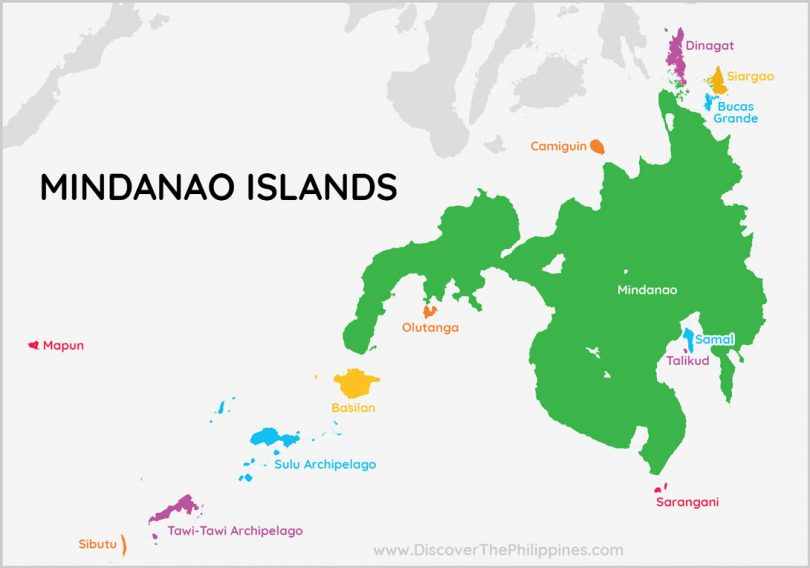
Map of the Mindanao Island Group by discoverthephilippines.com
Mindanao Island Group – Complete Administrative & Travel Guide
The Mindanao Island Group is the southernmost of the Philippines’ three major island groups and is known for its cultural diversity, vast natural landscapes, rich agricultural resources, and growing tourism sector. From the surfing beaches of Siargao and the volcanic landscapes of Camiguin to the highlands of Bukidnon and the cultural heritage of BARMM, Mindanao offers some of the country’s most varied travel and geographic experiences.
Mindanao contains six administrative regions and numerous island groups, making it one of the most geographically diverse parts of the Philippines. It serves as a major center for agriculture, fisheries, trade, ecotourism, and adventure travel while remaining home to some of the country’s most significant indigenous and cultural communities.
Quick Facts About the Mindanao Island Group
| Feature | Information |
|---|---|
| Island Group | Mindanao |
| Location | Southern Philippines |
| Administrative Regions | Region IX, Region X, Region XI, Region XII, Region XIII, BARMM |
| Number of Regions | 6 |
| Number of Provinces | 27 |
| Largest City | Davao City |
| Major Islands | Mindanao, Samal, Siargao, Dinagat, Camiguin, Basilan, Sulu Islands, Tawi-Tawi |
| Known For | Mountains, waterfalls, cultural diversity, agriculture, surfing, marine environments |
| Major Airport Gateway | Davao International Airport (DVO) |
| Major Seaports | Davao Port, Cagayan de Oro Port, Zamboanga Port, General Santos Port |
| Famous Destinations | Siargao, Camiguin, Samal Island, Lake Sebu, Enchanted River, Mount Apo |
| Major Mountain Ranges | Kitanglad Range, Apo-Talomo Range, Pantaron Range |
| Famous Landmarks | Mount Apo, Tinuy-an Falls, Enchanted River, Lake Lanao |
| Best For | Adventure travel, ecotourism, diving, surfing, cultural tourism |
| Geographic Role | Southern economic, agricultural, ecological, and cultural center of the Philippines |
Administrative Identity of the Mindanao Island Group
The Mindanao Island Group forms the southern administrative framework of the Philippines and contains a diverse collection of mainland provinces, island provinces, autonomous territories, metropolitan centers, agricultural regions, and remote island chains. The island group contains many of the country’s largest agricultural areas and some of its most significant marine ecosystems.
Administrative Regions of the Mindanao Island Group
The Mindanao Island Group contains six administrative regions, each contributing unique cultural, economic, and geographic characteristics. Together these regions form the southern administrative structure of the Philippines while supporting agriculture, commerce, transportation, mining, tourism, and fisheries.
Mindanao Administrative Regions
| Region | Description |
|---|---|
| Region IX – Zamboanga Peninsula | A culturally diverse region known for maritime trade, Chavacano heritage, beaches, and coastal communities. |
| Region X – Northern Mindanao | A region of mountains, river systems, agricultural lands, and major urban centers including Cagayan de Oro. |
| Region XI – Davao Region | The economic powerhouse of Mindanao, home to Davao City and Mount Apo, the highest mountain in the Philippines. |
| Region XII – SOCCSKSARGEN | Known for agriculture, tuna fishing, indigenous cultures, and Lake Sebu’s highland communities. |
| Region XIII – Caraga Region | Famous for mining, forests, surfing destinations, and island provinces including Dinagat Islands and Siargao. |
| Bangsamoro Autonomous Region in Muslim Mindanao (BARMM) | A culturally distinct autonomous region known for Islamic heritage, traditional communities, island provinces, and important maritime routes. |
Regional Structure of Mindanao
The Mindanao Island Group combines mainland regions, autonomous territories, highland provinces, agricultural plains, coastal communities, and island archipelagos.
- Region IX serves as Mindanao’s western gateway.
- Region X occupies much of northern Mindanao.
- Region XI serves as the island group’s primary economic center.
- Region XII anchors much of central and southern Mindanao.
- Region XIII connects northeastern Mindanao with Siargao and Dinagat Islands.
- BARMM occupies large portions of western and southern Mindanao, including several island provinces.
Together these regions form the administrative framework of the Mindanao Island Group and contain many of the Philippines’ most productive agricultural areas, culturally diverse communities, and emerging tourism destinations.
Provinces of Mindanao
Mindanao contains 27 provinces, the second-largest concentration of provinces in the Philippines.
Region IX – Zamboanga Peninsula
- Zamboanga del Norte
- Zamboanga del Sur
- Zamboanga Sibugay
Region X – Northern Mindanao
- Bukidnon
- Camiguin
- Lanao del Norte
- Misamis Occidental
- Misamis Oriental
Region XI – Davao Region
- Davao de Oro
- Davao del Norte
- Davao del Sur
- Davao Occidental
- Davao Oriental
Region XII – SOCCSKSARGEN
- Cotabato
- Sarangani
- South Cotabato
- Sultan Kudarat
Region XIII – Caraga
- Agusan del Norte
- Agusan del Sur
- Dinagat Islands
- Surigao del Norte
- Surigao del Sur
BARMM
- Basilan
- Lanao del Sur
- Maguindanao del Norte
- Maguindanao del Sur
- Sulu
- Tawi-Tawi
Major Cities of Mindanao
Mindanao contains several of the Philippines’ largest and fastest-growing urban centers.
Key Highly Urbanized Cities
- Davao City
- Cagayan de Oro
- Zamboanga City
- General Santos City
- Iligan City
- Butuan City
Other Major Cities
- Malaybalay
- Valencia
- Cotabato City
- Kidapawan
- Koronadal
- Surigao City
- Tagum
- Dipolog
- Pagadian
Geography of the Mindanao Island Group
Mindanao features some of the Philippines’ most dramatic landscapes, including mountain ranges, volcanic peaks, vast river systems, forests, lakes, and island archipelagos.
Key Geographic Features
- Mount Apo
- Kitanglad Mountain Range
- Pantaron Mountain Range
- Agusan Marsh
- Lake Lanao
- Davao Gulf
- Moro Gulf
- Zamboanga Peninsula
Significant Islands
- Siargao
- Samal Island
- Camiguin
- Dinagat Islands
- Basilan
- Jolo
- Tawi-Tawi
- Talicud Island
Economy of Mindanao
Mindanao plays a critical role in the Philippine economy as a major producer of food, agricultural products, and marine resources.
Key Economic Sectors
- Agriculture
- Fisheries
- Aquaculture
- Tourism
- Trade and Logistics
- Mining
- Manufacturing
- Energy Production
Major Economic Centers
- Davao City
- Cagayan de Oro
- General Santos
- Zamboanga City
- Butuan City
- Koronadal
Travel Overview of Mindanao
Mindanao offers some of the Philippines’ most rewarding outdoor and cultural travel experiences.
Top Destinations
- Siargao Island
- Camiguin Island
- Samal Island
- Mount Apo
- Lake Sebu
- Tinuy-an Falls
- Enchanted River
- Dahican Beach
- Britania Islands
- Dinagat Islands
- Lake Lanao
- Zamboanga City
Popular Travel Experiences
- Surfing
- Diving
- Island hopping
- Hiking
- Waterfall exploration
- Cultural tourism
- Wildlife photography
- Ecotourism
- Adventure travel
- Indigenous cultural experiences
Travel Gateways
Major entry points into the Mindanao Island Group include:
- Davao International Airport (DVO)
- Laguindingan Airport (CGY)
- Francisco Bangoy International Airport
- General Santos International Airport
- Zamboanga International Airport
- Bancasi Airport (Butuan)
- Davao Port
- General Santos Port
- Cagayan de Oro Port
- Zamboanga Port
Internal Links
Strengthen the Regions of the Philippines silo by linking to:
- Regions of the Philippines
- Zamboanga Peninsula
- Northern Mindanao
- Davao Region
- SOCCSKSARGEN
- Caraga Region
- BARMM
- Mindanao Provinces Directory
- Major Cities of Mindanao
- Philippine Administrative Divisions
- Philippine Statistics
- Mindanao Road Trips Guide
- Mindanao Budget Travel
- Mindanao Island Clusters Guide
Conclusion
The Mindanao Island Group represents one of the Philippines’ most diverse and dynamic regions. From the economic centers of Davao and Cagayan de Oro to the island destinations of Siargao, Camiguin, and Samal, Mindanao combines rich cultural heritage, exceptional natural beauty, and significant economic importance. Whether exploring its administrative regions, learning about its provinces, or planning a journey through its mountains, islands, and coastal communities, Mindanao provides a deeper understanding of the southern Philippines and its unique place within the archipelago.