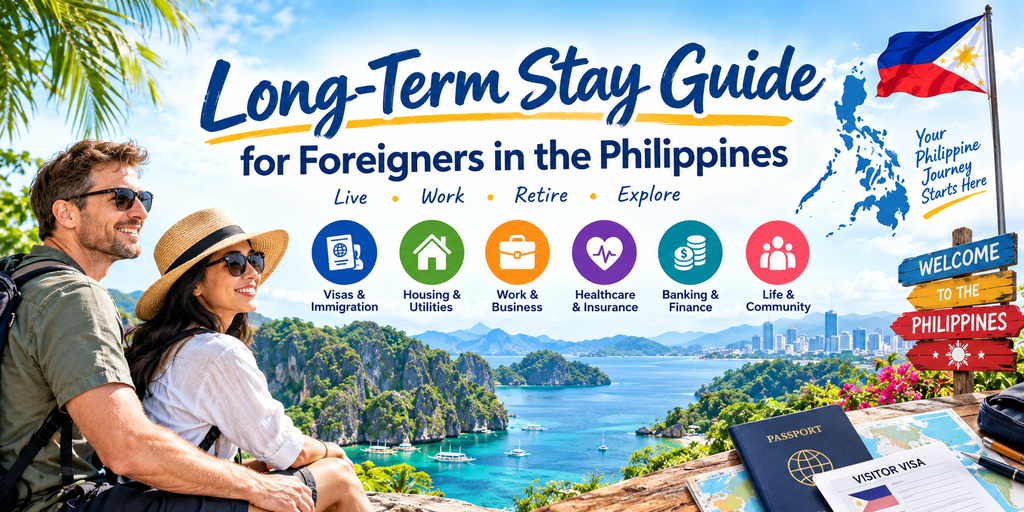
Planning an extended stay in the Philippines? Learn about visas, budgeting, housing, healthcare, transportation, banking, internet, retirement, and practical living tips for foreigners.
Long-Term Stay Guide for Foreigners in the Philippines
The Philippines has become a popular destination for foreigners seeking a long-term stay. Some visitors arrive for a few months to escape winter, while others stay for years as retirees, digital nomads, remote workers, investors, or family members of Filipinos.
With more than 7,600 islands, widespread English usage, affordable living costs, and a welcoming culture, the Philippines offers opportunities ranging from modern city living to quiet provincial lifestyles.
This guide serves as a starting point for foreigners planning an extended stay in the Philippines and connects you to resources covering visas, budgeting, housing, healthcare, transportation, and daily life.
Why Stay Long-Term in the Philippines?
Many foreigners choose the Philippines because it offers:
- Relatively affordable living costs
- English-speaking communities
- Warm tropical weather year-round
- Diverse destinations from cities to remote islands
- Established expat communities
- Access to beaches, mountains, and nature
- Friendly local culture
- Modern amenities in major cities
Whether you prefer the convenience of Metro Manila, the coastal lifestyle of Cebu, or the slower pace of provincial towns, there are options suited to different budgets and lifestyles.
Determining Your Long-Term Stay Goals
Before choosing a location or setting a budget, identify your primary purpose for staying.
Common long-term visitor categories include:
Retirees
Retirees typically prioritize:
- Cost of living
- Healthcare access
- Safety
- Housing options
- Established expat communities
Digital Nomads
Remote workers often focus on:
- High-speed internet
- Coworking spaces
- International airports
- Reliable infrastructure
Extended Vacationers
Long-term travelers frequently seek:
- Affordable accommodations
- Island hopping opportunities
- Transportation access
- Local experiences
Family-Based Visitors
Some foreigners spend long periods in the Philippines with spouses, partners, or extended family.
Their priorities often include:
- Community integration
- Housing
- Education
- Family services
Understanding Philippine Visas
Visa requirements vary based on nationality and the purpose of your stay.
Before traveling, always review the most current immigration requirements.
Long-term visitors commonly explore:
- Tourist visa options
- Visa extensions
- Retirement programs
- Work-related permits
- Family-based residency programs
Important factors include:
- Passport validity
- Extension fees
- Reporting requirements
- Re-entry rules
- Length-of-stay limits
A visa strategy should be one of the first parts of your long-term stay planning process.
Choosing the Best Location
The Philippines offers dramatically different lifestyles depending on where you choose to live.
Metro Manila
Best for:
- Business
- International services
- Shopping
- Specialized healthcare
- International schools
Challenges:
- Traffic congestion
- Higher rental costs
- Faster pace of life
Cebu
Best for:
- Regional travel
- Beaches
- Urban conveniences
- International flights
Popular among:
- Expats
- Retirees
- Remote workers
Davao
Best for:
- Modern infrastructure
- Lower congestion
- Outdoor recreation
- Family-oriented living
Provincial Cities
Examples include:
- Dumaguete
- Bacolod
- Iloilo
- Tagbilaran
- Butuan
Advantages:
- Lower living costs
- Less traffic
- Local community atmosphere
Small-Town and Rural Living
Ideal for those seeking:
- Very low living costs
- Quiet lifestyles
- Cultural immersion
Potential challenges include:
- Limited healthcare
- Fewer transportation options
- Slower internet speeds
Understanding the Cost of Living
Living costs vary substantially throughout the country.
Major factors include:
- Location
- Housing standards
- Utility usage
- Healthcare needs
- Transportation habits
- Lifestyle preferences
General expense categories include:
- Rent
- Food
- Utilities
- Internet
- Transportation
- Healthcare
- Entertainment
Related Guides
- Cost of Living in the Philippines: Small-Town vs City Prices for Travelers
- Cost of Living in the Philippines for Retirees
Managing Your Money
Financial planning becomes increasingly important during long-term stays.
Topics to consider include:
- ATM access
- Banking services
- Digital payments
- Budgeting
- Emergency savings
- Currency exchange
The Philippines uses both cash and digital payment systems. Foreigners quickly discover that while major cities offer extensive card acceptance, many local businesses continue to operate primarily in cash.
Related Guides
- Philippine Money & Budgeting Guide
- Philippine Currency Guide
- Money, Banking & ATMs in the Philippines
Finding Housing
Housing choices range from inexpensive provincial apartments to luxury condominiums in major cities.
Common options include:
Apartments
Often the most practical option for solo visitors and couples.
Condominiums
Popular in major cities because they provide:
- Security
- Amenities
- Furnished units
- Reliable utilities
Houses
Typically favored by:
- Families
- Retirees
- Long-term residents
Long-Term Resort Rentals
Available in many tourism destinations.
Factors to evaluate:
- Monthly rent
- Utilities
- Internet availability
- Distance to healthcare
- Transportation access
- Security
Related Guide
Healthcare Considerations
Healthcare quality differs considerably across the country.
Major medical centers generally offer:
- Advanced diagnostics
- Specialist care
- Modern facilities
- International-standard hospitals
Before committing to a location, consider:
- Hospital availability
- Emergency services
- Medical insurance
- Prescription access
- Specialist availability
Long-term visitors often maintain either travel insurance or international health insurance.
Related Guide
Transportation and Mobility
Your transportation needs depend heavily on where you plan to live.
Common options include:
- Domestic airlines
- Ferries
- Buses
- Jeepneys
- Tricycles
- Taxis
- Ride-hailing services
Visitors in major cities often rely on ride-hailing apps, while those in provincial areas commonly use local transportation networks.
Related Guide
Internet and Connectivity
Reliable internet is essential for many long-term visitors.
Typical options include:
- Mobile data plans
- Fiber internet
- Wireless home internet
- eSIM services
Internet performance varies significantly between urban and rural locations.
Digital nomads should review internet availability before signing a long-term lease.
Banking and Financial Services
Many foreigners use a combination of:
- Local cash withdrawals
- International debit cards
- Credit cards
- E-wallet services
Popular digital payment platforms include:
- GCash
- Maya
Practical considerations include:
- ATM fees
- Exchange rates
- Banking hours
- Transaction limits
- Online banking options
Building an emergency fund is strongly recommended for anyone planning an extended stay.
Safety and Practical Living Tips
Long-term visitors can improve their experience by following several practical guidelines.
Maintain Emergency Funds
Unexpected expenses may include:
- Healthcare costs
- Transportation disruptions
- Accommodation issues
- Emergency travel
Keep Digital Copies of Important Documents
Store copies of:
- Passport
- Visa documents
- Insurance information
- Flight details
Plan for Weather Events
The Philippines experiences:
- Typhoons
- Heavy rains
- Seasonal flooding in some regions
Location selection should take local weather risks into account.
Learn Basic Cultural Etiquette
While English is widely spoken, understanding local customs helps make day-to-day interactions easier and more enjoyable.
Long-Term Stays for Retirees
The Philippines remains a popular retirement destination because of:
- Lower living costs
- Tropical climate
- English usage
- Established expat communities
- Diverse location options
Retirees should carefully evaluate:
- Healthcare access
- Monthly budgets
- Housing options
- Transportation availability
- Community support
Related Guide
- Philippine Retirement Guide
Advantages of Long-Term Living in the Philippines
Benefits frequently cited by long-term residents include:
- Affordable lifestyle options
- Warm weather
- Friendly culture
- Diverse travel opportunities
- Relaxed pace of life in many areas
- Strong English proficiency
Challenges to Consider
Potential challenges include:
- Traffic in major cities
- Seasonal weather disruptions
- Infrastructure differences between regions
- Visa management requirements
- Healthcare availability in remote locations
Proper planning helps minimize these challenges and improves the overall experience.
Is a Long-Term Stay in the Philippines Right for You?
For many foreigners, the Philippines offers a unique combination of affordability, natural beauty, cultural experiences, and lifestyle flexibility. Whether you plan to spend several months exploring the islands or establish a long-term base as a retiree or remote worker, careful preparation will help ensure a successful stay.
Understanding housing, budgeting, transportation, healthcare, and local living conditions before you arrive can make the transition significantly smoother and more enjoyable.
Related Guides
- Travel Essentials Philippines
- Philippine Money & Budgeting Guide
- Philippine Currency!
- Money, Banking & ATMs in the Philippines
- Cost of Living in the Philippines: Small-Town vs City Prices for Travelers
- Cost of Living in the Philippines for Retirees
- Philippines Housing & Rentals Guide for Expats and Long-Term Visitors
- Healthcare & Hospitals Guide for Visitors and Expats
- Transportation & Getting Around in the Philippines
- Philippine Retirement Guide
- Philippine Island Tourism Hub