Explore the Philippines’ rich biodiversity—from rare wildlife and vibrant marine ecosystems to world‑class national parks. Learn key species, top destinations, conservation efforts, travel tips, and eco‑tourism guides in one comprehensive resource.
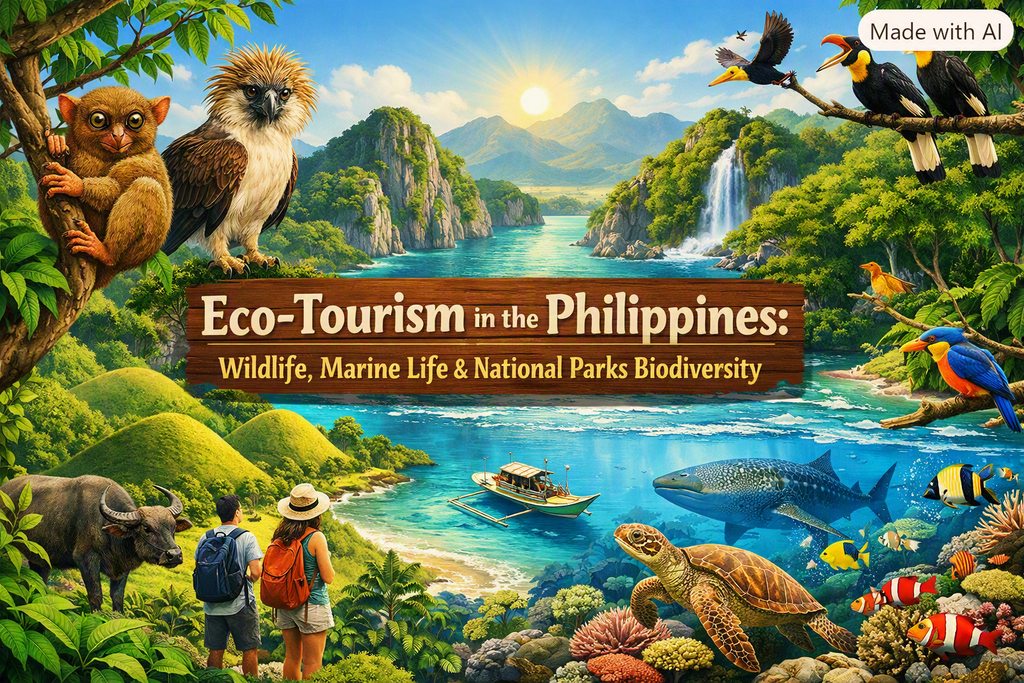
Philippine Wildlife, Marine Life & National Parks: The Biodiversity Guide
The Philippines is one of the world’s most important biodiversity hotspots, home to thousands of endemic species, vibrant coral reefs, and protected national parks that safeguard its natural heritage. This 2,000‑word landing page unifies three major eco‑tourism pillars—Wildlife Diversity, Marine Life, and National Parks—into a single authoritative resource for travelers, students, and conservation advocates.
The Philippines as a Global Biodiversity Hotspot
The archipelago’s unique geography—7,641 islands, tropical climate, volcanic terrain, and vast coastlines—creates ideal conditions for extraordinary biodiversity. Over 52,000 species thrive here, including rare mammals, endemic birds, ancient reptiles, and more than 500 coral species, making the country a top destination for eco‑tourism and scientific research.
Key factors that shape Philippine biodiversity:
- Endemism — Over half of land mammals and birds exist nowhere else on Earth.
- Island Ecosystems — Isolated habitats create distinct species per region.
- Marine Corridors — The Philippines sits at the center of the Coral Triangle, the richest marine region globally.
- Protected Areas — National parks and reserves safeguard forests, reefs, and wildlife.
Wildlife Diversity in the Philippines
The Philippines hosts an impressive range of wildlife—from tiny tarsiers to giant eagles, from rare cloud rats to endemic reptiles. Its forests, mountains, wetlands, and mangroves support species found nowhere else.
Iconic Wildlife Species
- Philippine Eagle — One of the world’s largest and rarest eagles, found in Mindanao and Luzon highlands.
- Philippine Tarsier — A nocturnal primate known for its large eyes, native to Bohol and Mindanao.
- Tamaraw — A critically endangered dwarf buffalo found only in Mindoro.
- Visayan Warty Pig — A rare species threatened by habitat loss.
- Palawan Bearcat — A unique mammal with a prehensile tail, found in Palawan forests.
Major Wildlife Habitats
Forests & Highlands
Dense forests in Luzon, Mindanao, and the Visayas host endemic mammals, reptiles, and birds. Key areas include:
- Sierra Madre
- Mount Apo
- Northern Sierra Madre Natural Park
H4: Wetlands & Marshes
Wetlands support migratory birds and freshwater species:
- Agusan Marsh
- Candaba Wetlands
Mangroves & Coastal Forests
Mangrove ecosystems protect coastlines and serve as nurseries for fish and crustaceans.
Marine Life in the Philippines
The Philippines is globally recognized for its marine biodiversity. Its waters host 2,000+ fish species, 500+ coral species, and countless marine mammals, turtles, and invertebrates.
Key Marine Species
- Sea Turtles — Green, Hawksbill, Olive Ridley, and Leatherback turtles nest across the archipelago.
- Whale Sharks — Gentle giants found in Donsol, Tubbataha, and Southern Leyte.
- Dugong — Rare marine mammals found in Palawan.
- Coral Species — The country hosts the highest coral diversity on Earth.
- Reef Fish — Clownfish, parrotfish, wrasses, groupers, and more.
Related Guides:
Top Marine Destinations
Tubbataha Reefs Natural Park, Palawan
A UNESCO World Heritage Site known for pristine reefs, sharks, manta rays, and large pelagic species.
Apo Reef Natural Park, Occidental Mindoro
The second-largest contiguous coral reef system in the world.
Coron & El Nido, Palawan
Famous for limestone cliffs, shipwreck diving, and rich marine ecosystems.
Siargao & Surigao Waters, Surigao del Norte
Home to vibrant reefs, mangroves, and marine sanctuaries.
National Parks & Protected Areas
The Philippines has over 94 protected areas, including national parks, natural parks, wildlife sanctuaries, and marine reserves. These areas preserve ecosystems, support wildlife, and promote sustainable tourism.
Top National Parks in the Philippines
Mount Pulag National Park, Benguet
Known for its “sea of clouds,” dwarf bamboo grasslands, and endemic species.
Bataan Natural Park, Bataan
A biodiversity-rich forest home to birds, mammals, and waterfalls.
Puerto Princesa Subterranean River National Park, Palawan
A UNESCO site featuring limestone karsts, underground rivers, and diverse wildlife.
Mounts Iglit-Baco National Park, Occidental Mindoro & Oriental Mindoro
The last refuge of the critically endangered tamaraw.
Balinsasayao Twin Lakes Natural Park, Negros Oriental
A freshwater ecosystem supporting birds, reptiles, and endemic plants.
Conservation Efforts & Environmental Challenges
The Philippines faces significant environmental threats—deforestation, illegal wildlife trade, coral bleaching, pollution, and climate change. Conservation programs aim to protect habitats and species through:
- Community-Based Conservation
- Marine Protected Areas
- Reforestation Programs
- Anti-Poaching Initiatives
- Eco-Tourism Policies
Eco‑Tourism Guide for Travelers
Eco‑tourism allows visitors to explore nature responsibly while supporting conservation.
Best Eco‑Tourism Activities
- Wildlife Watching
- Birdwatching
- Scuba Diving
- Snorkeling
- Forest Trekking
- Kayaking & River Tours
Responsible Travel Tips
- Choose eco‑certified tour operators.
- Avoid touching corals or disturbing wildlife.
- Support local communities and conservation groups.
- Reduce plastic waste during travel.
- Follow park rules and guidelines.
Why Biodiversity Matters
Philippine biodiversity supports:
- Food security
- Climate resilience
- Tourism and livelihoods
- Cultural heritage
- Scientific discovery
Protecting wildlife, marine life, and national parks ensures future generations can experience the country’s natural wonders.
Summary & Key Takeaways
The Philippines is a global biodiversity treasure. Its wildlife, marine ecosystems, and national parks form a rich natural tapestry that attracts travelers and researchers worldwide