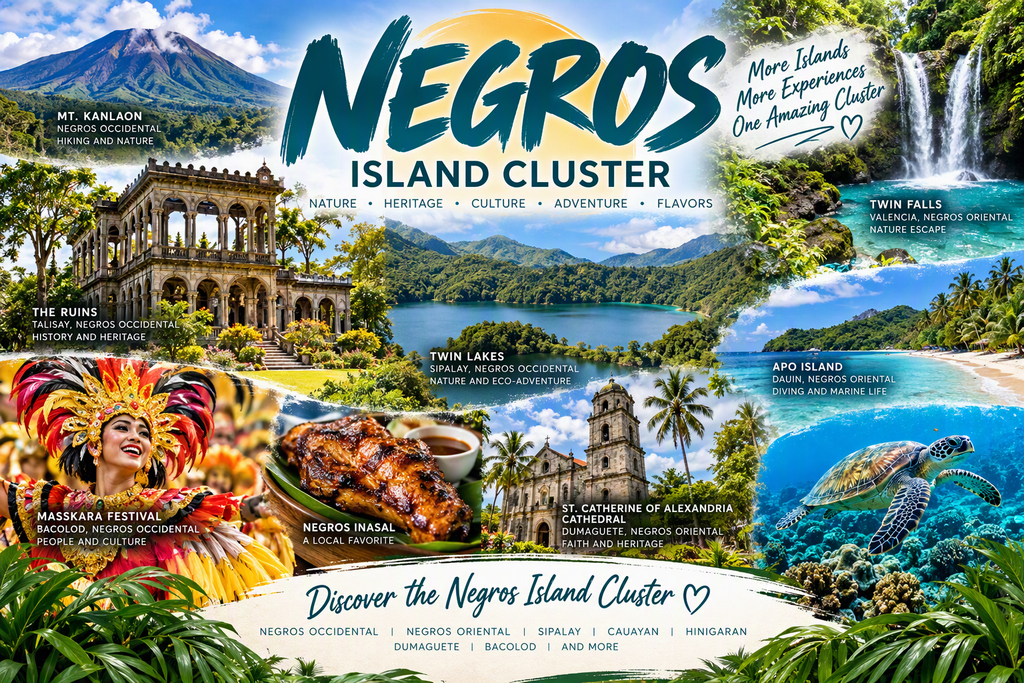
Negros is the fourth-largest island in the Philippines and one of the most diverse destinations in the Visayas. Shared by Negros Occidental and Negros Oriental, the island combines volcanic landscapes, mountain ranges, heritage cities, marine sanctuaries, waterfalls, diving destinations, and thriving cultural traditions. From the urban energy of Bacolod and Dumaguete to the wilderness of Mt. Kanlaon and the coral reefs of Apo Island, Negros offers a wide range of experiences for travelers seeking both adventure and relaxation.
Unlike many island destinations that focus primarily on beaches, Negros provides a balanced mix of culture, history, nature, and outdoor recreation. Visitors can explore Spanish-era landmarks, hike volcanic trails, discover hidden waterfalls, experience local festivals, and enjoy some of the best diving sites in the Philippines.
Today, Negros remains one of the Visayas’ most rewarding islands, offering authentic local experiences alongside world-class natural attractions.
Quick Facts About Negros
| Feature | Information |
|---|---|
| Region | Western Visayas and Central Visayas |
| Provinces | Negros Occidental, Negros Oriental |
| Largest City | Bacolod City |
| Largest Island | Negros |
| Most Famous Landmark | Mt. Kanlaon |
| Primary Airports | Bacolod-Silay Airport, Dumaguete Airport |
| Known For | MassKara Festival, Apo Island, Volcanoes, Diving, Heritage Sites |
| Surrounding Waters | Visayan Sea, Sulu Sea, Bohol Sea, Tañon Strait |
Best Time to Visit Negros
Negros can be visited throughout the year, with the dry season providing the best conditions for outdoor activities, diving, and island exploration.
| Season | Conditions | Best For |
|---|---|---|
| December to May | Dry season and calmer seas | Diving, sightseeing, outdoor travel |
| June to November | Increased rainfall and greener landscapes | Nature tourism and cultural travel |
| March to May | Warm temperatures and clear skies | Beach trips, hiking, photography |
| July to October | Rainy season and occasional storms | Flexible travelers only |
Travelers planning hikes, diving excursions, or visits to remote attractions should monitor local weather conditions.
Geographic Overview
Negros lies at the center of the Visayas and is separated from Panay by the Guimaras Strait, Cebu by the Tañon Strait, and Mindanao by the Bohol Sea. The island is dominated by mountain ranges and volcanic landscapes, including the active Mt. Kanlaon, the highest peak in the Visayas.
The island’s western side is known for sugar plantations and historic cities, while the eastern side features marine sanctuaries, coastal resorts, waterfalls, and university towns. This combination creates one of the Philippines’ most geographically varied islands.
Negros also serves as a transportation hub connecting travelers to Cebu, Siquijor, Bohol, Panay, and Mindanao.
Major Destinations on Negros
Bacolod City
Known as the “City of Smiles,” Bacolod serves as the cultural and economic center of Negros Occidental.
Highlights
- MassKara Festival
- The Ruins
- Capitol Park and Lagoon
- Museums and heritage sites
Best For
- Cultural tourism
- Food travel
- Urban exploration
Dumaguete City
Dumaguete is one of the Philippines’ most popular university cities and serves as the gateway to many attractions in Negros Oriental.
Highlights
- Rizal Boulevard
- Silliman University
- Local cafés
- Ferry connections
Best For
- Culture
- Food
- Base for exploration
Apo Island
Apo Island is one of the country’s most famous marine sanctuaries and diving destinations.
Highlights
- Sea turtle encounters
- Coral reefs
- Snorkeling
- Marine biodiversity
Best For
- Diving
- Snorkeling
- Marine photography
Mt. Kanlaon Natural Park
The highest mountain in the Visayas dominates central Negros.
Highlights
- Volcanic landscapes
- Mountain trails
- Forest ecosystems
- Wildlife habitats
Best For
- Hiking
- Nature travel
- Adventure tourism
Mambukal Resort
Located in Murcia, Mambukal combines hot springs, waterfalls, and forest environments.
Highlights
- Waterfalls
- Hot springs
- Forest trails
- Recreation facilities
Best For
- Families
- Nature lovers
- Day trips
Bais City and Manjuyod Sandbar
One of the most popular coastal destinations in Negros Oriental.
Highlights
- Manjuyod Sandbar
- Dolphin watching
- Coastal scenery
- Island excursions
Best For
- Photography
- Marine tours
- Families
Classification of Attractions
Best Natural Attractions
- Mt. Kanlaon
- Mambukal Resort
- Twin Lakes Natural Park
- Pulangbato Falls
Best Beaches and Coastal Destinations
- Apo Island
- Sipalay
- Manjuyod Sandbar
Best Historical Sites
- The Ruins
- Silliman University
- Heritage Houses of Silay
Best Wildlife Attractions
- Apo Island Marine Sanctuary
- Twin Lakes Natural Park
- Mt. Kanlaon Ecosystems
Best Family Attractions
- Mambukal Resort
- Manjuyod Sandbar
- Bacolod Attractions
Ecological Importance
Negros supports some of the Visayas’ most important ecosystems. The island contains protected forests, volcanic habitats, watersheds, mangrove forests, marine sanctuaries, and coral reef systems.
Mt. Kanlaon Natural Park protects a significant portion of the island’s biodiversity, while Apo Island serves as an internationally recognized model for marine conservation. Numerous endemic birds, reptiles, and plant species depend on Negros’ forests and protected landscapes.
The island’s marine environments also support fisheries, tourism, and conservation programs throughout the Visayas.
History and Culture
Negros has played a significant role in Philippine history through agriculture, trade, and regional development. The sugar industry helped shape much of Negros Occidental’s economy and architectural heritage, while Negros Oriental developed as an educational and cultural center.
The island’s cities preserve historic churches, ancestral houses, museums, and cultural traditions that reflect centuries of indigenous, Spanish, and modern Filipino influences.
Major festivals, especially Bacolod’s MassKara Festival, continue to showcase the island’s vibrant cultural identity.
Why Visit Negros?
Negros offers one of the most complete island experiences in the Philippines. Travelers can explore volcanoes, marine sanctuaries, heritage cities, waterfalls, hot springs, and island beaches without leaving the island.
The diversity of attractions allows visitors to combine outdoor adventures with cultural experiences, making Negros ideal for both first-time and repeat visitors.
Its excellent transportation network and connections to neighboring islands further enhance its appeal as a travel destination.
Top Experiences on Negros
Climb or View Mt. Kanlaon
Experience the highest peak in the Visayas.
Dive or Snorkel at Apo Island
Discover one of the Philippines’ most celebrated marine sanctuaries.
Explore Dumaguete
Experience one of the country’s most charming coastal cities.
Visit The Ruins
See one of Negros Occidental’s most iconic historical landmarks.
Relax at Mambukal Resort
Enjoy waterfalls, hot springs, and mountain scenery.
Discover Manjuyod Sandbar
Experience the “Maldives of the Philippines.”
Travel Styles
Best for Families
- Mambukal Resort
- Manjuyod Sandbar
- Bacolod Attractions
Best for Divers
- Apo Island
- Dauin Dive Sites
Best for Nature Lovers
- Mt. Kanlaon
- Twin Lakes
- Forest Reserves
Best for Couples
- Sipalay
- Apo Island
- Dumaguete Waterfront
Best for Photographers
- Manjuyod Sandbar
- Mt. Kanlaon
- The Ruins
Suggested Itineraries
3-Day Negros Highlights
Day 1
- Dumaguete
- Rizal Boulevard
- Local food tour
Day 2
- Apo Island
- Snorkeling
- Marine sanctuary
Day 3
- Manjuyod Sandbar
- Bais dolphin watching
5-Day Complete Negros Experience
Days 1–2
Negros Oriental highlights
Day 3
Apo Island and marine activities
Day 4
Bacolod City and heritage attractions
Day 5
Mt. Kanlaon or Mambukal Resort
How to Get Around Negros
Air Travel
- Bacolod-Silay Airport
- Dumaguete Airport
Ferry Connections
- Cebu
- Bohol
- Siquijor
- Panay
- Mindanao
Local Transportation
- Jeepneys
- Buses
- Vans
- Motorbike rentals
- Private tours
Where to Stay
Bacolod City
- Business hotels
- Heritage properties
- Boutique accommodations
Dumaguete
- Waterfront hotels
- Boutique guesthouses
- City accommodations
Sipalay
- Beach resorts
- Eco-resorts
- Diving lodges
Apo Island Area
- Dive resorts
- Budget accommodations
- Homestays
Planning Your Visit
Travelers should allow at least four to five days to experience both Negros Occidental and Negros Oriental.
Consider:
- Booking marine tours in advance
- Monitoring weather conditions
- Carrying cash for remote destinations
- Following wildlife and marine sanctuary regulations
- Combining Negros with nearby islands such as Cebu or Siquijor
Related Guides
- Panay Island Travel Guide
- Cebu Island Travel Guide
- Bohol Island Travel Guide
- Siquijor Island Travel Guide
- Apo Island Guide
- Dumaguete Travel Guide
- Visayas Island Clusters Guide
- Best Islands in the Philippines
Book Your Negros Adventure
Find Hotels and Resorts
Compare accommodations across Bacolod, Dumaguete, Sipalay, and surrounding destinations.
Flight Search
Find flights to Bacolod-Silay or Dumaguete airports.
Travel Insurance
Protect your trip against delays, cancellations, and unexpected events.
eSIM and Connectivity
Stay connected while exploring Negros and neighboring islands.
Tours and Activities
Book diving trips, island excursions, dolphin-watching tours, hiking adventures, and cultural experiences.
Conclusion
Negros combines the best of the Visayas into a single island destination. From the volcanic landscapes of Mt. Kanlaon and the marine sanctuaries of Apo Island to the heritage landmarks of Bacolod and the seaside charm of Dumaguete, the island offers an exceptional mix of nature, culture, history, and adventure. Whether you’re seeking world-class diving, mountain exploration, cultural festivals, or relaxing coastal escapes, Negros provides one of the most diverse and rewarding travel experiences in the Philippines.