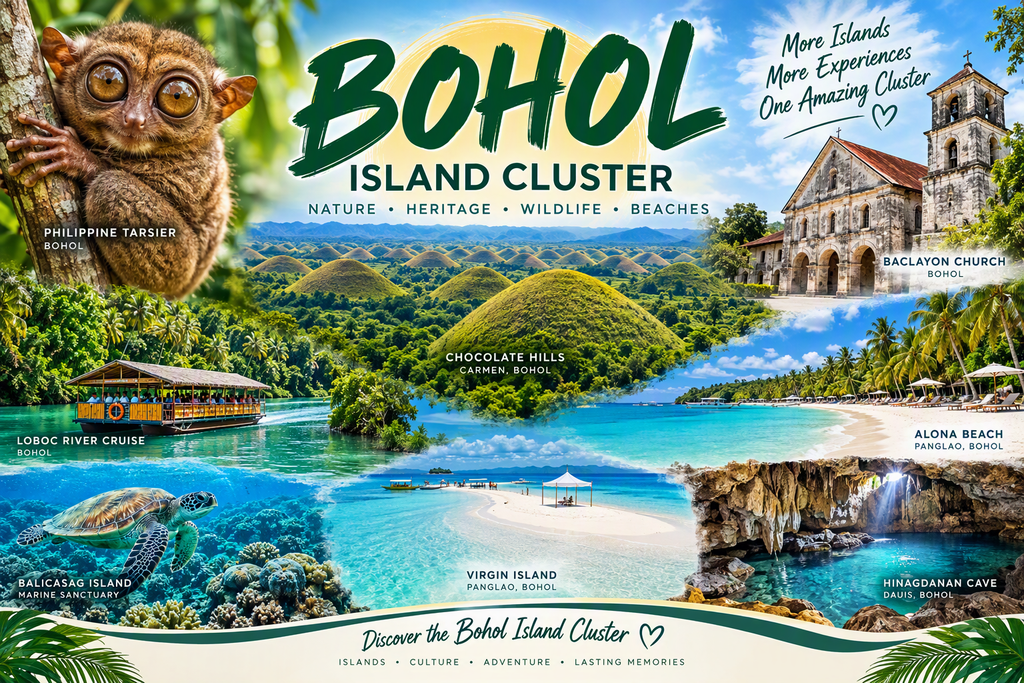
Bohol is one of the Philippines’ most diverse island destinations, combining natural wonders, pristine beaches, historical landmarks, cultural heritage, and marine biodiversity within a single island province. Located in the heart of the Central Visayas, Bohol is famous for the Chocolate Hills, the Philippine Tarsier, world-class diving sites, centuries-old churches, and the white-sand beaches of Panglao Island.
Unlike many destinations that focus primarily on beaches or cities, Bohol offers a balanced travel experience. Visitors can explore geological formations, cruise scenic rivers, discover Spanish-era heritage sites, encounter rare wildlife, and enjoy some of the country’s most accessible island-hopping and marine adventures.
Today, Bohol serves as one of the premier tourism destinations in the Philippines and a gateway to several smaller islands, marine sanctuaries, and coastal communities throughout the Visayas.
Quick Facts About Bohol
| Feature | Information |
|---|---|
| Region | Central Visayas |
| Province | Bohol |
| Capital City | Tagbilaran City |
| Largest Island | Bohol Island |
| Most Famous Landmark | Chocolate Hills |
| Primary Airport | Bohol-Panglao International Airport |
| Known For | Chocolate Hills, Tarsiers, Beaches, Diving, Heritage Churches |
| Surrounding Waters | Bohol Sea, Cebu Strait, Camotes Sea |
Best Time to Visit Bohol
Bohol can be visited year-round, with the dry season generally providing the most favorable conditions for sightseeing, island hopping, and outdoor activities.
| Season | Conditions | Best For |
|---|---|---|
| December to May | Dry weather and calmer seas | Beaches, sightseeing, island hopping |
| June to November | Increased rainfall and greener landscapes | Nature tourism and cultural travel |
| March to May | Warm temperatures and sunny skies | Beach vacations and outdoor adventures |
| July to October | Wet season with occasional storms | Flexible travelers only |
Travelers planning island-hopping tours should monitor local weather conditions before departure.
Geographic Overview
Bohol is the tenth-largest island in the Philippines and occupies a central position within the Visayan island group. The province consists of the main island of Bohol along with Panglao Island and numerous smaller islets and coastal islands.
The island is characterized by rolling hills, fertile agricultural land, limestone formations, river systems, mangrove forests, coral reefs, and extensive coastlines. Its strategic location has historically connected it to Cebu, Leyte, Siquijor, and Mindanao through maritime trade and transportation routes.
Bohol’s combination of inland and coastal environments makes it one of the most geographically varied islands in the country.
Major Destinations in Bohol
Tagbilaran City
Tagbilaran serves as the provincial capital and principal transportation hub for visitors arriving in Bohol.
Highlights
- Provincial Museum
- Cathedral of Saint Joseph
- Local markets
- Gateway to island attractions
Best For
- City tourism
- Cultural exploration
- Transportation connections
Panglao Island
Panglao is Bohol’s most famous beach destination and tourism center.
Highlights
- Alona Beach
- Dumaluan Beach
- Diving sites
- Resort districts
- Island-hopping tours
Best For
- Beach vacations
- Diving
- Snorkeling
- Resort stays
Chocolate Hills
The Chocolate Hills are among the most recognizable natural landmarks in the Philippines. Thousands of conical limestone hills create one of the country’s most unique landscapes.
Highlights
- Chocolate Hills Complex
- Viewing Decks
- Scenic Photography
- Geological Heritage
Best For
- Sightseeing
- Photography
- Family travel
- Nature tourism
Loboc
Loboc is one of Bohol’s most visited inland destinations and is known for its river cruises and historic sites.
Highlights
- Loboc River
- River Cruises
- Historic Church Sites
- Forest Landscapes
Best For
- Cultural tourism
- River experiences
- Scenic relaxation
Corella
Corella is famous for housing one of the island’s most important conservation facilities.
Highlights
- Philippine Tarsier Sanctuary
- Forest Habitats
- Wildlife Conservation
Best For
- Wildlife enthusiasts
- Educational tourism
- Nature travel
Island and Destination Classification
Natural Landmarks
- Chocolate Hills
- Loboc River
- Bilar Forest
Beach Destinations
- Panglao Island
- Alona Beach
- Dumaluan Beach
Wildlife Attractions
- Philippine Tarsier Sanctuary
- Forest Reserves
- Protected Habitats
Historical and Cultural Sites
- Baclayon Church
- Loboc Church
- Blood Compact Shrine
Marine Destinations
- Balicasag Island
- Virgin Island
- Panglao Dive Sites
Ecological Importance
Bohol contains a variety of significant terrestrial and marine ecosystems. Forest habitats support several endemic species, while coastal environments include coral reefs, mangroves, seagrass beds, and marine sanctuaries.
The island is internationally known for tarsier conservation efforts and marine biodiversity around Panglao and Balicasag Island. Marine protected areas help preserve coral reef systems that support fisheries and tourism throughout the province.
Historical and Cultural Significance
Bohol played an important role in Philippine history and was among the earliest areas influenced by Spanish colonial settlement. Historic churches, watchtowers, and cultural landmarks remain throughout the province.
One of the most important historical events commemorated on the island is the Sandugo or Blood Compact between local ruler Datu Sikatuna and Spanish explorer Miguel López de Legazpi. This event remains a major symbol of friendship and diplomacy in Philippine history.
The island’s communities continue to preserve traditions through festivals, local crafts, cuisine, and religious celebrations.
Why Visit Bohol?
Bohol offers one of the most complete travel experiences in the Philippines. Few destinations combine beaches, wildlife, geological wonders, diving, heritage sites, and family-friendly attractions as effectively as Bohol.
Visitors can spend the morning exploring the Chocolate Hills, enjoy a Loboc River cruise in the afternoon, observe Philippine tarsiers in protected forests, and end the day watching the sunset from Panglao’s beaches.
The island’s accessibility and well-developed tourism infrastructure also make it one of the easiest Visayan destinations to explore.
Top Experiences in Bohol
Visit the Chocolate Hills
See one of the most iconic natural landmarks in the Philippines.
See the Philippine Tarsier
Observe one of the world’s smallest primates in a protected environment.
Explore Panglao Island
Relax on white-sand beaches and enjoy island resort accommodations.
Dive at Balicasag Island
Discover vibrant coral reefs and abundant marine life.
Cruise the Loboc River
Experience one of the island’s most popular cultural and nature attractions.
Visit Historic Churches
Explore centuries of history and architecture throughout the province.
Travel Styles in Bohol
Best for Families
- Chocolate Hills
- Loboc River
- Panglao Island
Best for Divers
- Balicasag Island
- Panglao Reefs
- Marine Sanctuaries
Best for Nature Lovers
- Tarsier Sanctuary
- Bilar Forest
- Chocolate Hills
Best for Couples
- Panglao Resorts
- Beachfront Dining
- Sunset Cruises
Best for Photographers
- Chocolate Hills
- Panglao Coastline
- Historic Churches
Suggested Itineraries
3-Day Bohol Highlights
Day 1
- Chocolate Hills
- Tarsier Sanctuary
- Loboc River
Day 2
- Panglao Island
- Alona Beach
- Sunset Viewing
Day 3
- Balicasag Island
- Snorkeling
- Historic Sites
5-Day Complete Bohol Experience
Days 1–2
Major inland attractions
Days 3–4
Panglao and island hopping
Day 5
Heritage and cultural tourism
How to Get Around Bohol
Air Travel
- Bohol-Panglao International Airport
Ferry Services
- Cebu
- Siquijor
- Dumaguete
- Camiguin
Local Transportation
- Tricycles
- Vans
- Taxis
- Motorbike rentals
- Tour vehicles
Where to Stay
Panglao Island
- Luxury Resorts
- Dive Resorts
- Boutique Hotels
Tagbilaran City
- Business Hotels
- Budget Accommodations
Interior Bohol
- Eco-Lodges
- Nature Resorts
- Farm Stays
Planning Your Visit
Visitors should allow at least three days to experience the island’s major attractions. A longer stay provides more opportunities for diving, beach activities, wildlife encounters, and cultural exploration.
Travelers should:
- Book Panglao accommodations early during peak seasons
- Respect wildlife viewing guidelines
- Use reef-safe sunscreen
- Follow conservation rules in protected areas
- Carry cash when visiting rural communities
Related Guides
- Cebu Island Cluster Guide
- Negros Island Cluster Guide
- Siquijor Island Guide
- Camiguin Island Guide
- Panglao Island Travel Guide
- Chocolate Hills Guide
- Philippine Tarsier Guide
- Best Islands in the Visayas
Book Your Bohol Adventure
Find Hotels and Resorts
Compare accommodations across Panglao, Tagbilaran, and inland Bohol.
Flight Search
Find domestic and international flights to Bohol-Panglao International Airport.
Travel Insurance
Protect your trip against delays, cancellations, and unexpected travel disruptions.
Tours and Activities
Book countryside tours, river cruises, island-hopping adventures, diving excursions, and wildlife experiences.
Conclusion
Bohol remains one of the Philippines’ most rewarding island destinations, blending natural wonders, cultural heritage, wildlife conservation, marine adventures, and world-class beaches into a single destination. Whether exploring the Chocolate Hills, encountering Philippine tarsiers, diving at Balicasag Island, or relaxing on Panglao’s shores, visitors will discover why Bohol continues to rank among the country’s most popular and diverse travel destinations.