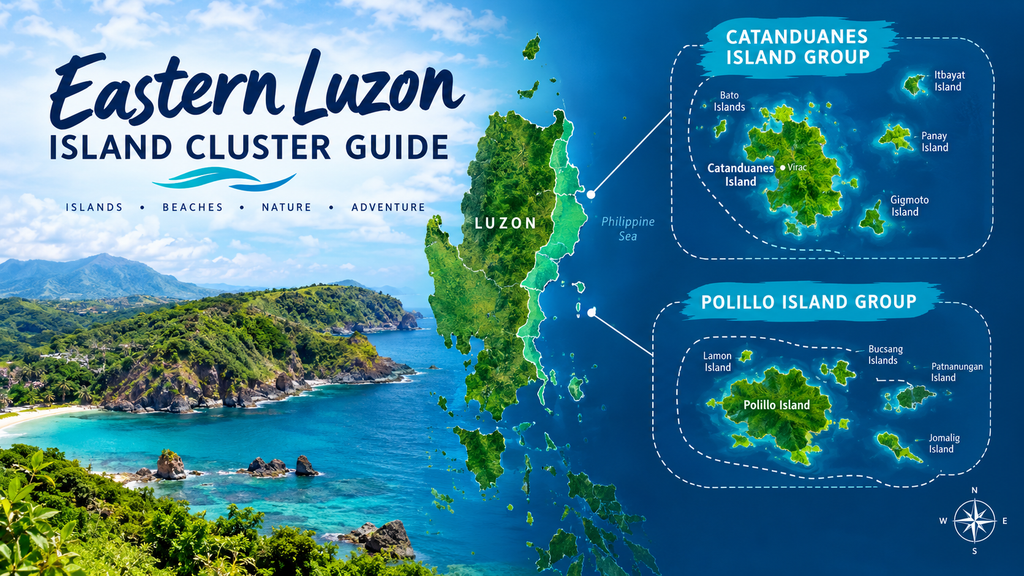
The Eastern Luzon Island Cluster encompasses the island province of Catanduanes and the Polillo Island Group off the eastern coast of Luzon. Facing the Philippine Sea, these islands are known for rugged coastlines, surfing beaches, rolling hills, coastal forests, marine ecosystems, and traditional fishing communities. Compared to many of the Philippines’ more developed tourist destinations, Eastern Luzon offers a quieter and more nature-focused travel experience.
Positioned along the Pacific-facing side of the archipelago, the islands of Eastern Luzon are shaped by strong ocean currents, seasonal weather systems, and rich marine biodiversity. The region’s dramatic landscapes, outdoor recreation opportunities, and growing eco-tourism industry make it one of the most distinctive island clusters in Luzon.
Quick Facts About the Eastern Luzon Island Cluster
| Feature | Information |
|---|---|
| Island Group | Luzon |
| Primary Islands | Catanduanes, Polillo Island Group |
| Provinces | Catanduanes, Quezon |
| Largest Settlement | Virac |
| Most Famous Destination | Catanduanes Island |
| Primary Airport | Virac Airport |
| Known For | Surfing Beaches, Coastal Landscapes, Eco-Tourism, Marine Ecosystems |
| Eastern Boundary | Philippine Sea |
Geographic Overview
Eastern Luzon consists primarily of Catanduanes Island and the Polillo Island Group, located east of mainland Luzon. These islands face the Philippine Sea and serve as important ecological zones supporting coastal habitats, mangrove forests, coral reefs, and marine wildlife.
The region experiences a tropical maritime climate and is frequently influenced by weather systems moving westward across the Pacific. This exposure has helped shape the islands’ rugged coastlines, productive fisheries, and unique coastal ecosystems.
Eastern Luzon also serves as a transition zone between mainland Luzon and the open Pacific, contributing significantly to the region’s environmental and cultural diversity.
Islands of the Eastern Luzon Cluster
Catanduanes Island
Catanduanes is the largest island in the cluster and serves as the center of the province of Catanduanes. Often called the “Land of the Howling Winds,” the island is known for its coastal scenery, surfing destinations, waterfalls, and historic landmarks.
Highlights
- Puraran Beach
- Binurong Point
- Virac
- Bato Church
- Maribina Falls
- Twin Rock Beach
Best For
- Surfing
- Scenic viewpoints
- Nature photography
- Cultural tourism
Polillo Island
Polillo Island is the largest island in the Polillo Group and is characterized by forests, agricultural lands, coastal villages, and marine habitats. The island remains largely undeveloped compared to many other Luzon destinations.
Highlights
- Coastal communities
- Mangrove ecosystems
- Nature reserves
- Island beaches
- Local fisheries
Best For
- Eco-tourism
- Wildlife viewing
- Island exploration
- Nature travel
Jomalig Island
Jomalig Island has become one of the most recognized destinations in the Polillo Group due to its unique golden-sand beaches and relaxed atmosphere.
Highlights
- Salibungot Beach
- Golden-sand coastlines
- Coastal viewpoints
- Island sunsets
Best For
- Beach escapes
- Photography
- Weekend adventures
- Relaxation
Patnanungan Island
Patnanungan is a quiet island municipality known for traditional fishing communities, uncrowded beaches, and scenic coastal landscapes.
Highlights
- White-sand beaches
- Fishing villages
- Coastal scenery
- Marine environments
Best For
- Local culture
- Relaxation
- Off-the-beaten-path travel
Burdeos and Nearby Islands
Burdeos serves as an important gateway to several smaller islands and protected coastal areas within the Polillo Group. The area is known for its marine resources and natural landscapes.
Highlights
- Mangrove areas
- Small offshore islands
- Coastal forests
- Nature reserves
Best For
- Eco-tourism
- Wildlife observation
- Coastal exploration
Best Time to Visit the Eastern Luzon Island Cluster
The Eastern Luzon Island Cluster can be visited throughout the year, although seasonal weather patterns influence ocean conditions, ferry schedules, and outdoor activities. Because Catanduanes and the Polillo Island Group face the Philippine Sea, travelers should consider weather conditions when planning island-hopping trips and coastal excursions.
| Season | Conditions | Best For |
|---|---|---|
| December to May | Drier weather and calmer seas | Beach trips, island hopping, sightseeing |
| June to November | Increased rainfall and occasional storms | Eco-tourism and cultural travel |
| March to May | Warm temperatures and clear skies | Surfing, photography, coastal exploration |
| July to October | Peak typhoon season | Flexible travelers only |
Travelers should monitor weather forecasts and transportation schedules before visiting Catanduanes, Polillo Island, Jomalig, or other offshore destinations, particularly during the rainy and typhoon seasons.
Island Classification
The islands of Eastern Luzon can be grouped according to their geographic and ecological characteristics.
Major Islands
- Catanduanes Island
- Polillo Island
- Jomalig Island
- Patnanungan Island
Eco-Tourism Destinations
- Catanduanes
- Polillo Island
- Burdeos
Beach and Coastal Destinations
- Puraran Beach
- Jomalig Island
- Patnanungan Island
Protected Natural Areas
- Coastal Nature Reserves
- Mangrove Forests
- Marine Habitats of the Polillo Group
Ecological Importance
Eastern Luzon supports a variety of coastal and marine ecosystems that contribute to the biodiversity of the Philippine Sea. Mangrove forests, seagrass beds, coral reefs, and coastal forests provide habitat for marine species, birds, and wildlife.
The region’s relatively low level of development has helped preserve many natural environments that continue to support fishing communities and conservation initiatives. Coastal nature reserves throughout Catanduanes and the Polillo Islands also play an important role in protecting marine ecosystems and shoreline habitats.
Historical and Cultural Significance
The islands of Eastern Luzon have long been connected to maritime trade, fishing traditions, and coastal settlement. Communities throughout Catanduanes and the Polillo Group developed around fishing, agriculture, and seafaring activities.
Many towns preserve historic churches, cultural traditions, and local festivals that reflect centuries of regional history. In Catanduanes, landmarks such as Bato Church offer insight into the island’s colonial heritage, while traditional livelihoods remain important across the region.
Travel Styles in Eastern Luzon
Best for Surfing
- Puraran Beach
- Catanduanes
Best for Nature and Scenery
- Binurong Point
- Catanduanes Coastline
- Polillo Island
Best for Eco-Tourism
- Polillo Island
- Burdeos
- Coastal Nature Reserves
Best for Photography
- Binurong Point
- Jomalig Island
- Puraran Beach
Best for Relaxation
- Jomalig Island
- Patnanungan Island
- Remote Polillo beaches
How to Get Around Eastern Luzon
Transportation options vary throughout the cluster.
Air Travel
- Flights connect Manila with Virac in Catanduanes.
Sea Travel
- Ferries connect mainland Luzon with Catanduanes.
- Boats provide access to Polillo Island, Jomalig, Patnanungan, and nearby islands.
Local Transportation
- Tricycles
- Vans
- Jeepneys
- Motorcycle rentals in selected areas
Visitors should verify ferry schedules and weather conditions before traveling to offshore islands.
Where to Stay
Accommodation options range from basic homestays to beach resorts and eco-lodges.
Catanduanes
- Beach resorts
- Boutique accommodations
- Guesthouses
Polillo Island Group
- Homestays
- Inns
- Local guest accommodations
Jomalig Island
- Beachfront cottages
- Small resorts
- Island guesthouses
Planning Your Visit
The best travel experiences often come from exploring multiple islands within the cluster. Visitors should allow extra time for weather-related transportation changes and seasonal conditions.
Travelers should:
- Book transportation in advance
- Carry sufficient cash
- Pack sun and rain protection
- Respect conservation areas
- Follow local environmental guidelines
Book Your Eastern Luzon Adventure
Discover surfing beaches, coastal viewpoints, historic landmarks, and island communities throughout Eastern Luzon.
Find Hotels and Resorts
Compare accommodations across Catanduanes and the Polillo Island Group.
Flight Search
Find flights to nearby gateways and save on airfare.
Travel Insurance
Protect your trip against travel disruptions and unexpected delays.
Tours and Activities
Book island tours, nature excursions, surfing experiences, and cultural visits throughout the region.
Related Guides
Continue exploring Luzon’s islands, coastal regions, and nearby destinations with these guides:
- Northern Luzon Island Cluster Guide → Batanes, Sabtang, Itbayat, and the Babuyan Islands
- Southeastern Luzon Island Cluster Guide → Masbate, Ticao, Burias, and the islands between Luzon and the Visayas
- Bicol Peninsula Cluster Guide → Mayon Volcano, Caramoan, Donsol, and mainland Bicol
- CALABARZON Coastal Cluster Guide → Batangas, Verde Island Passage, Pagbilao, and Southern Luzon coastal destinations
- Catanduanes Travel Guide → Surfing beaches, waterfalls, cultural landmarks, and coastal attractions
- Polillo Island Group Guide → Polillo, Jomalig, Patnanungan, Burdeos, and surrounding islands
- Jomalig Island Travel Guide → Golden-sand beaches and remote island adventures
- Best Islands in Luzon → A comprehensive guide to Luzon’s top island destinations
Conclusion
The Eastern Luzon Island Cluster offers a unique combination of Pacific-facing landscapes, island culture, marine biodiversity, and outdoor adventure. From the dramatic cliffs of Binurong Point and the surf breaks of Puraran Beach to the quiet shores of Jomalig and the forests of Polillo, the region showcases a lesser-known side of Luzon. Travelers seeking authentic island experiences, natural beauty, and uncrowded destinations will find Eastern Luzon among the most rewarding island regions in the Philippines.