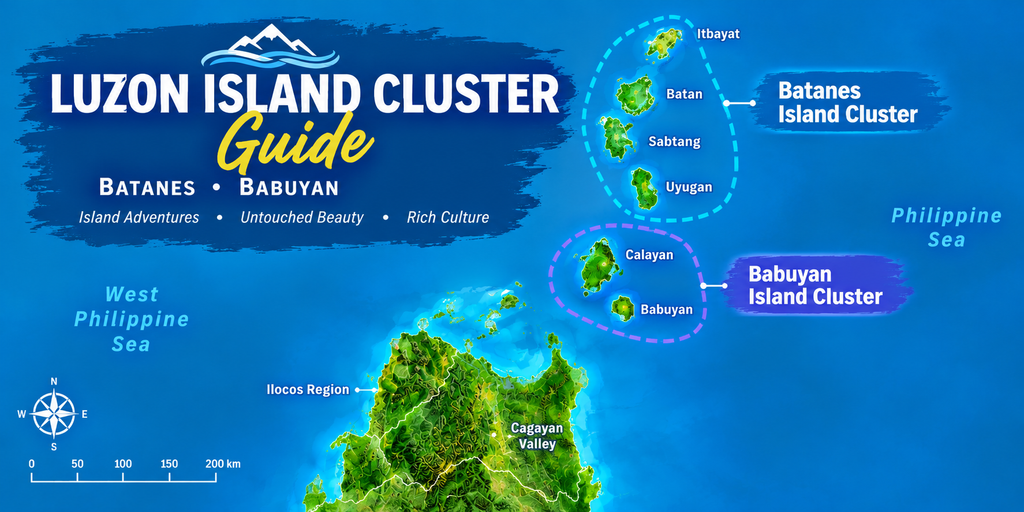
Introduction to the Northern Luzon Island Cluster
The Northern Luzon Island Cluster occupies the northernmost frontier of the Philippines and consists of some of the country’s most remote, culturally unique, and geographically distinct islands. Positioned between Luzon and Taiwan, this island cluster is characterized by dramatic coastlines, rolling grass-covered hills, volcanic landscapes, traditional fishing communities, and centuries-old maritime traditions.
The cluster is centered on the islands of Batanes and the Babuyan Islands, which together form the northern gateway of the Philippine archipelago. While separated from mainland Luzon by the Balintang and Babuyan Channels, these islands remain closely connected to the nation’s history, territorial waters, and cultural heritage.
Visitors exploring the Northern Luzon Island Cluster can experience untouched landscapes, centuries-old stone villages, rugged cliffs overlooking the Pacific Ocean, remote beaches, and some of the most distinctive indigenous cultures in the Philippines.
Quick Facts About the Northern Luzon Island Cluster
| Feature | Information |
|---|---|
| Island Group | Luzon |
| Primary Islands | Batanes, Babuyan Islands |
| Provinces | Batanes, Cagayan |
| Largest Settlement | Basco |
| Most Famous Destination | Batan Island |
| Primary Airport | Basco Airport |
| Known For | Ivatan Culture, Cliffs, Lighthouses, Remote Islands |
| Northern Boundary | Taiwan Strait |
Islands of the Northern Luzon Island Cluster
The Northern Luzon Island Cluster can be explored through two primary island groups that serve as the geographic and cultural heart of the region.
Batanes Island Group
Batanes is the northernmost province of the Philippines and is widely regarded as one of the country’s most unique destinations. The province is known for its rolling hills, stone houses, dramatic coastlines, traditional Ivatan culture, and carefully preserved landscapes.
Strong winds, rugged terrain, and isolation from the mainland have shaped both the environment and way of life of the Ivatan people for generations.
Highlights of Batanes
- Basco Lighthouse
- Marlboro Hills
- Sabtang Island
- Itbayat Island
- Valugan Boulder Beach
- Tayid Lighthouse
Explore
- Batanes Island Guide →
Babuyan Islands Group
Located south of Batanes and north of mainland Cagayan, the Babuyan Islands consist of several volcanic islands scattered across the Luzon Strait. These islands remain among the least-visited destinations in the Philippines and offer pristine beaches, active volcanoes, marine ecosystems, and important wildlife habitats.
The Babuyan Islands are recognized for their ecological significance and play an important role in regional biodiversity conservation.
Highlights of the Babuyan Islands
- Camiguin Norte Island
- Calayan Island
- Babuyan Claro Volcano
- Dalupiri Island
- Remote Beaches
- Marine Wildlife Areas
Explore
- Babuyan Islands Guide →
Geography of the Northern Luzon Island Cluster
The Northern Luzon Island Cluster occupies a strategic position between the Philippines and Taiwan. The islands form part of the Luzon Volcanic Arc and are characterized by rugged coastlines, steep cliffs, volcanic peaks, and rolling grasslands.
Their location places them at the intersection of major weather systems, ocean currents, and migration routes used by both marine life and birds.
Surrounding Waters
- Luzon Strait
- Balintang Channel
- Babuyan Channel
- Philippine Sea
- West Philippine Sea
These waterways have historically supported fishing, navigation, and trade while serving as important maritime corridors between the Philippines and neighboring territories.
Provinces of the Northern Luzon Island Cluster
The cluster is distributed across two provinces.
Batanes
The smallest province in the Philippines by population, Batanes is renowned for its preserved cultural identity, traditional architecture, rolling landscapes, and natural scenery.
Cagayan
The northernmost province on mainland Luzon, Cagayan administers the Babuyan Islands and serves as the primary gateway to the cluster from mainland Philippines.
Culture and Heritage
The Northern Luzon Island Cluster is best known for the culture of the Ivatan people, whose traditions have been shaped by centuries of adaptation to powerful typhoons, isolation, and maritime life.
Traditional Ivatan stone houses remain among the most recognizable architectural landmarks in the Philippines. Built using thick limestone walls and cogon grass roofs, these structures were specifically designed to withstand the harsh weather conditions common in the region.
The islands also maintain strong cultural traditions related to fishing, farming, weaving, and community cooperation. Local languages, customs, cuisine, and festivals continue to play an important role in preserving regional identity.
Historic churches, Spanish-era structures, and traditional villages can be found throughout the island cluster.
Transportation Across the Northern Luzon Island Cluster
Travel to the Northern Luzon Island Cluster is more limited than in most other parts of the Philippines due to the region’s remote location and weather conditions.
Major Airports
- Basco Airport
- Tuguegarao Airport (mainland gateway)
Ferry Connections
Limited ferry services occasionally connect:
- Northern Cagayan
- Calayan Island
- Other Babuyan Islands
Weather conditions can significantly affect transportation schedules throughout the year.
Why Visit the Northern Luzon Island Cluster?
The Northern Luzon Island Cluster appeals to travelers seeking destinations that remain largely untouched by mass tourism.
The region offers:
- Dramatic coastal scenery
- Traditional Ivatan culture
- Historic stone villages
- Remote island exploration
- Volcanic landscapes
- Wildlife opportunities
- Photography destinations
Visitors can experience a side of the Philippines that differs significantly from the country’s resort-focused tourism destinations while enjoying some of its most spectacular natural scenery.
Best Time to Visit the Northern Luzon Island Cluster
The Northern Luzon Island Cluster can be visited year-round, although weather conditions have a significant impact on transportation and outdoor activities. Travelers should plan their visit around seasonal conditions, especially when visiting remote islands where flights and ferry services may be affected by strong winds and storms.
| Season | Conditions | Best For |
|---|---|---|
| December to May | Drier weather and calmer seas | Sightseeing, photography, island tours |
| June to November | Increased rainfall and stronger winds | Cultural travel and off-season exploration |
| March to May | Clear skies and excellent visibility | Hiking and landscape photography |
| July to October | Peak typhoon season | Flexible travelers only |
Travelers should monitor weather forecasts and transportation advisories before visiting Batanes or the Babuyan Islands.
Recommended Itineraries
3-Day Northern Luzon Highlights
Day 1
- Arrive in Basco
- Explore Basco Lighthouse
- Visit Vayang Rolling Hills
- Sunset photography session
Day 2
- Tour Sabtang Island
- Explore traditional Ivatan villages
- Visit Morong Beach
- Experience Ivatan culture and cuisine
Day 3
- Visit Valugan Boulder Beach
- Explore Marlboro Hills
- Visit local museums and markets
- Departure
5-Day Northern Luzon Adventure
Days 1-3
- Explore Batan Island and Sabtang Island
Day 4
- Visit Itbayat Island
- Coastal sightseeing and community visits
Day 5
- Nature walks
- Heritage sites
- Return flight
Travel Planning Tips
Before visiting the Northern Luzon Island Cluster, travelers should keep the following considerations in mind. The region’s remote location, weather conditions, and limited transportation infrastructure require more planning than many destinations elsewhere in the Philippines.
- Book flights well in advance, especially for Batanes.
- Allow flexibility for weather-related delays.
- Carry cash, particularly on smaller islands.
- Respect local customs and cultural traditions.
- Wear comfortable walking shoes for sightseeing and hiking.
- Bring sun protection and rain gear.
- Consider guided tours when exploring remote areas.
- Check ferry and flight schedules before departure.
Travelers who plan ahead are rewarded with access to some of the Philippines’ most unique landscapes and cultural experiences.
How to Get Around the Northern Luzon Island Cluster
Transportation options vary throughout the cluster, with most visitors relying on local transportation, guided tours, and occasional boat transfers between islands.
Within Batanes
- Tricycles
- Vans
- Motorbike rentals
- Guided tours
Between Islands
- Local passenger boats
- Chartered vessels
- Limited scheduled services
Many visitors choose organized tours due to transportation schedules, weather conditions, and the remoteness of some destinations.
Where to Eat
The Northern Luzon Island Cluster offers cuisine influenced by Ivatan traditions, fishing communities, and island agriculture.
Popular foods include:
- Uvud balls
- Vunes
- Lunis
- Fresh seafood
- Root-crop-based dishes
Basco has the largest concentration of cafés, restaurants, local eateries, and accommodations serving traditional Ivatan dishes and Filipino cuisine.
Where to Stay in the Northern Luzon Island Cluster
Accommodation options primarily consist of locally owned guesthouses, boutique inns, eco-lodges, and small hotels.
Popular accommodation areas include:
- Basco
- Sabtang
- Itbayat
- Calayan Island
Tours and Activities
Popular experiences include:
- Batanes cultural tours
- Lighthouse excursions
- Coastal photography tours
- Village heritage walks
- Island hopping
- Hiking and nature exploration
- Wildlife observation
Many tours focus on cultural immersion and appreciation of the region’s unique landscapes.
BOOK NORTHERN LUZON TOURS →
Getting to the Northern Luzon Island Cluster
The fastest way to reach the cluster is by air through Basco Airport in Batanes.
Most visitors travel via:
- Manila to Basco flights
- Tuguegarao connections
- Limited sea transportation from northern Cagayan
Travel schedules are highly dependent on weather conditions, particularly during the typhoon season.
COMPARE FLIGHTS TO BATANES →
Travel Essentials
Planning ahead can make travel throughout the Northern Luzon Island Cluster more convenient, particularly when visiting remote destinations such as Batanes and the Babuyan Islands where transportation schedules may occasionally be affected by weather conditions.
Travel Insurance
Because many destinations within the cluster are remote and weather can occasionally impact flights and ferry services, travelers may wish to consider travel insurance before their trip.
COMPARE PHILIPPINES TRAVEL INSURANCE →
eSIM and Connectivity
Mobile coverage is generally available in populated areas of Batanes, although connectivity may be more limited on remote islands and during sea crossings. A Philippines travel eSIM can help visitors stay connected while exploring the region.
GET A PHILIPPINES eSIM →
BOOK NORTHERN LUZON HOTELS →
Related Guides
Island Cluster Guides
- Philippines Island Clusters Guide
- Luzon Island Clusters Guide
- Northeastern Luzon Island Cluster Guide
- Southeastern Luzon Island Cluster Guide
- MIMAROPA Island Clusters Guide
Destination Guides
- Batanes Travel Guide
- Basco Travel Guide
- Sabtang Travel Guide
- Itbayat Travel Guide
- Calayan Island Travel Guide
Planning Resources
- Top Destinations in Luzon
- Philippine Ferry Guide
- Best Islands in the Philippines
- Philippine Weather Guide
Northern Luzon Island Cluster at a Glance
The Northern Luzon Island Cluster represents one of the Philippines’ most distinctive travel regions. Combining dramatic landscapes, remote island communities, rich cultural traditions, and extraordinary natural beauty, the cluster offers an experience unlike any other in the country. Whether exploring the rolling hills of Batanes, visiting traditional Ivatan villages, discovering the remote Babuyan Islands, or standing atop windswept coastal cliffs overlooking the Luzon Strait, travelers will find one of the archipelago’s most unforgettable destinations.
Explore Batanes →
Explore the Babuyan Islands →
Return to the Luzon Island Clusters Guide →