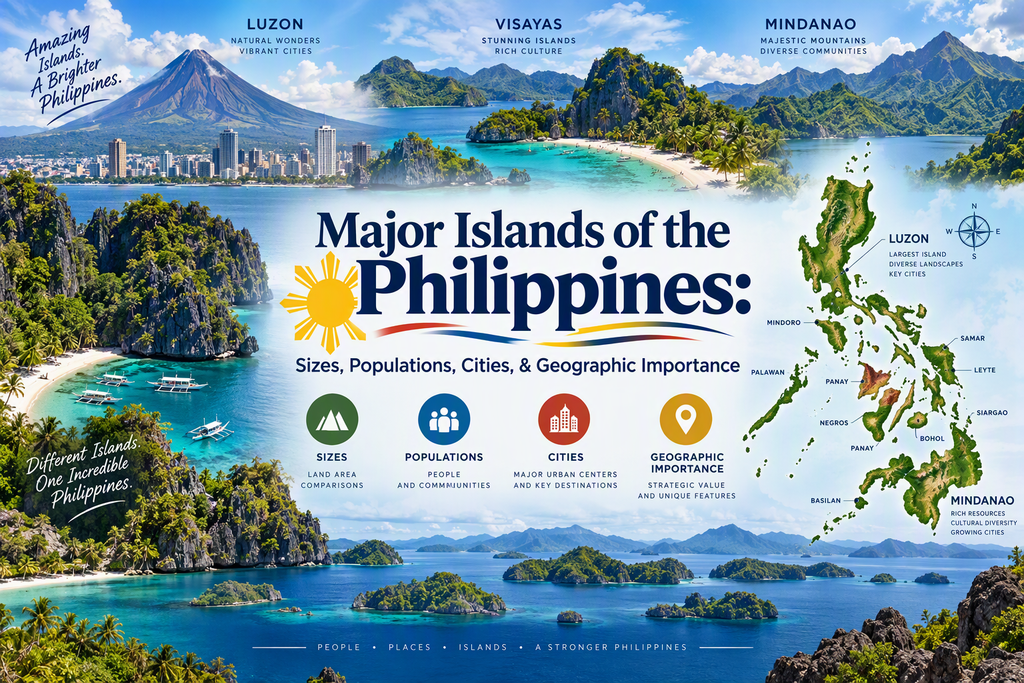
The Philippines is home to several large and strategically important islands that serve as centers of population, commerce, agriculture, and government. From Luzon, the nation’s largest and most populous island, to Mindanao, Samar, Negros, Panay, and Palawan, each island plays a unique role in the country’s development. This guide examines the Philippines’ major islands, comparing their sizes, populations, principal cities, economic significance, and geographic characteristics.
The Three Main Island Groups
Luzon
Luzon is the largest and most populous island in the Philippines. It serves as the political and economic center of the country and is home to Metro Manila, the national capital region.
Highlights include:
- Manila and Intramuros
- Banaue Rice Terraces
- Baguio City
- Mayon Volcano
- Hundred Islands National Park
- Vigan Historic City
Luzon offers a mix of modern urban centers, colonial history, mountain landscapes, and world-famous volcanoes.
Visayas
The Visayas occupies the central part of the Philippines and consists of several large and small islands known for beaches, diving destinations, and cultural heritage.
Popular destinations include:
- Cebu
- Bohol
- Boracay
- Iloilo
- Bacolod
- Dumaguete
The region is famous for white-sand beaches, whale shark encounters, Spanish-era churches, and vibrant festivals.
Mindanao
Mindanao is the second-largest island in the Philippines and is known for its rich biodiversity, cultural diversity, and adventure tourism opportunities.
Top attractions include:
- Siargao Island
- Camiguin
- Mount Apo
- Samal Island
- Enchanted River
- Tinuy-an Falls
Mindanao offers untouched natural attractions, world-class surfing, and some of the country’s most spectacular landscapes.
Major Islands of the Philippines
While the Philippines contains thousands of islands, several stand out due to their size, population, economic importance, and tourism appeal.
1. Luzon
Area: Approximately 109,965 km²
Luzon is the country’s largest island and serves as the gateway for many international visitors. It includes Metro Manila, Central Luzon, the Cordillera Mountains, Bicol Region, and numerous island provinces.
Best Known For
- The capital city of Manila
- Mayon Volcano
- Banaue Rice Terraces
- Historic Vigan
- Surfing in La Union
2. Mindanao
Area: Approximately 97,530 km²
Mindanao is known for its rich natural resources, mountain ranges, unique cultures, and growing tourism industry.
Best Known For
- Mount Apo, the highest mountain in the Philippines
- Siargao surfing destination
- Samal Island beaches
- Camiguin Island adventures
- Diverse indigenous cultures
3. Samar
Area: Approximately 13,429 km²
Samar is the third-largest island in the Philippines and remains one of the nation’s most untouched destinations.
Best Known For
- Sohoton Natural Bridge National Park
- Calbiga Cave System
- Biri Rock Formations
- Pristine waterfalls and forests
Nature lovers will find some of the Philippines’ best eco-tourism experiences in Samar.
4. Negros
Area: Approximately 13,310 km²
Negros lies in the Visayas and is divided between Negros Occidental and Negros Oriental provinces.
Best Known For
- Bacolod City
- The MassKara Festival
- Dumaguete City
- Apo Island diving
- Mount Kanlaon
Negros combines excellent diving, mountain adventures, and rich cultural heritage.
5. Palawan
Area: Approximately 12,189 km²
Often called the Philippines’ last ecological frontier, Palawan is one of the country’s most famous travel destinations.
Best Known For
- El Nido
- Coron
- Puerto Princesa Underground River
- Balabac Islands
- World-class diving
Palawan regularly ranks among the world’s best island destinations.
6. Panay
Area: Approximately 12,011 km²
Panay is a major island in the Western Visayas and home to several important cities and tourist destinations.
Best Known For
- Iloilo City
- Boracay Island (Aklan)
- Antique’s mountain landscapes
- Guimaras mangoes nearby
Panay combines historical attractions, stunning beaches, and exceptional food culture.
7. Mindoro
Area: Approximately 10,572 km²
Located south of Luzon, Mindoro is known for its natural beauty and rich biodiversity.
Best Known For
- Puerto Galera
- Apo Reef Natural Park
- Mangyan indigenous cultures
- Diving and snorkeling
Mindoro remains one of the easiest island escapes from Manila.
8. Leyte
Area: Approximately 7,368 km²
Leyte played a significant role during World War II and is one of the Visayas’ most historically important islands.
Best Known For
- MacArthur Landing Memorial
- Kalanggaman Island
- Tacloban City
- Beautiful waterfalls and beaches
The island offers a mix of history, culture, and nature.
9. Cebu
Area: Approximately 4,943 km²
Cebu is one of the country’s most developed and visited islands.
Best Known For
- Cebu City
- Oslob whale sharks
- Kawasan Falls
- Moalboal diving
- Historical landmarks
Cebu serves as a major transportation and tourism hub in the Central Visayas.
10. Bohol
Area: Approximately 4,821 km²
Bohol is internationally famous for its unique geological formations and marine attractions.
Best Known For
- Chocolate Hills
- Panglao Island
- Tarsier sanctuaries
- Loboc River
- White-sand beaches
Bohol is perfect for families, nature lovers, and cultural travelers.
Why These Islands Matter
The Philippines’ largest islands support the majority of the country’s population, economy, transportation networks, and tourist destinations. Each island possesses its own identity, language influences, traditions, cuisine, and natural attractions.
From the volcanoes of Luzon and the beaches of Palawan to the surf breaks of Siargao and the marine wonders of Cebu and Bohol, the country’s islands showcase the incredible diversity that makes the Philippines one of Southeast Asia’s most fascinating destinations.
Explore More Philippine Guides
Luzon
- Manila City Guide
- Quezon City Guide
- Makati City Guide
- Baguio Travel Guide
- Ilocos Region Guide
Visayas
- Cebu Travel Guide
- Bohol Travel Guide
- Boracay Travel Guide
- Iloilo Travel Guide
- Negros Island Guide
Mindanao
- Davao City Guide
- Cagayan de Oro Guide
- Siargao Island Guide
- Camiguin Travel Guide
- Zamboanga Peninsula Guide
Related Guides
- Philippine Regions Guide
- Luzon Travel Guide
- Visayas Travel Guide
- Mindanao Travel Guide
- Best Islands in the Philippines
- Philippines Travel Guide
- Major Cities of the Philippines
- Philippine Provinces Guide
- Best Beaches in the Philippines
- Philippine Island Hopping Guide
Ready to Explore the Islands of the Philippines?
From the towering mountains of Luzon and the pristine lagoons of Palawan to the vibrant culture of the Visayas and the adventure-filled landscapes of Mindanao, the Philippines offers an incredible diversity of destinations across its thousands of islands. Each island has its own story, traditions, natural wonders, and unforgettable experiences waiting to be discovered.
Whether you’re planning your first trip to the Philippines, searching for your next island getaway, or simply learning more about this remarkable archipelago, use our destination guides to explore the country’s most beautiful regions, cities, beaches, mountains, and cultural treasures.
Start your Philippine journey today:
- Explore the Regions of the Philippines
- Discover the Best Islands in the Philippines
- Find Detailed City and Province Guides
- Plan Your Perfect Beach, Nature, or Cultural Adventure
- Uncover Hidden Gems Beyond the Tourist Trail
The Philippines is more than just a collection of islands. It is a nation of diverse landscapes, welcoming communities, rich history, and endless opportunities for exploration. Continue browsing TuristaSaPilipinas.com and discover why every island offers a new adventure waiting to be experienced.