Overview
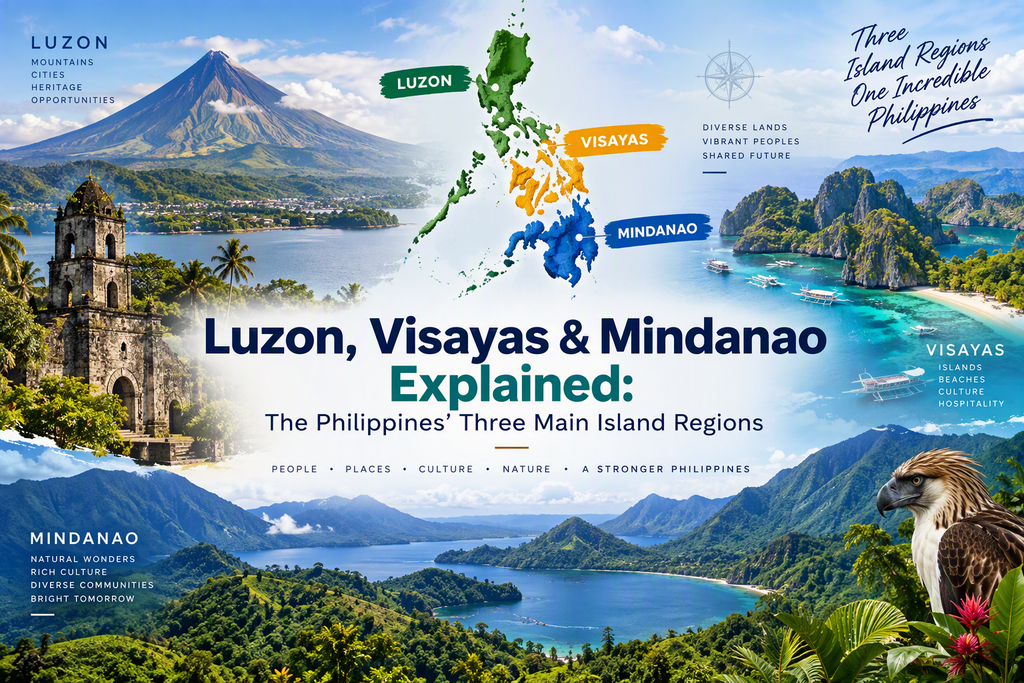
The Philippines is officially divided into three major island regions: Luzon, Visayas, and Mindanao. While these regions are not administrative units, they play an essential role in geography, culture, transportation, government, and national identity. Understanding the distinction between Luzon, Visayas, and Mindanao provides the foundation for understanding how the country is organized and how its diverse regions connect across thousands of islands.
How the Philippines Is Divided
The Philippines is organized into three major island groups:
- Luzon
- Visayas
- Mindanao
Each island group contains multiple regions, provinces, cities, municipalities, and thousands of islands. These divisions help define geography, culture, language, transportation routes, and tourism destinations across the archipelago.
Quick Comparison
| Island Group | Location | Major Cities | Known For |
|---|---|---|---|
| Luzon | Northern Philippines | Manila, Baguio, Legazpi | Government, history, mountains, beaches |
| Visayas | Central Philippines | Cebu City, Iloilo City, Bacolod | Beaches, islands, diving, culture |
| Mindanao | Southern Philippines | Davao City, Cagayan de Oro, Zamboanga | Nature, mountains, indigenous culture |
Luzon Island Group
The Luzon Island Group occupies the northern portion of the Philippines and includes the nation’s largest island, Luzon. It is the political, economic, and population center of the country and is home to the National Capital Region (Metro Manila).
Highlights
- Largest island group in the Philippines
- Home to Manila, the national capital
- Gateway to many international destinations
- Features mountains, volcanoes, beaches, and historic sites
Popular Destinations
- Manila
- Baguio
- Vigan
- Tagaytay
- Batangas
- Puerto Galera
- Palawan
- El Nido
- Coron
- Batanes
Major Regions
- National Capital Region (NCR)
- Ilocos Region
- Cagayan Valley
- Central Luzon
- CALABARZON
- MIMAROPA
- Bicol Region
- Cordillera Administrative Region
Visayas Island Group
Located in the center of the Philippines, the Visayas Island Group consists of several islands known for their white-sand beaches, diving destinations, island-hopping opportunities, and vibrant cultural festivals.
Highlights
- Central island region of the Philippines
- Famous for beaches and marine activities
- Home to some of the country’s most popular tourist destinations
- Rich Spanish colonial heritage
Popular Destinations
- Cebu
- Bohol
- Boracay
- Iloilo
- Bacolod
- Siquijor
- Dumaguete
- Kalanggaman Island
Major Islands
- Cebu
- Bohol
- Panay
- Negros
- Samar
- Leyte
Major Regions
- Western Visayas
- Central Visayas
- Eastern Visayas
Mindanao Island Group
The Mindanao Island Group occupies the southern Philippines and contains the country’s second-largest island, Mindanao. The region is known for its natural attractions, cultural diversity, rainforests, waterfalls, and mountain landscapes.
Highlights
- Home to Mount Apo, the highest mountain in the Philippines
- Rich indigenous and cultural heritage
- Emerging ecotourism and adventure destinations
- Extensive coastline and marine biodiversity
Popular Destinations
- Davao
- Siargao
- Camiguin
- Samal Island
- Dinagat Islands
- Cagayan de Oro
- Bukidnon
- Zamboanga
Major Regions
- Davao Region
- Northern Mindanao
- SOCCSKSARGEN
- Caraga
- Zamboanga Peninsula
- BARMM
Why Island Groups Matter
The three island groups help organize:
- Geographic location
- Transportation networks
- Tourism routes
- Cultural identities
- Administrative regions
- Educational and statistical classifications
Travelers often plan trips based on island groups because transportation between islands usually involves flights or ferries. Understanding the distinction between Luzon, Visayas, and Mindanao makes travel planning easier and helps visitors discover destinations within the same geographic area.
Travel Between Island Groups
By Air
Domestic flights connect major cities throughout Luzon, Visayas, and Mindanao, making air travel the fastest method of transportation.
By Ferry
Numerous ferry routes connect islands and provinces, particularly within the Visayas and nearby regions.
By Land and Sea
Some destinations can be reached through a combination of bus and ferry services, offering an economical way to explore multiple islands.
Related Guides
Explore by Island Group
- Luzon Island Group Travel Guide
- Visayas Island Group Travel Guide
- Mindanao Island Group Travel Guide
Learn More
- Major Islands of the Philippines
- Island Clusters of the Philippines
- Lesser-Known Islands of the Philippines
- Best Islands to Visit in the Philippines
Conclusion
The Philippines is divided into three major island groups: Luzon, Visayas, and Mindanao. Together, these geographic divisions encompass thousands of islands, diverse cultures, breathtaking landscapes, and world-class travel destinations. Whether you’re planning an island-hopping adventure, exploring cultural landmarks, or seeking hidden tropical escapes, understanding the Philippine island groups is the ideal starting point for discovering the archipelago