A complete traveler‑focused guide to Philippine customs and etiquette. Learn honorifics, social norms, dining behavior, religious etiquette, gift culture, and practical tips for respectful travel across the Philippines.
by fity.club
Philippine Customs Guide for Travelers
The Philippines is one of the most culturally welcoming destinations in Asia, but travelers often underestimate how deeply rooted Filipino customs are in daily life. Understanding these customs not only enriches your travel experience—it also helps you connect respectfully with locals, avoid misunderstandings, and navigate social situations with confidence.
This guide breaks down honorifics, social norms, religious etiquette, dining behavior, gift culture, and regional variations across Luzon, Visayas, and Mindanao. Everything here is written specifically for travelers, not anthropologists, and aligns with your Cultural Travel Guide silo.
Core Filipino Values Travelers Should Understand
Filipino customs are shaped by three major cultural pillars: respect, family, and community harmony. These values influence how people speak, interact, host guests, and even how they eat.
Respect for Elders (Paggalang)
Respect is expressed through language, gestures, and behavior.
- Honorifics — The use of po and opo signals politeness and respect.
- Titles — Locals commonly address others as ate (older sister), kuya (older brother), tito, tita, even when not related.
- Body language — Avoid loud confrontational gestures; Filipinos value calm, gentle communication.
Family-Centered Interactions
Family is the core of Filipino society. Travelers will notice:
- Multi‑generational households
- Strong parental authority
- Family involvement in decisions
- Frequent gatherings and celebrations
Travelers invited into homes are treated as extended family—expect food, conversation, and hospitality.
Community Harmony (Pakikisama)
Filipinos avoid conflict and prefer smooth social interactions.
- Indirect communication
- Softening criticism
- Avoiding public confrontation
- Prioritizing group harmony
This cultural trait explains why locals may say “yes” even when they mean “no”—a polite way to avoid disagreement.
Essential Honorifics & Communication Etiquette
Understanding Filipino communication norms helps travelers navigate conversations respectfully.
Using “Po” and “Opo” Correctly
These honorifics are used when speaking to:
- Elders
- Authority figures
- Strangers
- Service staff (optional but appreciated)
Common Filipino Titles Travelers Should Know
Note: Most of these can be used for an older non-relative. Example: You’re at a store “Excuse may Kuya, may I buy this”
- Ate — older female
- Kuya — older male
- Tito/Tita — uncle/aunt
- Manong/Manang — older male/female in rural areas
- Boss — casual friendly term for men
- Sir/Ma’am — widely used in service settings
Indirect Communication Style
Filipinos rarely express blunt opinions. Travelers should:
- Avoid confrontational tone
- Use polite phrasing
- Read non-verbal cues
- Understand “maybe” often means “no”
Smiling & Friendly Gestures
Smiling is a cultural norm. Even in stressful situations, Filipinos maintain warmth and friendliness.
Social Norms Travelers Must Follow
Hospitality Culture (Pagkamapagpatuloy)
Filipinos are known for exceptional hospitality. Travelers may experience:
- Being offered food immediately
- Invitations to family gatherings
- Free assistance from strangers
- Genuine interest in your background
Modesty in Clothing
While cities are modern, rural areas remain conservative.
- Avoid revealing clothing in villages
- Cover shoulders in religious spaces
- Dress modestly during festivals
- Swimwear is acceptable only at beaches/pools
Gift Etiquette
Gift-giving is common in Filipino culture.
- Gifts are often opened later, not in front of the giver
- Avoid overly expensive gifts
- Pasalubong (souvenirs) are appreciated
- Food gifts are universally welcomed
Respect for Personal Space
Filipinos stand close when speaking, but physical affection is reserved for family.
Religious Etiquette for Travelers
Religion plays a major role in Filipino customs. The Philippines is predominantly Catholic, with strong Muslim communities in Mindanao and indigenous spiritual traditions in remote areas.
Church Etiquette
- Dress modestly
- Avoid loud conversations
- Do not take photos during mass
- Follow instructions during processions
Festival Processions
During religious festivals:
- Respect sacred icons
- Avoid blocking pathways
- Ask permission before photographing devotees
- Follow crowd control rules
Muslim Cultural Etiquette (Mindanao)
Travelers visiting Muslim-majority areas should:
- Avoid pork and alcohol in homes
- Dress conservatively
- Respect prayer times
- Ask permission before entering mosques
Dining Etiquette & Food Customs
Food is central to Filipino hospitality. Travelers will encounter communal dining, shared dishes, and unique eating traditions.
Kamayan (Eating with Hands)
Kamayan is a traditional Filipino way of eating using hands.
- Wash hands before and after
- Use right hand for eating
- Follow the host’s lead
- Common in seafood, grilled meats, and boodle fights
Sharing Dishes
Filipinos rarely eat individually plated meals.
- Dishes are placed at the center
- Everyone shares
- Rice is always served
- Declining food may be seen as impolite
Street Food Etiquette
Street food is safe when purchased from busy vendors.
- Observe cleanliness
- Ask for freshly cooked items
- Avoid waste—finish what you order
- Popular items: balut, isaw, kwek-kwek, fish balls
Drinking Culture
Filipinos enjoy social drinking.
- Toasting is common
- Declining politely is acceptable
- Drink moderately during fiestas
- Avoid excessive drinking in rural areas
Regional Customs Across the Philippines
Luzon Customs
- Strong Spanish influence
- Formal communication in cities
- Conservative dress in rural provinces
- Respect for elders emphasized
Visayas Customs
- Warm, expressive communication
- Strong festival culture (Sinulog, Ati-Atihan)
- Seafood-centered dining traditions
- Hospitality is extremely generous
Mindanao Customs
- Muslim cultural influence
- Conservative clothing norms
- Distinct cuisine (pastil, tiyula itum)
- Respect for prayer times and religious spaces
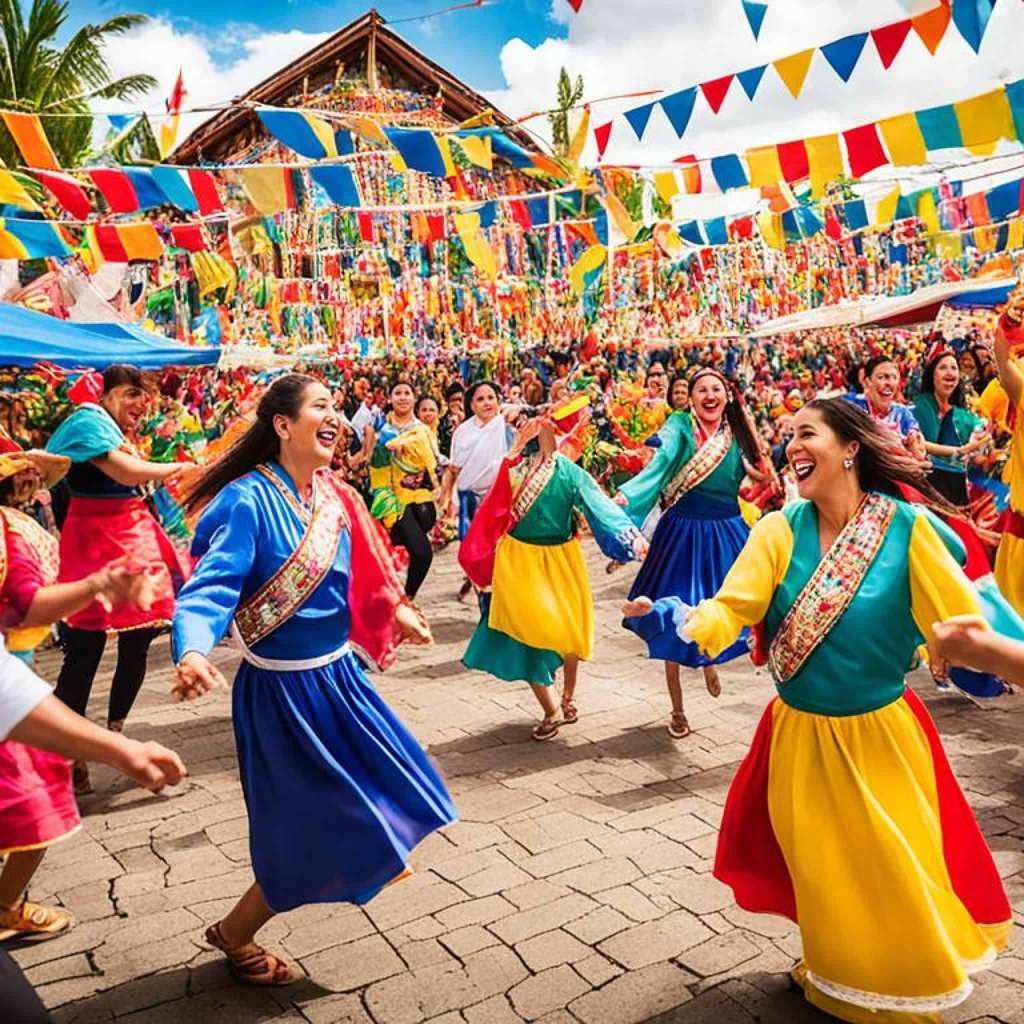
Customs During Festivals & Celebrations
Festivals are major cultural events. Travelers must follow etiquette to avoid misunderstandings.
Photography Etiquette
- Ask permission before close-up shots
- Avoid flash during rituals
- Respect performers’ space
- Do not disrupt dances or parades
Crowd Behavior
- Keep belongings secure
- Follow marshals’ instructions
- Avoid pushing
- Respect elderly and children in crowds
Participation Etiquette
Travelers may join dances or parades.
- Follow local guidance
- Wear appropriate attire
- Avoid blocking performers
- Participate respectfully
Customs in Homes & Rural Communities
Entering Homes
- Remove shoes if requested
- Accept food or drinks offered
- Compliment the home
- Avoid loud behavior
Table Manners
- Wait for elders to start eating
- Avoid wasting rice
- Offer help with cleanup
- Thank the host sincerely
Community Visits
- Ask permission before taking photos
- Respect local leaders
- Follow village rules
- Avoid sensitive topics (politics, religion)
Practical Cultural Tips for Travelers
Language Basics
Learn simple Filipino phrases:
- “Salamat” — thank you
- “Magandang araw” — good day
- “Paumanhin” — excuse me
- “Pakiusap” — please
Avoiding Cultural Missteps
- Do not raise your voice
- Avoid public criticism
- Respect religious symbols
- Dress modestly in rural areas
- Ask permission before taking photos
Supporting Local Culture
- Buy from local artisans
- Avoid mass-produced souvenirs
- Respect environmental rules
- Support community-based tourism
Related Guides to Explore
- Philippine Honorifics
- Sinulog Festival
- Rice Terraces of the Philippine Cordilleras
- Philippine Cultural Travel Guide
- Philippine Food Culture Guide
- UNESCO Sites in the Philippines
Plan Your Cultural Journey
Understanding Filipino customs transforms your travel experience from simple sightseeing to meaningful cultural immersion. Whether you’re joining a fiesta, visiting a rural community, dining with locals, or exploring heritage sites, these customs help you navigate respectfully and confidently.