Plan your trip or long-term stay with this complete Philippine Weather & Climate Guide. Includes month-by-month breakdowns, typhoon season insights, El Niño/La Niña impacts, regional climate differences, packing tips, and best months to visit each region.
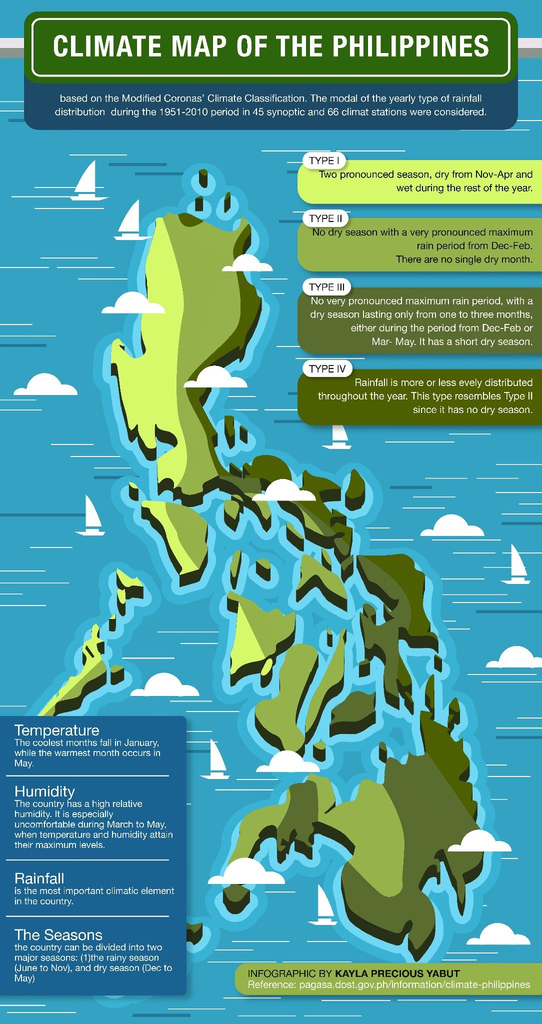
by animalia-life.club
Philippine Weather & Climate Guide for Visitors & New Expats
The Philippines has one of the most dynamic climates in Southeast Asia. With more than 7,600 islands stretching across multiple weather zones, conditions can vary dramatically from Luzon to Visayas to Mindanao. This guide gives visitors and new expats a complete understanding of seasonal patterns, typhoon risks, rainfall cycles, and the best months to travel across different regions.
Understanding the Philippine Climate System
Tropical Maritime Climate Overview
The Philippines experiences a tropical maritime climate, meaning it is warm, humid, and heavily influenced by the Pacific Ocean. Average temperatures range from 25°C to 32°C (77°F to 90°F) year-round, with humidity often above 70%.
Three major factors shape the country’s weather:
- Monsoon winds (Amihan and Habagat)
- Intertropical Convergence Zone (ITCZ)
- Typhoons and tropical storms
The Two Main Seasons
Although locals often refer to “summer,” the Philippines technically has two seasons:
- Dry Season (Amihan) — November to May
- Wet Season (Habagat) — June to October
However, regional variations mean some areas stay dry longer or experience heavier rainfall.
Monsoon Patterns
- Amihan (Northeast Monsoon) Brings cooler temperatures, clearer skies, and calmer seas. Best for travel.
- Habagat (Southwest Monsoon) Brings heavy rains, strong winds, and rough seas, especially on the western side of the country.
Month-by-Month Weather Breakdown
January
Cool, dry, and comfortable. Best for: Northern Luzon, Cordilleras, Batanes, Palawan.
February
Still cool and dry; excellent visibility for photography. Best for: Manila, Cebu, Bohol, Siargao.
March
Start of warmer temperatures; dry season continues. Best for: Beach trips nationwide.
April
Peak heat; temperatures can reach 35°C+. Best for: Island hopping in Visayas and Mindanao.
May
Transition month; hot with occasional thunderstorms. Best for: Palawan, Coron, El Nido.
June
Start of rainy season; expect afternoon showers. Best for: Eastern Mindanao (less rainfall).
July
Heavy rains and possible typhoons. Best for: Indoor city travel, museums, food trips.
August
Wettest month in many regions. Best for: Davao, General Santos (more stable weather).
September
Typhoon-prone; unpredictable weather. Best for: Visayas central belt (Cebu, Bohol).
October
Transition back to dry season; improving conditions. Best for: Luzon highlands.
November
Cooler temperatures return. Best for: All regions.
December
Festive season with cool breezes. Best for: Manila, Baguio, Tagaytay, Cebu.
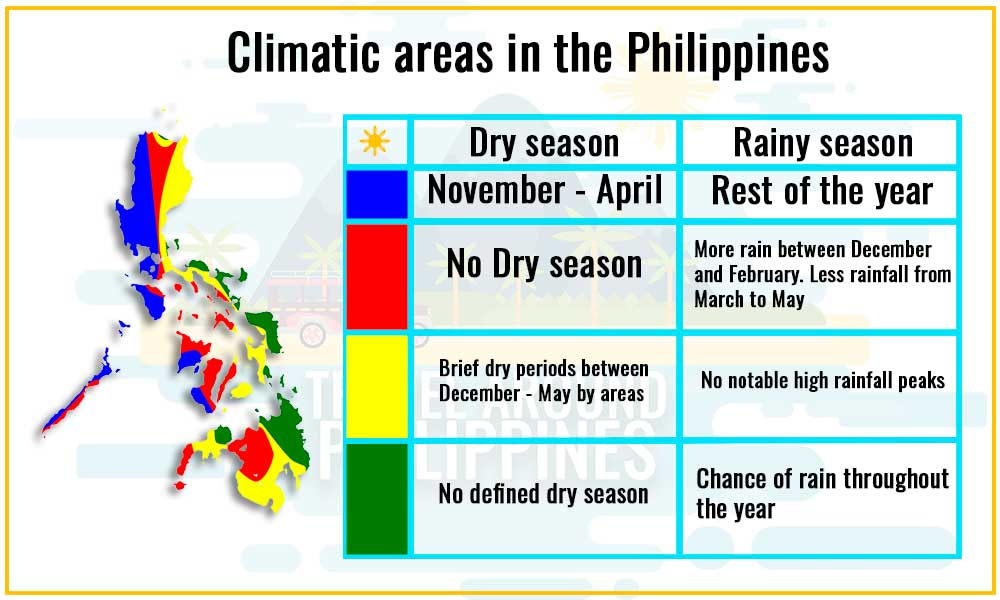
by travelaroundthephilippines.com
Typhoon Season & Storm Preparedness
When Typhoons Occur
Typhoons typically occur from June to November, peaking in August–October. The Philippines averages 15–20 tropical cyclones per year, though not all make landfall.
Most Affected Regions
- Eastern Luzon (Bicol, Aurora, Cagayan)
- Eastern Visayas (Samar, Leyte)
- Northern Luzon (Ilocos, Cordillera)
Least Affected Regions
- Palawan
- Western Mindanao
- Central Visayas (Cebu, Bohol)
Storm Safety Tips
- Monitor PAGASA advisories.
- Avoid sea travel during warnings.
- Keep emergency kits ready.
- Choose accommodations with backup generators.
El Niño & La Niña Impacts
El Niño
El Niño brings warmer temperatures and reduced rainfall, often causing:
- Droughts
- Water shortages
- Higher heat index
Best travel conditions occur in many regions, but heat can be extreme.
La Niña
La Niña brings heavier rainfall, flooding, and more frequent storms.
Travelers should expect:
- Road closures
- Rough seas
- Higher humidity
Regional Climate Differences
Luzon
- North: Cooler, typhoon-prone
- Central: Hot plains, seasonal flooding
- South: Mountain climates (Tagaytay, Baguio)
Visayas
- Central belt has balanced weather
- Eastern side receives more rain
- Western side is shielded from storms
Mindanao
- Generally stable weather
- Fewer typhoons
- Higher humidity in coastal cities
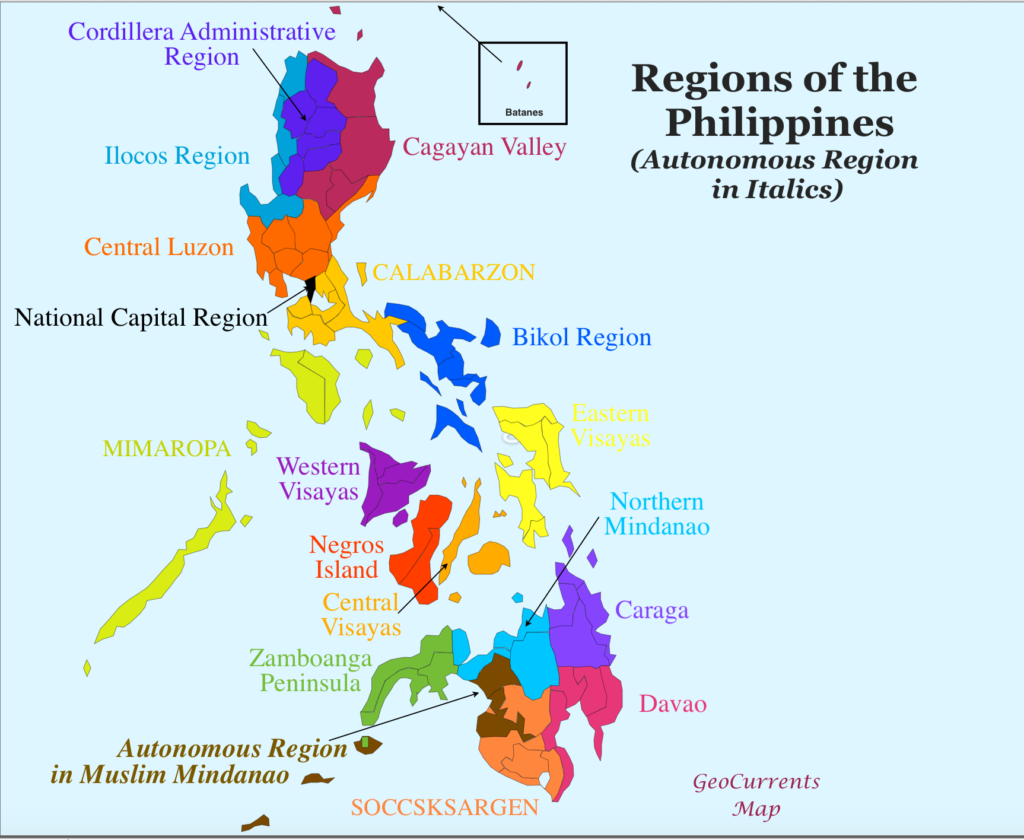
by animalia-life.com
Best Months to Visit Each Region
Luzon
Best months: December–March Ideal for: Manila, Baguio, Ilocos, Palawan.
Visayas
Best months: January–May Ideal for: Cebu, Bohol, Boracay.
Mindanao
Best months: February–July Ideal for: Davao, Siargao, Camiguin.
Packing Tips for Philippine Weather
Dry Season Essentials
- Lightweight clothing
- Sunscreen
- Refillable water bottle
- Hat or umbrella
Wet Season Essentials
- Waterproof bag
- Quick-dry clothing
- Sandals with grip
- Portable rain jacket
Typhoon Season Essentials
- Power bank
- Flashlight
- Basic first-aid kit
- Extra snacks and water
Travel Realities & Weather Considerations
Transportation Delays
Rain can cause:
- Flight cancellations
- Ferry delays
- Road closures
Photography Conditions
Dry season offers:
- Clear skies
- Golden sunsets
- Excellent visibility
Wet season offers:
- Dramatic cloud formations
- Lush landscapes
- Cooler temperatures after rain
Outdoor Activities
- Hiking: Best in dry months
- Diving: Year-round but best visibility in summer
- Surfing: Best waves during Habagat
Related Guides for Visitors & Expats
- Itinerary Tips
- Emergency & Health Guide
- Cost of Living: Small Town vs City for Travelers
- Cost of Living: Small Town vs City for Expats
- Philippine Festivals Guide
- Regional Customs Guide
- UNESCO Sites Guide
- Philippine History for Travelers
- Philippine Souvenirs & Handicrafts
- Nightlife & Entertainment
- Philippine Money & Budgeting
- Philippine Cultural Etiquette
- Philippine Photography Tips
Plan Your Trip with Confidence
Understanding the Philippines’ weather patterns is one of the most important steps in planning a smooth trip or long-term stay. Whether you’re choosing the best month to visit Palawan, preparing for typhoon season, or comparing regional climates, this guide gives you the clarity you need.